
Translated material
The disappeared army
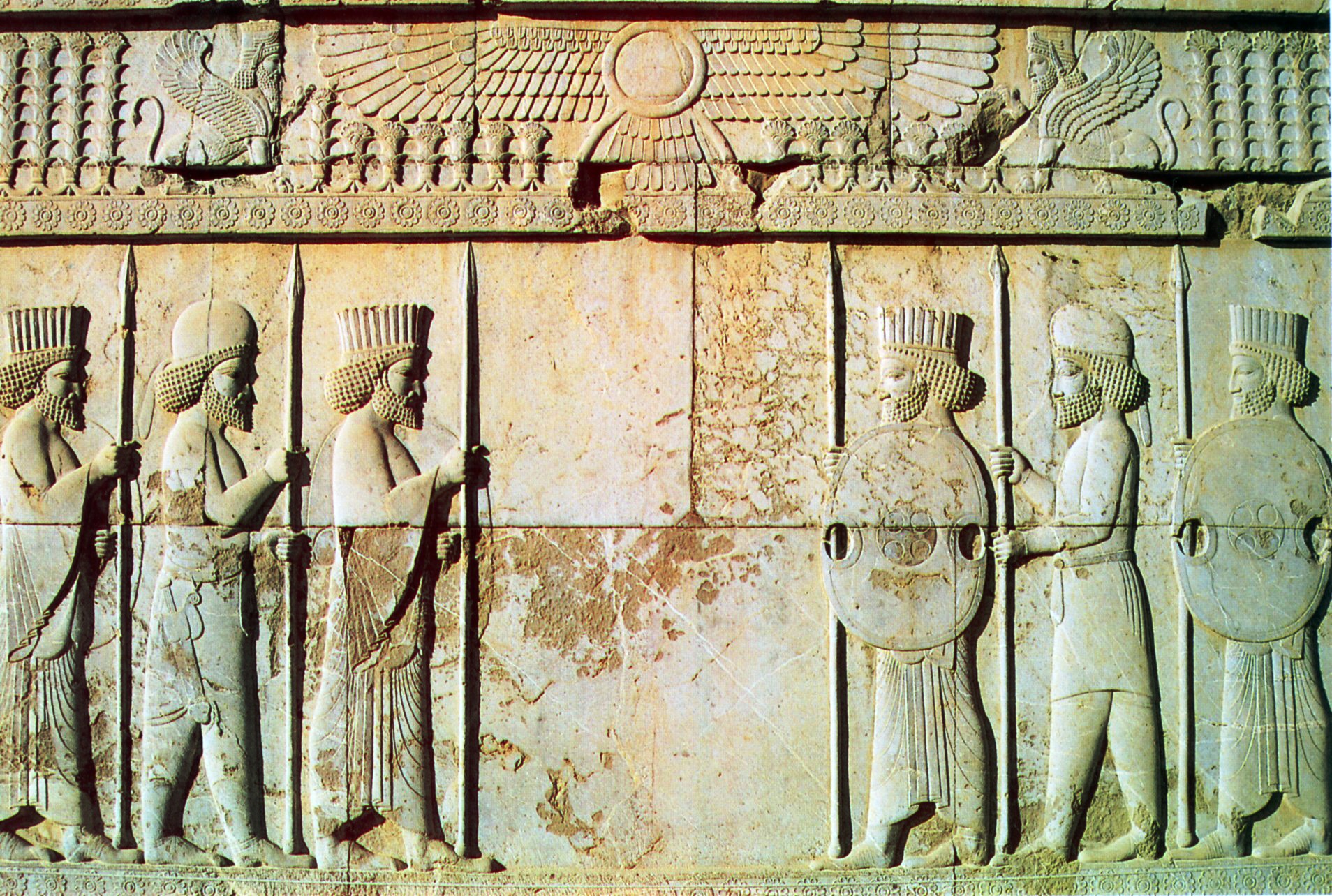
Egyptologist from Leiden University, Professor Olaf Kaper), said that he revealed the mystery of the Persian king Cambis, the son of Kira the Great, who had disappeared in 524 BC.
Cambis captured Egypt in 525 BC. I must say, he behaved imprudently there. After the victory, he ordered to pull the body of the pharaoh Amasis II out of the tomb, who died shortly before, to beat him with scourges and burn him at the stake. This looked like a terrible crime both in the eyes of the Egyptians (abuse of the body and the destruction of tombs), and in the eyes of the Persians (desecration of the sacred for the Zoroastrians of fire). Then, at the festival in honor of the “phenomenon” of the Holy Bull Apis, that is, simply in honor of the birth of a calf that will become this sacred bull, he wounded the calf with a sword in the thigh, why he died, the priests ordered to scourge, and then ordered his soldiers to kill everyone who celebrates the holiday.
The victory of Cambis over the Egyptian pharaoh Psammetich III, the son of Amasis II. Image from the Persian press.
Many contemporaries believed that the blasphemy of Cambysus entailed his subsequent "madness", and then death. He became more suspicious, increasingly gave orders about the executions of close associates, including his sister. He also ordered to kill his brother, the governor of Media, fearing that he would seize power. Soon after, in Persia against Cambis, the priest Gaumat raised an uprising, who impersoned the saved tsar’s brother. Cambis from Egypt went on a trip to the impostor, but, as Herodotus writes, “when the king jumped on the horse, the tip of the scabbard disappeared, and the naked sword cut his hip. The wound was in the very place where he himself had previously struck the Egyptian god Apis ”(History, III, 66). From this wound, Cambyste soon died.
But in 524, Cambis, not knowing that he was only a couple of years to live, sought to conquer the peoples neighboring Egypt: Ethioples, residents of oases and Carthaginians. It was not possible to organize a trip to the Carthaginians, since the Phoenicians refused to give ships for war with their fellow tribesmen. Cambis was limited to conquests that can be made with the ground army.
The Persians occupied a number of territories west of the Nile Delta. However, then one of the armies of the Persian armies disappeared in the desert. Herodotus talks about this:
When Cambysa arrived in Thebes, he divided his army: 50,000 soldiers had to conquer and sell ammoniums into slavery and burn Zeus’s propagation. The king himself with the rest of the army moved to Ethiopes. <...> The part of the troops, sent against ammonias, came out of Thebes with guides. To the city of Oasis, inhabited as if by gravians from the Phil of Eschrionia, the army without a doubt reached. This city is located in seven days from Thebes along the sandy desert, and this area is called the Blessed island translated into the Hellenic language. So, to this area, they say, the Persian army came, and what happened to him later, no one knows this, except, perhaps, the Ammonians themselves and those who heard their stories. In any case, they did not reach Ammon and did not return back. Ammonia themselves tell about this this. From the oasis of the Persians went to them through the sandy desert. About halfway between Oasis and Ammon, just during breakfast, a terrible [sandy] storm from the south rose and buried an army under piles of sand. So the Persians died. Such is the story of Ammoniev about the fate of the Persian army. (History, III, 25–26)
The city of Oasis, mentioned by Herodotus, is the current Oasis of Harga about 200 kilometers west of the Nile Valley. During the Persian rule, there was a garrison of Greek mercenaries -samos from Phil Eschrionia. The people of Ammonians and the city of Ammon were located in the current Siva oasis, located near the border of Egypt with Libya. The distance between Harge and Siva in a straight line is more than 700 kilometers, along modern Egyptian roads, approximately repeating the ancient path through intermediate oases - 1072 kilometers. Somewhere there in the desert, the Persian army disappeared.
The wall of the temple of Amon in Siva. The Persian army did not reach.
I must say that, according to the narrative of Herodotus, the Ethiopian campaign to the king also failed. When the army went upstream, food quickly ended, and it got to the point that the warriors in the lot of spruce at each other. Cambis had to return.
Historians remembered the missing in the Egyptian desert by the 50,000th Persian army. Someone considered these stories a myth, someone believed in his reliability. Due to the message of Herodotus about the sandstone, who destroyed the army, many researchers, both archaeologists and professionals, tried to find Persian warriors buried with sand. This would be an outstanding find - the Persian army of the VI century BC. In complete equipment. Among those who tried to find this army in the desert was Count Laszlo Almashi, a Hungarian aristocrat, a pilot and researcher of Africa, some of the biography events formed the basis of the book and the film “English Patient”. But how much they did not look for in the sands between Harga and Siva, they didn’t find anything. Separate finds, sometimes hit by the researchers, did not pull on the buried army, and besides, they often did not coincide chronologically with the time of the rule of Cambis.
So the death of the Cambis Army from the sandstone artist of the 19th century imagined .
Olaf Carper believes that these searches could not be successful, since Herodotus made by him by rumors was incorrect. The scientist says that the many thousandth army could not completely disappear from the sandstorm without a trace. He claims that the army died in the battle, about which the Persians tried to forget.
This one was discovered by Olaf Carper when he studied Egyptian monuments from the oasis of Dahl, located in the desert in the path from Hargie to Siva. After reading the inscriptions, he learned that during the rule of Cambysa Dahl was the fortress of Seheribra Padibastet, an Egyptian of the royal family, who headed the antipersid uprising. He managed to conquer most of Egypt from the Persians and crown in Memphis under the name of Petubastis III. Information about the wars of Petubastis III has reached us thanks to the work of the “strategists” of the Greek historian Polyen.
The Persian army of Ammon could not pass the oasis in Dahl. It was there, according to Olaf Carper, that it was defeated by the army of Egyptian rebels. In the case, this was the first major victory of the future pharaoh Petubastis III over the Persian invaders.
A map of the alleged route of the Persian army. Solid arrows - the path attested to Herodotus, dashed - planned further route. Asterisk marked the battlefield at the oasis of Dahl, according to the hypothesis of Olaf Carper.
But why was nothing about this battle? Olaf Carper connects this with the activities of the Persian Tsar Darius. Soon after Darius, having overthrew Gaumatu, came to power, he had to suppress the uprising in Babylon. Then, many other areas tried to separate from the Persian Empire. Having suppressed separatism, Darius went to one of the most distant parts of the state - to Egypt.
Darius showed himself a wise ruler. He executed the Persian governor, who also showed a tendency to separatism and began to mint his own coin. The Egyptians took it with joy, since the governor proved himself to be a cruel ruler, who also greatly increased the tax burden. Darius, according to Herodotus, arrived in Egypt during mourning in the apis (already next). He then donated 100 talents in search of a new bull that satisfies the requirements. This act of respect for religion also bowed the Egyptians to the Persian king. As a result, Darius managed to consolidate the Persian power in Egypt.
However, Darius could not allow the spread of information about the battle, which ended in the defeat and death of the Persian army, as this undermined the prestige and his power. Therefore, he made sure that the information about the defeat in Dahl did not spread. Herodotus, who visited Egypt in less than a hundred years, had to be content with inaccurate rumors.
It should be noted that the story of the missing army, known to us from the words of Herodotus, in any case should be perceived with some reservations. Herodotus used the source, apparently, extremely negatively configured to Cambis and painted it exclusively in black colors. For example, it is very likely that the story of an unsuccessful campaign on Ethiopes is unreliable. It is difficult to believe that the experienced commander Cambys, who brilliantly planned the campaign of the Persian army from Gaza through the Sinai to Egypt, did not think about supplying his army in the Ethiopian campaign. It must also be taken into account that Nubia, or the country of Kush, which was the goal of Cambis in the south, later, during the time of Darius, was undoubtedly part of the Achaemenid empire, while there is no mention that it was won by Darius or one of its commanders. Consequently, Cambis’s campaign was still successful, despite the story of this Herodotus. So the story of the missing army may also not be quite reliable. But there are no evidence of the ruin of the oasis of Ammon (Siva) in the days of Cambys, then the army did not come there.