
Translated material
Privatization of life
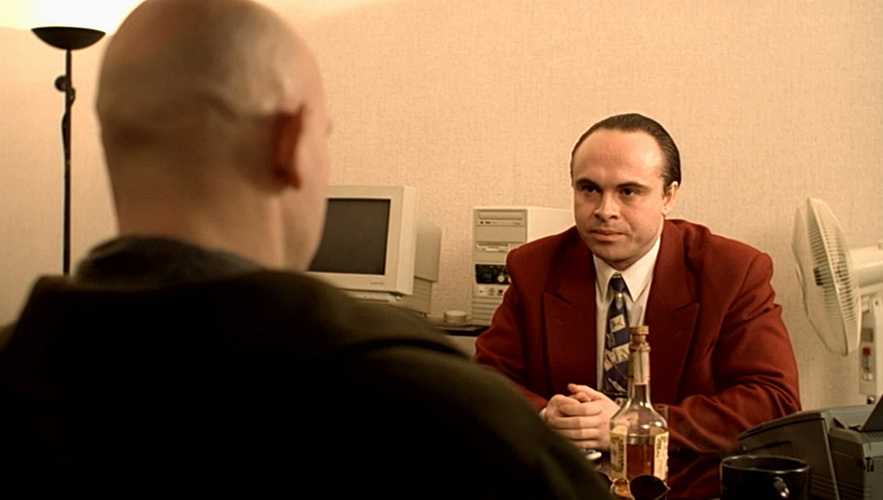
Especially for the “Museum of the 90s”, we talked about how new norms of behavior arose in post-Soviet Russia, with Alexei Yurchak-professor at the department of socio-cultural anthropology of the University of California in Berkeley and the author of the book “Everything was forever, until the last Soviet generation”.
-Now it seems that the 90s were a time when the state suddenly and radically lost interest in the private life of its citizens. In what areas of private life did this freedom led to the most serious changes?
- Yes, it really was a "utopian time." In the sense that it was not planned. There was a rapid institutional and ideological collapse of the Soviet Union, and at the place of what disappeared, a new space of openness arose. This was due not only to the lack of control over private. I think you can set the frame more widely - it was a time of lack of knowledge that at that moment controlled, about norms, rules. They could be declared, but it was not clear how they work: there were many ways to get around them or interpret them differently. The first private business often played on such differences in the interpretation. This does not mean that it was corrupt, just these norms and laws and their creative interpretation were part of entrepreneurial activity. Then there was a very strong change in the particular sphere.
-How were new norms created in the 90s?
- Many of those who later began to be called the "middle class" were guided by the West. They had an idea that you need to learn somewhere, ride, see. The idea of private space, private housing was formed. The term "European repair" appeared, the housing market appeared. When the opportunity arose to change, they began to immediately change. New norms of aesthetic creation of personality through space were born literally in a few years, and they spread very much. In many ways, this happened thanks to the exits to Europe.
In the 90s, a privatization of time occurred-and many have no time for nothing.
We can recall how white double-glazed windows appeared on different floors of houses in the early 1990s, by the end of the decade they became an inevitable part of the facades. We can say that European repair was not only a pragmatic solution, but also a cultural and aesthetic choice. The very concept of "European repair" indicates where these norms came from. Another question is how they were refracted.
- And what transformations Western norms underwent in Russia?
-The borrowing of the so-called culture is always in fact a local production, which is partially structured under the influence of something, but actually refracted inside. The same concept of “double -glazed windows” was important, because it was Russian windows that worked poorly - the muzzle, it was cold in winter, mosquitoes in the summer. It arose precisely in Russia and could hardly arise in France. The idea of the Gipro on the walls, too, probably was not borrowed, the desire was borrowed that the walls were white and even. The same is with parquet and with the relative unnecessarity of space furniture. It seems that all this is taken “from there”, but borrowing can never be direct: borrowings are always partly local production.
I think that the Institute for Traveling Abroad is very important and has not yet been completely analyzed. The trips affected a lot - for behavior, on the relaxation of poses, smiles, speaking, communication with people in space. In the 1990s, my eyes were not blurred-I studied in America in graduate school and came to Russia for the summer, and I had a fresh look every time. I saw these new poses - for example, sitting leg on the leg is not the same as before, more emancipated. It appeared very quickly.
- Can you give an example of an unexpected combination of Soviet and Western practices?
- We always had a very important communication. Although in the 90s there was a privatization of time (many have no time for anything), it is very important to be with friends in Russia today, and this is not important like in America. In America, communication needs to be planned in advance, even friendly communication resembles a business one - in accordance with graphs and schedules. In Russia, everything is different. Here, for example, even business people often say: “Call closer to business, on Friday, we will agree!” That is, the idea that it is necessary to structure time and space in Russia have not entirely been fixed. This is possibly less productively from the point of view of the statistical calculation of profit, but more productively from the point of view of creating the social space around you, which is not completely given to the reduction of effectiveness.
New norms of aesthetic creation of personality through space were born literally in a few years, and they spread very much.
This type of communication arose under the influence of both Western and Soviet. In it, much is spent in the late Soviet times, when the space of communication (this seat up to three in the night in the kitchen) was very important. This is not dissident communication, this is communication in the atmosphere, where it is very cool with friends where the meanings are formed, and this continues to influence how the circle of friends is built.
- Can you give an example when European practice came to Russia and fundamentally transformed?
- I will give an example familiar to me in life in St. Petersburg. The common behavior of the so -called middle class was communication in cafes and restaurants, and not at home; There was a move into the space of private publicity. As a result, forms appeared that are completely absent in the West. For example, many restaurants in St. Petersburg (both expensive and not quite expensive) have large children's rooms. That is, the idea is that a family with children comes there, and this space itself is no longer completely torn off from family life. In the West, this is not at all common, there, in order to go to a restaurant, you need to look for bbisiter: the consumption space is completely privatized, family life is separated from it. And in St. Petersburg, people are sitting in completed restaurants with a pleasant design. On the one hand, it seems to be a complete borrowing from Paris or New York-in Soviet times there was almost no such thing, but, on the other hand, this is a change in the norm that gives it a new meaning.
- How are people accustomed to collective values reacted to the new role of the private?
- When it began to be called neoliberal reforms - privatization at many levels of life (both at the level of the home, and at the level of education, and at the level of work search) - everything has changed. Social ties began to break abruptly - many lost friends. A social division occurred, people appeared with money and without them. The system of old connections, blat, friendship, mutual assistance, built earlier, collapsed. There were many other ways that were often not structured on the principle of acquaintance, and many social ties began to collapse.
Golden boots are no better and no worse than an apartment in the 14th district of Paris.
These things, on the one hand, were freed from something, but at the same time they seemed to be as a kind of subjective violence against themselves. In addition, the lack of rules often interfered. People engaged in entrepreneurship were forced to face the concept of roofing, with the bandits who had to be paid, because there were no state instruments for monitoring compliance with the norm, but there were private tools of quasi -monk through violence. Then they borrowed state institutions from them: the police began to do the same. I studied entrepreneurs of the 1990s, many of which have become successful since then-they created new norms, new practices and encountered constantly with violence, thanks to which new norms arose. On the one hand, thanks to this, a structuring of public space occurred, on the other hand, all this was unusually painful.
- How specific is the consumption culture that arose at that time in Russia?
-In order to understand how the consumption culture was formed in the 1990s, you need to understand what it was in Soviet times. And she, of course, was, and quite developed, she was just special. There was no advertising, there were no goods in stores - they were bought mainly through special networks. You could buy jeans, Italian cosmetics - all this existed and, of course, structured both tastes and self -perception. For example, it was necessary to have some paradoxically expensive things, worth, say, with a monthly salary.
-That is, the claim often sounding to Russian tourists in Europe that they dress too deliberately, that they put on gold boots for breakfast-did all this come from the 90s?
- All this is rooted in the importance of private back in Soviet times. It was very difficult to build yourself through the purchase of an expensive apartment in an expensive area in Soviet times, almost unrealistic - this was due to a residence permit, with the issuance of apartments. It was difficult to act through other consumption items. Therefore, everything was supplanted into the space of bodily, into the space of purely private. That is why gold boots are no better and no worse than an apartment in the 14th district of Paris.
There were almost always dense curtains on the windows of Soviet people, and in America there are practically no them.
In the 1990s, cottages in the form of castles began to appear in the suburbs. In the first years, there was an idea that your personal living space is such a castle from your children's fairy tale, which was connected with the idea of the need for personal space borrowed from the West. But it was transformed and transformed not into the concept of convenience and comfort, but into the concept of fabulousness and fencing off. Today it began to go into the background, but still continues and goes root into Soviet experience. The same dudes of the 1950s were exactly the same-they built themselves through their body; They had to show themselves all the time. There were simply no other ways.
- Is it possible then to say that the bandits in raspberry jackets continued the line of dudes?
- The focus on what you wear, on how you behave, go into the Soviet past. They can be completely different in a political and aesthetic sense, but the idea that you need to act through your jacket, through your behavior, through how much you spend on people go there.
-And how strong was the nostalgia for the Soviet past in the 90s and how is the current nostalgia related to the cultural contradictions originated in the 90s?
- You know, I think that we are now observing is not so much nostalgia for Soviet as nostalgia for individual institutions of the Soviet era. Say, in social space, which is not fully structured according to the principle of money. In Russia, it is lost to a greater extent than in many countries of Western Europe, where there are social programs trying to fence off society from the market.
In Russia, it happened that both the market and society practically merged - up to those areas that seem to be very fenced (like medicine, education).
Of course, there is nostalgia for space where the market does not dictate everything. This is not to say that Soviet society was collective, and the western society was private: it is incorrect. Soviet society was a collective and non -complex at the same time. Everything depended on the circle, and the Soviet man very protected his private. It is characteristic that there were almost always dense curtains on the windows of Soviet people, and in America, for example, there are practically no them.
Now there is nostalgia for such social fabric where you can communicate with people without thinking about the cost of this communication. Of course, this happens not only for those who feel economically deprived. This is happening. Nostalgia is not nostalgia throughout the Soviet. Rather, it is a way of resisting the very privatized space that arose after rather strict neoliberal reforms in Russia. Many things were destroyed and reformatted as a result by examples of the market. Resistance against all this is nostalgia.