
Translated material
Escape from the grave
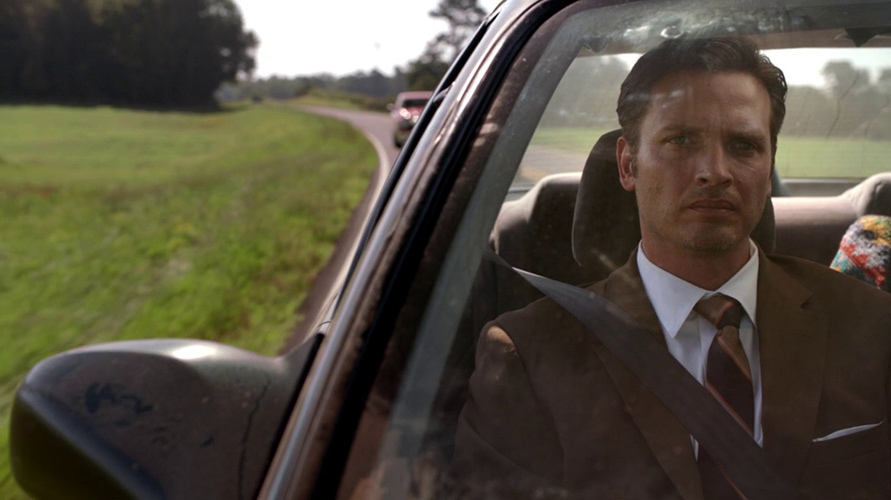
Last spring, Sundance TV , who had not done the series before, shot a mighty duplet: in March there was a mini-series Jane Campion “Top of the Lake” , in April- “RECTIFY” (“Fix errors”), which recently returned on the second season. That shot fell exactly into the funnel of the author’s cinema - both of the series were applauded in the halls of Berlinale and Sandens. It turned out that festival indie drama can exist without losses in a serial format. Previously, on TV there was almost no place for silent visual symbols - the series rested on the dull dialogs and the raised acting eyebrow. “Top of the Lake” went away from this tradition, making a landscape another hero: a huge lake spread out in the middle of the plot, around which all the events of the show revolve in one way or another. “ Rectify” has mastered a different landscape - existential.
Recall how the first season began. Daniel Holden, 19 years ago convicted of rape and killing his 16-year-old girlfriend, leaves the cell of suicide bombers. The DNA test showed that the traces of the girl’s body belong to someone else. However, we are not talking about complete rehabilitation - the inhabitants of the small town, from where the hero comes from, are convinced of his guilt, and the prosecutor wants to revise the case and return it to bars. You can understand this - 19 years ago Daniel completely pleaded guilty.
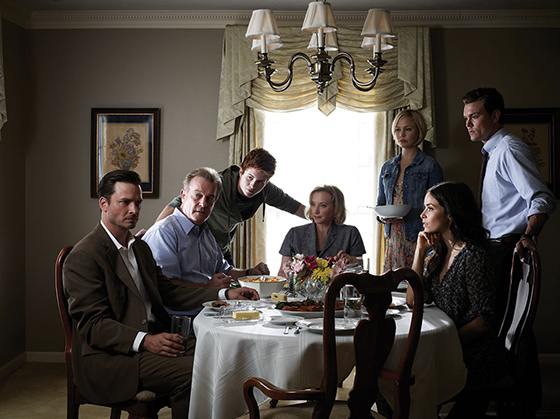 © Sundance TV
From such a material, a traditional series with a classic detective intrigue named after Laura Palmer could have been obtained - the final chord of the first episode, the suicide of one of the key witnesses in the case of Holden also spoke in favor of this. But very soon it turned out that the shot in the head actually ended with a detective intrigue, and did not promote it, as it should be expected. “Rectify” does not give an unequivocal answer whether Daniel is guilty, and, according to the author of the show Ray McKinnon, this detail is not too important for history. “ Rectify is, first of all, a conversation about what it means to be alive,” says McKinnon, Oscar holder for a short film accountant (2001). Here, his words should be expanded: “Rectify” explores what it is like to live, die for many years, and then resurrect and find the strength and courage to live again. For Freedom after two decades of imprisonment is a gift monstrous in size, which is almost impossible to accept.
Free is too bright, sunny and for some reason settles in sleep-Daniel falls asleep in the car on the way home to his parents. The hero has no other house - he was only 18 when he was behind bars. Daniel’s old room was occupied by the younger brother, whom he had never seen. But on the spot, half -stroked marks on the door jamb - it seems that Daniel has not grown at all. The fragments of his previous life are stored in the attic, where he will find a cassette player, a game console with an antediluvian “Sonic” and the old clothes of his father, who died while his son was in prison. The series is largely relied on on such trifles to show the hero’s discomfort in a collision with a new reality. It is precisely to show, and not to say: “Rectify” differs from all other series in the world, first of all, the main thing here is in a clumsy gesture, in a caught look, in the creak of the floorboard, in the shade under the door awkwardly retreating back, in the glare of a table knife, in a scattered coffee, in a whirlpan of the walls, in a dancing inflatable person. When it comes to words, Rectify tries to taste them again. Behind a family dinner, the head of the Ted family, the second husband of Mom Daniel, pronounces a prayer. “Very cute, Ted,” she says with a smile, and Daniel first repeats these simple words after his mother, and then mutters under his breath, as if trying on them. You will not hear this in the cell of suicide bombers - these are the words of free people, and these words have yet to study again.
 © Sundance TV
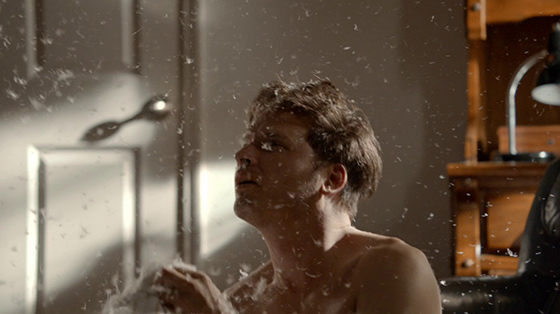
“My brother is the center of our universe,” said Daniel’s sister once, who devoted his whole conscious life to the struggle for his liberation. But the beginning of the second season weakens the dependence of “Rectify” on the figure of the protagonist. He lies in a coma for two episodes and wanders in dreams and hallucinations after a group of local residents with an aggravated sense of justice beat him to half death. People close to Daniel come to the fore, and we will find out how his return influenced family members - including those who did not know him before. For example, in the marriage of his consolidated brother, a crack was clearly outlined, so Daniel took possession of his young religious wife in the first week of his stay at large.
It is felt that in the new season Rectify has more space for maneuver: last year there were six episodes, now ten were ordered. The authors have enough time even on a lawyer who pulled Daniel out of prison thanks to DNA dead, and now she is saying goodbye to the suicide cell with another client, whose wine was confirmed-just thanks to DNA analysis. This is an elegant mirror reflection of Daniel’s history - a transparent reminder that the hero can still be sentenced to death.
 © Sundance TV
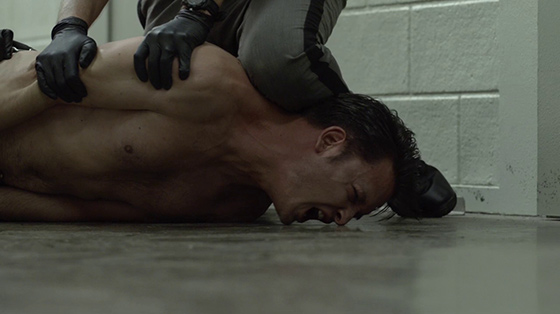
Lying in a coma, Daniel sees a sleep-removal about his prison days. There is a ventilation grill between the single cameras of suicide bombers, through which you can talk with a neighbor: so Daniel started a real friend, and then lost it and now does not get out of bed for weeks. “You have clinical depression, my friend,” the neighbor from the other side will say and will take care of therapy: he will take off his prison robe, the mattress on the floor next to the ventilation grill and tell Daniel about how he once raped him-when he only got into prison. “It seems I was the fourth,” the neighbor nostalgies and touches himself. So the grate between the cameras turns into an intimate hole - because in these conditions it is the only access to another person. It is no accident that the neighbor strokes this lattice with tenderness after an orgasm.
In the first season there was a remarkable frame: Daniel stands in the center of the baseball field and as if waiting for what a twisted ball to give him a new life. In the end, he waited for a throw, and this ball almost demolished his head. Daniel, of course, will come out of a coma, for the second time dodging the arms of death, and he is unlikely to get into the camera again - the prison is already on his mind. So, in essence, he remains to walk through the streets, parks, supermarkets, stadiums, cemeteries and wait for the day to come when he can accept his freedom for granted - and at the same second to turn into an ordinary person.