
Translated material
Memory. Nicholas I
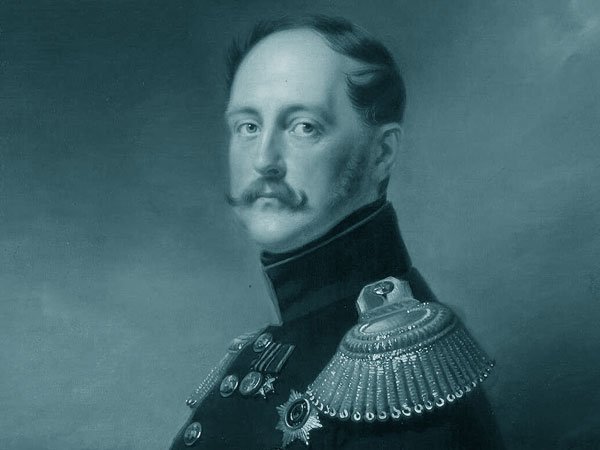
On July 6, 1796, Nicholas I was born, the eleventh All -Russian Emperor.
Personal business
Nikolai Romanov was the third son of Emperor Paul I and Empress Maria Fedorovna. He was born in 1796 and was the last of the grandchildren of Catherine II. Foreigners were engaged in the upbringing of the descendant: Charlotte Liven and General Lamsdorf. In 1801, the father of Nicholas I was killed by the conspirators, which laid out an imprint on the formation of his character. More than all sciences, the young heir loved engineering and fortification. In 1817, he was combined with the daughter of the Prussian king Charlotte (in Orthodox baptism Alexandra Fedorovna). Brother Nikolai Konstantin renounced the throne, and Nikolai remained the only contender. But on December 14, 1825, an uprising of the Decembrists took place, which was without pity crushed by the young monarch. The further reign of Nicholas I took place mainly in the “twisting of the nuts”. Three wars occurred during his rule, the last of which, Crimean, was for Nicholas I Rokokoy, he died, not having lived to the end, in 1855.
What is famous
The reign of Nicholas began with the suppression of the uprising of the Decembrists and the following political reaction. The reactionary nature of the regime was manifested in the suppression of the uprising in Poland and Hungary, as well as in repressive events against the Old Believers: with the help of regular troops, the Irgiz Old Believer Monastery was taken and destroyed. In the reign of Nikolai, the Imperial University of St. Vladimir in Kyiv was founded.
What you need to know
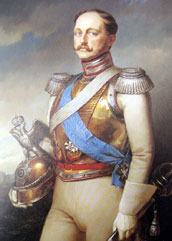 Nicholas I
The reign of Nicholas I was contradictory: the liberal in the essence of the reform of Kiselev and Cankrin was combined with repressive events, which brought Nicholas I the glory of the despot. At the same time, this rule can be designated as a “stagnation”. The main goal of Nicholas was the centralization of power and the construction of the vertical.
In his reign, the financial reform of Cankrin was carried out, the first railways were built, the Technological Institute in St. Petersburg was opened, and the reform of the state peasants of Kiselev was made.
Direct speech
“We can say that Nicholas I was the donkeys of autocracy, a terrible and malicious donation, because he possessed omnipotence, which allowed him to subordinate everything to his fanatical and obsolete theory and trample the most legitimate aspirations and rights of his age. That is why this person, who combined the generous and knightly character of rare nobility and honesty, the heart is hot and tender and an elevated and enlightened mind, although devoid of breadth, which is why this person could be a tyrant and despot, which he systematically strangled in his 30-year reign, in his controlled country, A.F. Tyutchev who was controlled by him.
“Who ruined France, if not lawyers ... Who were Mirade, Marat, Robespierre and others?! No, ... while I will reign - Russia does not need lawyers, we will live without them. ” - Nicholas I, from the memoirs of N. M. Kolmakov.
“It has a lot of warrant officer and a little Peter the Great” - A. S. Pushkin, Diary, May 21, 1834.
Nine facts about Nicholas I
- Nicholas I received his name due to the passion of Catherine II “Greek Project”: the name Nikolai means “winner of the peoples”.
- On the birth of Nicholas I, Odu Gavril Derzhavin wrote.
- In 1816, Nicholas I was appointed Chancellor of the University of Abo in Finland.
- In 1851, a railway was built from Moscow to St. Petersburg, called Nikolaev in honor of Nicholas I.
- After the Decembrists' conviction to execution, links and hard labor, Nikolai practically refused to use the death penalty in the Russian Empire.
- Nikolai accepted Pushkin and said that he would personally be his censor, although subsequently the relationship of the king and the poet remained difficult, and Pushkin was conducted by police surveillance.
- The first Russian secret police (the third branch) was established during the reign of Nikolai, P. Ya. Chaadaev was subjected to persecution. A. Polezhaev, M. Yu. Lermontov, I. S. Turgenev.
- According to L. N. Tolstoy, Nikolai Palkin was called in the emperor’s army due to the massive use of cruel punishment - flogging with sticks.
- The death of Nicholas I was surrounded by an atmosphere of mystery, and even a rumor arose that the emperor accepted the poison without surviving the defeat of the Russian troops near Yevpatoria during the Crimean War.
Links:
Article about Nicholas I in Wikipedia
Zaikovsky K. Memory of Emperor Nikolai Pavlovich // Historical Bulletin, 1886. - T. 24. - No. 4. - P. 112-119.
Bershtein A. Empire Facadas