
Translated material
The 70th anniversary of the Operation "Acute Brahma"
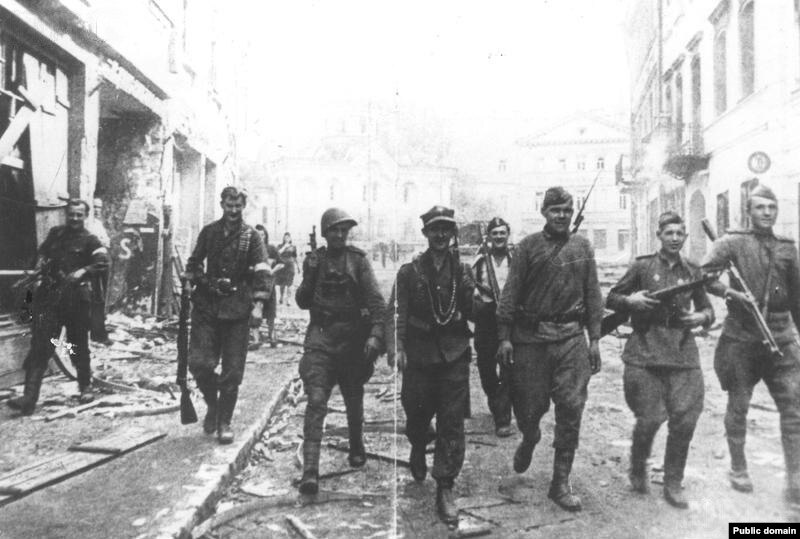
70 years ago, Polish partisans from the Kraiova army tried without the Red Army to liberate Vilnius, who was considered to be their vile
On July 7, the 70th anniversary of the began the liberation of Vilnius by the fighters of the Kraiova Army (the main partisan organization of the Polish resistance), who, having organized the Opera Brahma operation , tried to knock the Germans out of the city even before the arrival of the Red Army. The Poles dreamed of freeing at least one city ( and they considered Vilnius to be their own ) on their own. When the Red Army approached Vilnius, it ended very bad for most Polish partisans.
In Poland, about the results of the Opera Brahma operation, named after the name of the Vilnius chapel revered by all the Polish Catholics with the miraculous way of the Mother of God of the Ostroma , they still remember. In the spring of this year, the small Polish town of Penenzo, near the border with the Kaliningrad region, briefly found himself in the center of attention of the media in Poland and to some extent also in Russia. In this place in the early 70s of the XX century, a monument was erected to Soviet General Ivan Chernyakhovsky , who died near Penenno in 1945.

In January of this year, local authorities decided to dismantle the monument. Seven members of the City Council Penenito voted for, four against, and two refrained, and the "Declaration of the Intent to dismantle the monument" was adopted. Commenting on the decision of the city council, the Burmister Penenzo Casimezh Keydo said that over the past years, "tribute to those who paid the highest price for the freedom of Poland have already been given."
The city council also emphasizes that they want to dismantle the monument to Ivan Chernyakhovsky in compliance with all laws and the “respect of the feelings of the Russian side”. There is nothing against the dismantling of the monument in the Polish government, said the Minister of Foreign Affairs of Poland , Radoslav Sikorsky :
- For Russians, this is a soldier who fought for the liberation of Eastern Prussia, but for us he is simultaneously an executioner of these edges. Since we are the owners of our own country, we will decide who to erect monuments in public places, that is, an example to follow, and to whom it is not.
Radoslav Sikorsky emphasized that the graves of Soviet soldiers on the territory of Poland are “a completely different matter”:
- As a country that is particularly concerned about the graves of their own soldiers, we respect the graves of other military. Here is an international agreement that we will adhere to, ”the minister emphasized.
Members of the World Union of Veterans of the army of Kraiova spoke for the dismantling of the monument. The Union’s statement says: “We consider the presence of monuments in Poland praising the Soviet invaders. And especially those that were related to the death of the Polish patriots.”
And the leader of the largest opposition party of Poland "Law and Justice" Yaroslav Kachinsky said that the presence of a monument to General Chernyakhovsky in Polish territory is a misunderstanding:
-We are talking about 20 years of such a policy that did not fully say goodbye to the old system and was full of some unprecedented fear of Russia and the Soviet Union. I ask you not to expect my condolences from me that the criminals are hostile to the monuments.
The connection between the monument in Penenzo and the operation of the Kraiova Army "Acute Brahma" is the most direct. In Vilnius, the city, which in the period between the First and Second World Wars belonged to Poland and was called Vilna, for the first time, units of the Kraiova army and Soviet troops under the command of Ivan Chernyakhovsky met.
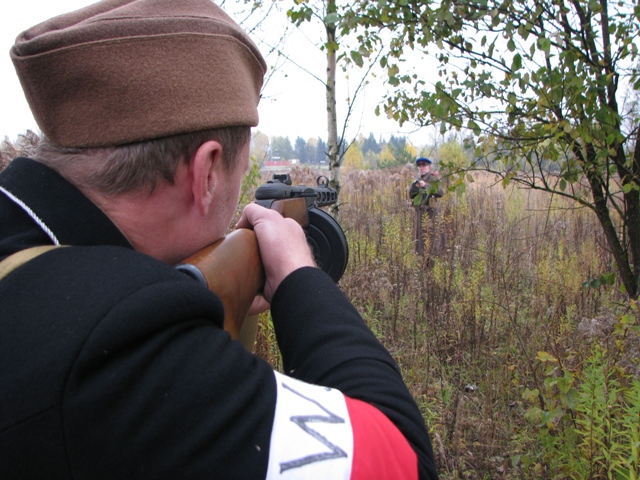
More than 10 thousand weakly armed Polish partisans tried to independently free Vilnius from German invaders on the morning of July 7, 1944, and partially they managed to do this, but the local garrison was well equipped and the city did not work completely. And about noon, units of the Red Army approached Vilnius. On July 13, Vilnius was taken, and the white-red Polish flag was originally erected on the castle mountain a few hours a few hours later. The Soviet command proposed the command of the Kraiova army to create units as part of the Red Army, but then the Polish General Alexander Kshzhanovsky was invited to negotiations against Ivan Chernyakhovsky, where they were arrested.
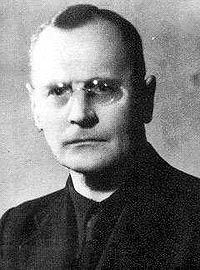
Parts of the NKVD surrounded the Polish partisans and disarmed them - few managed to break out of the ring. About 6 thousand fighters of the Kraiova army were interned, most of them refused to join the ranks of the 1st Army of the Polish troops under the command of General Zygmunt Berling , for which they were taken to camps for logging in Kaluga and Ryazan.
Information about the Opera Brahma operation was silent for many years, and initially also in the West, because by that time the allies had already decided that the post -war boundaries of Poland would change and Vilnius would no longer be part of the Polish state. In Poland, however, they remember those events well.