
Translated material
Russia is being prepared for war
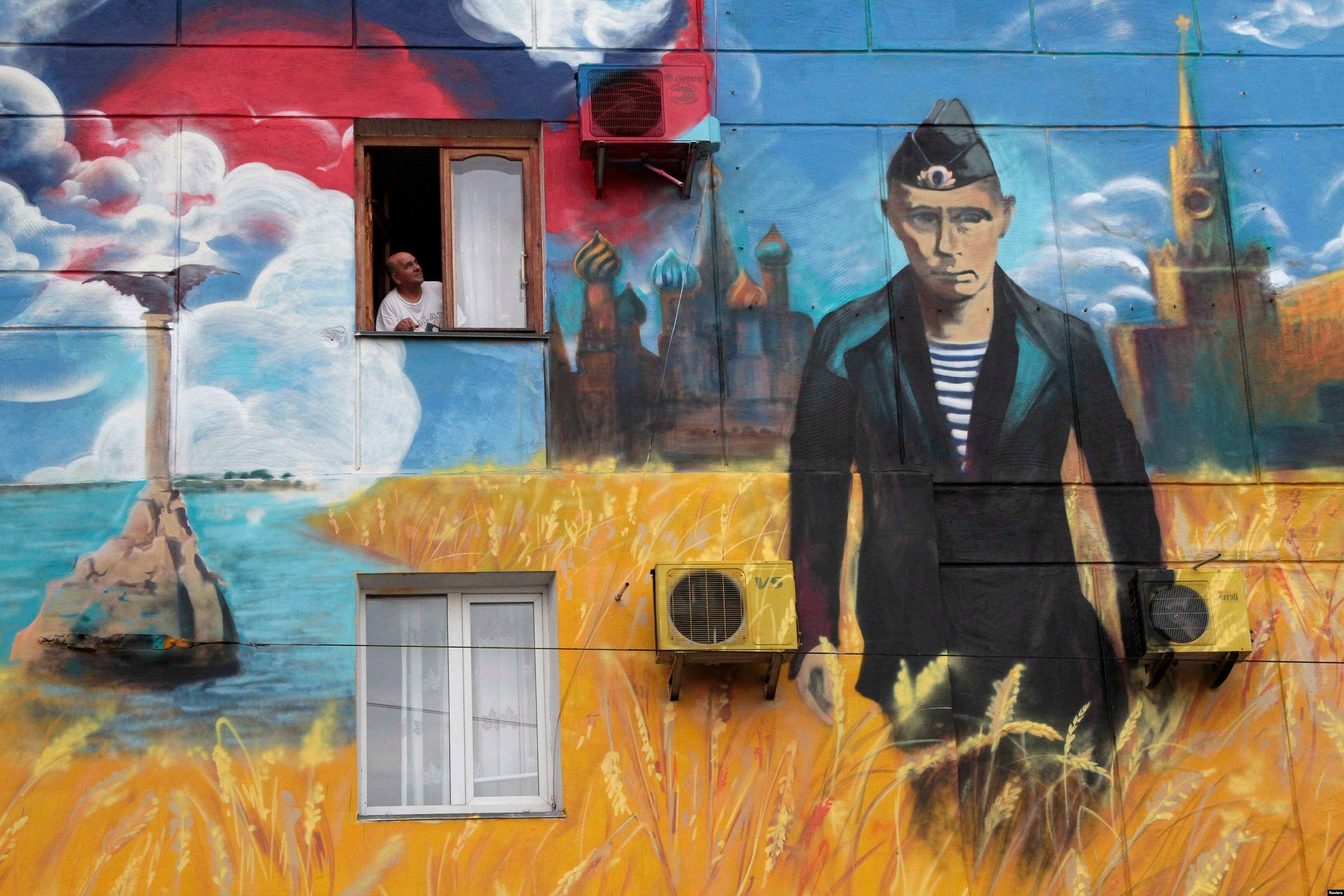
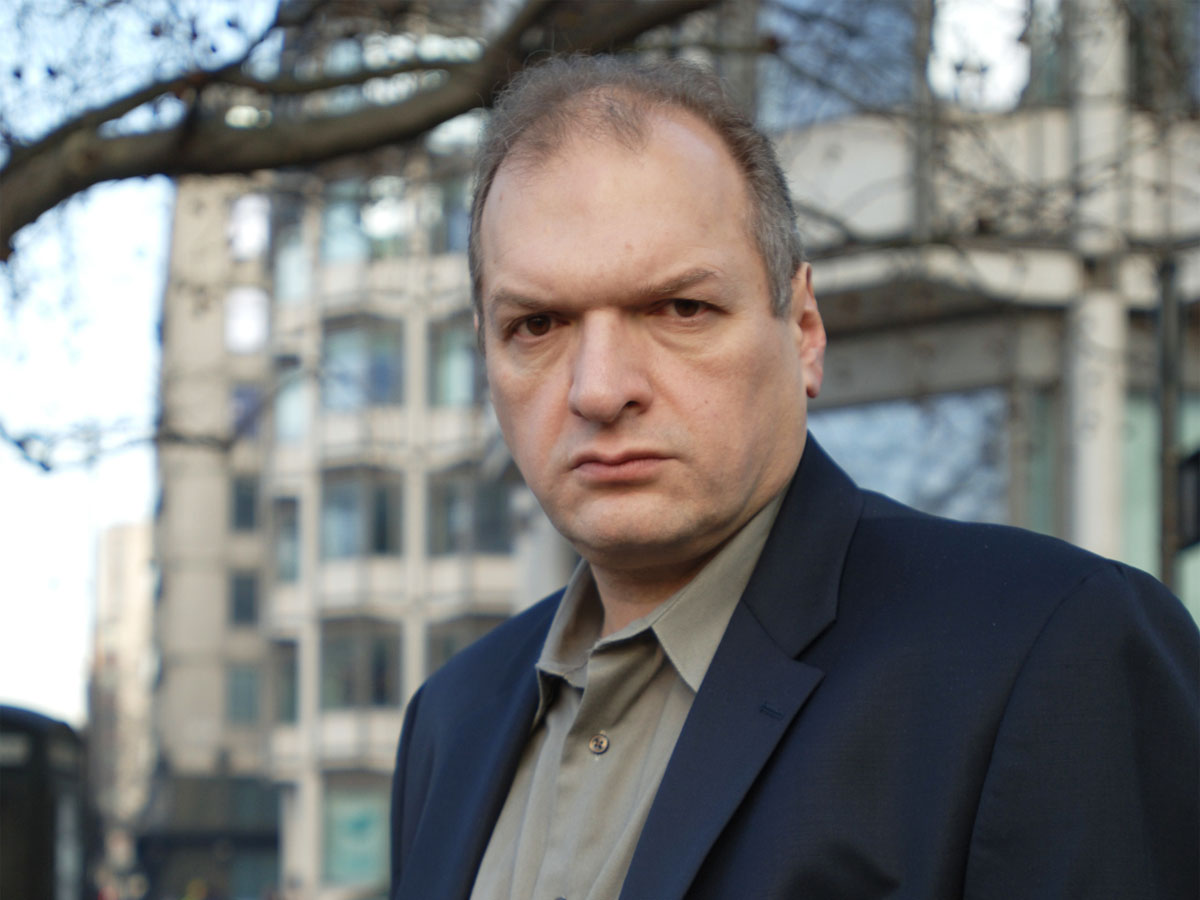
Historian Yuri Felshtinsky - about how events in Ukraine changed the essence of the regime of Vladimir Putin
The reputation of the tough critic of the political system created by Vladimir Putin in Russia in the United States, historian Yuri Felstinsky acquired after the publication of the book " FSB explodes Russia" , written by him in collaboration with Alexander Litvinenko. An open investigation of the causes of the explosions of residential buildings in 1999, the topic of Felsteinsky developed in the next work - written in co -authorship with political scientist Vladimir Profilov's book "Corporation: Russia and the KGB during the President of Putin."
In an interview with Radio Liberty, Yuri Felsteinsky answers questions about how the development of events in Ukraine in the last six months has influenced the character of the Putin regime:
- At least since March, the initiative in the political actions that we observe belongs to the Russian side, no matter how these actions are called - aggression or liberation mission. And the rest of the world is frantically trying to understand how to respond to these actions of Moscow. What we have now encountered, Europe has not seen since 1945; The situation where one European state grabs part of the territory from the neighbor, Europe has long forgotten. How do all these events affect Putin's regime itself? First of all, the bar of permissible actions has moved very much. We now look at the Russian problems that used to seem global to us, as some little things that accompany serious changes in Russian politics in relation to the whole world.
All these years-starting somewhere since 1989, and even more so since 1991-Russia strategically unfolded towards the civilized world. The Soviet Union, which could not be attributed to civilized countries, near Gorbachev, and then Russia - unfolded to Europe and tried to become part of European civilization. This period lasted until about 2000 - with all sorts of reservations, with stops, conflicts, Russia, nevertheless, saw itself part of European civilization. After 2000, skeptics, like me, began to sound the alarm due to the fact that a former KGB officer came to power in Russia. These skeptical estimates turned out to be fair, moreover, they even turned out to be in a sense, underestimated, reality turned out to be the worst than the most bad fears.
Now Putin can afford to speak with Europe and the USA natural for him - this, unfortunately, is the language of the KGB not very educated officer
Today, Putin no longer sets himself the task of sitting at a common table with the leaders of European states and a civilized world. His task is to talk with the whole world from the standpoint of power, and in this sense Putin, in general, spit on whether he remains a member of the group of democratic leaders or not. It is clear that so far we are not talking about an open, global war, they will meet and talk with Putin, but of course, the Russian leader will not be imprisoned at the general table of friends smiling at each other. And in this sense, unfortunately, Putin also has nothing to lose. Now he can afford to talk with Europe and the USA natural for him - this, unfortunately, is the language of the KGB not very educated officer.
- If so, tell me what played a role in the strategic change in Russian policy? Is the Ukrainian crisis the result of a situational reaction of the Kremlin elite to the development of events in a neighboring country, or is it still a more logical result of a mutation, changes in the Putin regime?
-Firstly, I think that we must forget about the elite in Russia. In the period before 2004, it was possible to suspect that some new elite in Russia was formed, and this elite was very attended by the government. Now it is already clear that there is no elite. There is a fairly rigidly rebuilt vertical of power. At the end of the 15-year journey, everything that we have in Russia is a dictatorship. This is a dictatorship of a non -Stalin type, but rather a soft dictatorship of a fascist type, as with Mussolini or Early Hitler. The dictatorship at open border - and under Stalin the border were closed, under a market economy - and under Stalin there was no market economy, without concentration camps, without mass political repression. But this soft dictatorship at any moment can turn into a more stringent dictatorship - simply according to the laws of the genre.
- When are you talking about fascism, what are you putting into this concept? The corporate structure of the company, the internal scheme of its organization according to the Italian or German examples of the mid -twentieth century?
At the end of the 15-year journey, everything that we have in Russia is a dictatorship
- I cited the example of Mussolini and Hitler, because the Society management schemes built by them are two classical types of fascism. It must be understood that before the start of the Great Patriotic War, while the Second World War from such a passive phase of 1939-41 has not passed into the most active and terrible phase, many quite reasonably believed that fascism is a rather advantageous form of government. In 1938-39, Germany was able to revive as a strong state, as an empire, and the vast majority of the Germans grew such a turn. Until they start killing you, until your children begin to die, small victorious wars are perceived positively, as a person is arranged. So the fact that small victorious wars from the point of view of PR bring Putin continuous victories should not be surprised. This is exactly the initial period of aggression, the expansion, through which both Italy and Germany passed. When Prince Charles and Hillary Clinton - a democratic, mild political leader according to American standards - compare Putin with Hitler, believe me, these are very serious indicators that the West understands what is being discussed. This problem, consciously or unconsciously, but must be resolved by the world-because if it is not resolved at the very initial stage of its occurrence (say, at the 1938 stage), then in a year it will have to be decided at the 1939 stage, and after two or three years it will be necessary to solve it already at the 1941 stage.
- I will return you to the question of the internal logic of the development of the Putin regime ...
Putting to themselves the country, they ended the preparatory period. Now a new stage begins: Russia is trying to return to itself those territories that have ever belonged to the Soviet Union or the Russian Empire
-Basically and to a large extent, Russia is ruled by either former KGB officers (such as Putin, Sergey Ivanov, Viktor Ivanov, Igor Sechin), or people who, due to ideological considerations (like Rogozin), or because of friendly relations (like Medvedev), or because of financial considerations, the current Russian regime, I think, only now, in 2014, they finally understand why the whole period has been the entire period since 1991-for which the whole period has been since 1991. All this period, from their point of view, was preparatory for a new stage, which began with the annexation of Crimea. Even the Russian-Georgian war of 2008 was a “preparatory breakdown”-on the one hand, Russian forces, and on the other hand, by checking how the West responds to the use of Russia to its army abroad, the answer to the question will accept the results of this war or not accept the results of this war. The West allowed the Russian army to conduct aggressive actions (I say this, regardless of political, emotional, national sympathies, regardless of how much Georgia was right or not right in the Abkhaz and Ossetian issue) - and nothing has changed. And the fact that after 2008 in relations between Russia and Europe, Russia and the United States, nothing changed, for Putin, of course, became a serious indication that you can move on. And now the turn of Ukraine has come. Probably, events on the Maidan, Yanukovych’s flight provoked this conflict. But I am absolutely convinced that the Kremlin has a certain general strategic plan, maybe not even a plan, but a certain philosophical concept. Its essence boils down to the fact that people in the Kremlin finally became clear why all these years they suffered, humiliated the oligarchs, smiled at the democrats, and their own and abroad. Having subordinated the country to itself - and Russia is subordinated from the point of view of politics, from the point of view of the economy, and from the point of view of the destruction of tools that could withstand the authorities, such as the institution of free press, they graduated from the preparatory period. Now a new stage begins: Russia is trying to return to itself those territories that have ever belonged to the Soviet Union or the Russian Empire.
When Putin became the owner of the Crimea, then from all sides, both from America and Europe, signals were sent to him: say that everything ends in the Crimea, and we will heal in the old way. But Putin did not make such a statement - on the contrary, he began to talk about Novorossia, about the correction of the historical injustice of 1991. So the conflict begun in March 2014 is seriously and for a long time. There is no territorial problem (with the exception of Crimean, because there was a serious Russian garrison on the peninsula and from a military point of view, in fact, there was not much what needed to be done) quickly and bloodlessly not to solve, we see this on the history of the Lugansk and Donetsk “People’s Republics”.
Since Putin, I think, has long analyzed the situation from the point of view of the reaction of Western countries, one moment for him turned out to be the main one. This moment is the position of the US president. President Obama once came to power in order to end two wars - in Afghanistan and in Iraq. Actually, these tasks for President Obama were the main ones. And when he re -elected for a second term, Putin understood, it seems to me that he has four more years to solve the foreign policy problems of Russia. Because the next American president - regardless of whether it will be a democratic president or republican - will certainly take a more stringent position on Russia.
- It is clear that such operations, as Crimean, require internal consolidation of the regime and, on the other hand, they themselves lead to an increase in the mobilization readiness of society. According to your estimates, the Putin regime has become more internally over the past six months?
- I never belonged to critics of the regime, who believed that the Putin regime would fall quickly, that he could not exist for a long time as he exists, that Putin remained, as a political figure, to live for several months, a maximum of a year. I always thought that the Putin regime is for a long time. But now I believe that this regime, maybe, is not for long, precisely because Putin began active aggressive foreign policy actions. It is clear that the Putin regime could not fall without pressure from the outside, and it was clear that this pressure could not be, because why put pressure on Russia, where the president, in general, is a fairly progressive, pro-European, pro-American politician, if we compare it with all the previous ones? Putin, of course, was never a democrat from the point of view of the West, but he was an absolutely normal partner that could be talked with. Over time, in Russia, through the vertical of power, a system was created in which the life of the country's population is divorced from the actions of the Kremlin - as in Soviet power. Putin, in fact, returned to this Soviet system - when the Kremlin runs Russia, and the rest of the population has nothing to do with this process.
The Russian leadership makes a lot of different small steps that indicate a single global, strategic direction: the country is preparing for war
I would be worried that Ukraine is a weak adversary who will quickly surrender. The attempt to instantly create the so -called Novorossia choked. At the same time, the word "quickly" also needs to be put in quotation marks, because world wars are not analyzed in the format of months, every day of the war does not bring serious strategic changes in the alignment of forces. What I see in recent months from the side-the Russian leadership does a lot of different small steps that indicate a single global, strategic direction: the country is preparing for war. What forces and at what price this war will be held - we do not know now. Unfortunately, since there are no free press tools in Russia, we cannot find out how the population actually treats Putin and what is happening. You can give any figures now - 86 percent of support, 75 percent of support, but they cannot be believed, ”says historian Yuri Felsteinsky.
Soon: Read in the "Opinions" section of the political blog of Yuri Felsteinsky
-

Andrey Shary
I.O. Regional Director of Radio Free Europe/Radio Liberty for Russian -Sound Content
Andrey Shary on Facebook
Sharya@rferl.org