
Translated material
Research: What fairy tales develop in children honesty
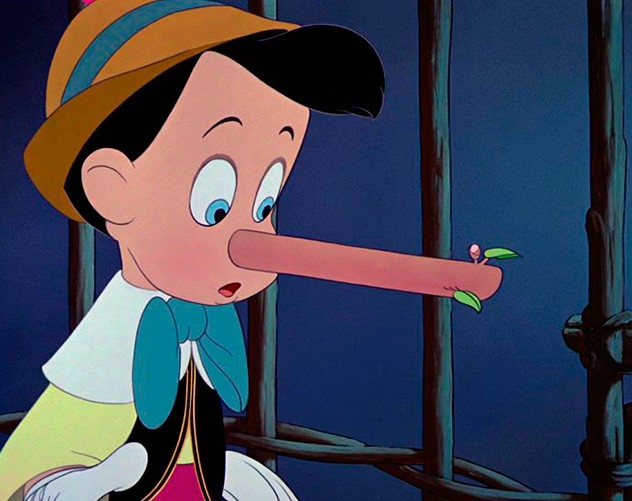
Not all fairy tales are equally useful. If you want to teach the child to tell the truth, then do not read him those works in which the negative consequences of lies are shown. Much more useful are those that show how good it is to tell the truth. Therefore, for example, reading “Pinocchio”, where every time Pinocchio lied, his nose grew up, worse than the fable of Leo Tolstoy “Truth is more expensive” and the Russian folk tale “Truth and Krivda” . This follows fromthe work carried out by a group of scientists of the University of Brock, McGill and Toronto, led by Can Li. 268 children in their intricate experiment took part in their intricate experiment. 3-7 years old, he looked like this, the experimenter and the child remained under the pretext that the book was left out of the room and at the same time asked for a child to turn away and not look at the toy that he returned on the table and hid one of the works. The following fairy tales:
"The boy who shouted:" Wolf! "." The young shepherd, bored, decided to check if the inhabitants of the village would come to his aid in case of danger, as promised. "Wolf! Wolf!" He shouted. The peasants rushed to the aid with pitchfork, but they did not find a wolf. The next day, the story repeated, but this time the inhabitants already abused the boy well. When the wolf really came, no one rushed to the screams, and the wolf fired the lamb into the forest. The shepherd rushed to the village. “Why didn't you come when I called you? He shouted. “The wolf dragged the sheep.” “And we did not believe you,” the peasants answered. “Now you have to work in the field to pay for the lost sheep” (Russian analogue - Tolstoy’s fable of “wolf” ). "George Washington and Cherry Tree." Once Little George, wanting to try a new knife, cut a cherry tree growing in the garden. When asked by his father, who did this, Washington honestly admitted his misconduct and asked for forgiveness. Father not only did not punish George, but even praised him for honesty (the Russian analogue is Tolstoy’s fable “truth is more expensive” ). During the experiment, they told the version of this fable with the negative consequences of lies ( George Washington, a negative version ). In the new story, Washington says a lie, and his father, having learned about this, takes the knife as a punishment. “Turtle and Hare” - the plot of this fable of Aesop is not important, since it was used as a control, that is, it was measured, reduced or increased by the frequency of lies in children of other works. “Turtle and Hare” is not about lies and truth, but about the competition between unequal rivals in which the turtle wins due to patience and hard work, and the hare loses due to negligence.
After reading the story of the child, they asked whether he spied or not (there was a hidden camera in the room). Only those who spied, but did not admit it were considered liars. As it turned out, only the story of George Washington and Cherry Tree was effective in reducing lies - the share of truthful children was about 50% compared to 32% of the control fable of the Turtle and the Hare.
Share of truthful children, % 
Source: Toronto University
You ask if this is important for raising children to study at least some economic significance? Of course, in a society of honest people, you can trust each other, and the level of trust in society increases the rate of economic growth.