
Translated material
Anatoly Nyman: Life without a prescription

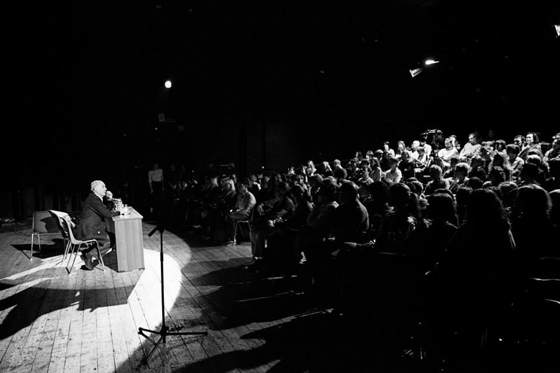
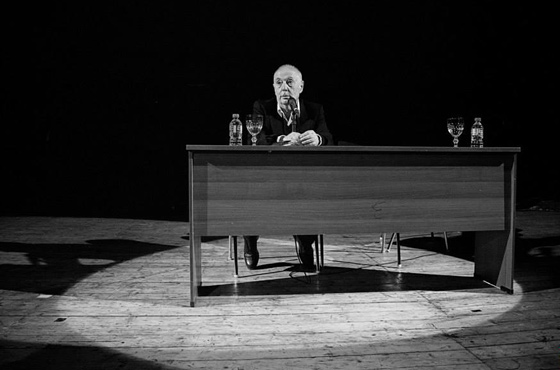
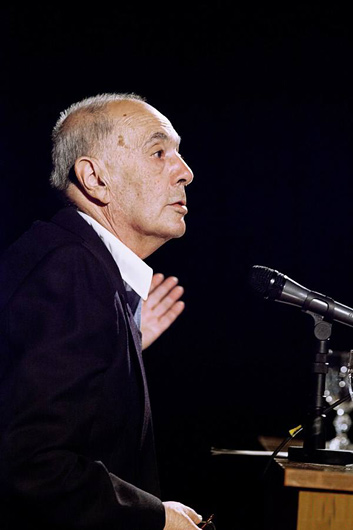
COLTA . RU continues to cooperate with the project of Katerina Gordeeva and Alexander Urzhanov “Open Lecture”, within the framework of which public performances of famous representatives of social, scientific and creative thought are held at the Gogol Center. The poet and writer Anatoly Nayman gave an “open lecture” on June 19. We publish fragments of his speech.
Lecture
When you read the course (and I had to do this), everything is in order with lectures: you read one today - and went. And all you need to read thirty. And you read them - how you roll from a slide. And when you give one lecture and you are also an old person ... It is quite difficult. The best lecture that I heard was read by a wonderful person, Prince Dmitry Petrovich Svyatopolk-Mirsky. He was one of the leading and most acute critics of Russia. He emigrated, the Marxist became abroad. The people who knew him said that he was completely painful on this Marxism. Then he was somehow more or less invited to Soviet Russia. He arrived, in 1937 he sat down and died in the camp in 1939.
So, once he was invited to Oxford to give a lecture on Pushkin. He had a wonderful English with a small Russian accent. He drank very much, came there completely drunk and in this form went to the public. And the rector of the university said: "Well, I give the word to Svyatopolk-Mirsky." And that ... it did not make any impression on him. He sat with his eyes closed, with his head drooping, and continued to sit. This lasted seven minutes, a very long time for the meeting. And then the rector asked: "Well, you don't want to start?"
I must say that for the British, for such an audience, especially the Oxford audience, this is not something supernatural-that a person is drunk. "Well, you don't want to start?" And he said with this accent with this: “ Pushkin IS for Russian Literature Just What Shakespeare IS for English " . He said, it means that Pushkin was as Shakespeare - and the finally wilted. And no one disturbed him in any way. We passed the next seven minutes, and then the rector said: "Well, let's thank." This is all very solemn, because he was like here the prince, so there was a prince, right? “Let's thank Prince Svyatopolk - Mirsky for this bright and wonderful lecture and we hope that this is not the last that will be more. ” This is what I consider with such a record of lecture.
Honestly, this is my second public lecture. The first was 20 years ago. In New York, I taught several semesters at different good American universities, and there-in particular, in NYU -the duty of such an invited Poet in Residence was a public lecture, which was quite easy to read, just one of the lectures on Russian poetry for the American, alien audience.
But she was remarkable too, because when I came up ... This is a separate two -story beautiful building on Washington Square . And I came up, there was our kind friend, a birthplace, such an Irena Grudzinskaya. She was a beauty even at that time, and in her youth is generally incredible. From any noticeable Russian, Soviet people-like Okudzhava-everyone was completely in love with her, wrote to her some poems and dedicated songs. And when she arrived in America, she had a wonderful train of fans. And next to her stood a very nice small one who, in Russian, turned to me with an accent and asked: “Will you read in Russian or in English?” I said that in English. He said: “Well, I don’t understand a word in English, but I still sit to the end, then let's go together. My name is Adam Mikhnik. " I said: "Wow, I heard about you." He said: “From Joseph. And I heard about you from Joseph. " And somehow all this immediately became comfortable. And then for two months he was there, and it was a continuous comfort. Here.
The fact is that what I'm going to say is no drawing. I really think that at all, none of us can say something to each other that another is unknown. For example, I have neither a worldview of some kind of suitable to share, nor sufficient knowledge and there is no irresistible, not to mention the tragic, impulse in order to speak.
There is a particular. We can tell each other some particular, which, well, can somehow revive the given topic. And all this has a single excuse. The most incredible, I think, on Earth a thing is two persons talking to each other. It is not the content of what they say to each other, but what they say . Very often the absolute nullity of the content - it only emphasizes this: here, in fact, everything you were born to.
I am not going to tell you and tell you any Maxim. It’s just that everything in the world of life - the brightest lives, the most Mozart, Shakespearean or Platonic - they are living in vain. I will explain it. What I say does not mean a pessimistic point of view at all. All of them are lived in vain, because there is no commandment more strong in the world than "be fruitful and multiply." She is the first, as we know from the Book of Genesis, she is immeasurably more powerful than all subsequent ones. But the most multi -common lives, and the most ascetic as a result come to the fact that here it is lived, this life, and is subject to oblivion.
There is a belief of people in life behind the coffin. I’m not talking about this, I'm talking about their earthly part, about what we can talk about and find some common basis for this conversation. So, these lives are subject to oblivion. But only the totality of the emptiness of the living and the phenomenon of the fact that you turned out to be alive-it is expressed in the fact that these two people that I mentioned about, something like this is muttering, something mutter, one listens, the other does not listen ... And this, in fact, creates our reality.
Nikolai Vasilievich and Nikolai Nikolaevich
The first thing I remembered when I was told that this lecture would take place at the Gogol Center is that in 1952 (and this is a centenary of Gogol’s death) we were led to this ... I was then in the ninth grade. In Leningrad, Manezhnaya Square is not like Manezhnaya Square in Moscow. This is such a small area, and it has a small squash, quite stunted. And a few trees that are green for very small time, with leaves. And a few bushes that you think all the time when you see that this is such a result of the recklessness of the previous summer. Generally speaking, without bushes it's all somehow better. And now they lead us there (this is a decent distance-well, I don’t know, 15 minutes), they are brought, and some adult uncles and Aunts say that, then, a monument to Gogol will be erected in this place.
Words are very inaudible to us. But we are already used to the fact that if there is an opportunity not to listen, it is better not to listen. March, very cold. You know, the Leningrad Mart-it is: either some kind of sun is not warm, then the chill is just penetrating. And now all this is told and then they say that the monument will be erected next year, and then: "You can go home." And I understand that I am in a wonderful gain, because this square goes on the caravan one side - and here is my house, here I live. That is, instead of going home from school myself, I am going home as if at the expense of school.
And the next year, about these days, Stalin dies. This is very much in such a Gogol spirit. Stalin dies, so there is no talk of any monument. And, then, then it passes for several years, and in the middle of the square they put a monument, also a very miserable one. He stands for many years, even a couple of decades, in my opinion. Then he disappears, and it is clear that Gogol is forgotten. Then Gogol is placed five quarters from this place. Well, such an ordinary, unsuccessful monument to Gogol, where he is keen, insightful, but even cannot be said that the writer, because in the monument this is not displayed in any way. Just a personality stands on a small stable. And with this square everything is completely forgotten.
Then it takes many years, and my friend, in the future, film director Ilya Averbakh, is fond of ... There are such waves that someone is fond of the emperor, you know? "O Emperor Emperor!" And there was another friend of our friend. And they all the time repeated: "Emperor Emperor." In general, the emperor is a continuous sovereign, and suddenly the father of this Ilya Averbach speaks for some dinner: "I saw your emperor." - "How?! I have been so many years ... Do you know that I am so ... How did you see him? " He says: “Well, I was 4 years old, I walked along the caravan, drove a car, and everyone said:“ The emperor, the emperor emperor ”.” - “So what? How is the Emperor the sovereign? " - “Well, how? The driver pressed the pear, and the Golden Horn played the tra-on. ” And somehow you can’t squeeze anything out of this: well, the horn played. And everyone was silent, experiencing this moment, and Averbach said: “Well, what to say? Sovereign Emperor. " To which his father said: “There, by the way, in this square there was a monument to Grand Duke Nikolai Nikolaevich in the middle. Well, then he was removed, this monument. ” Then I already asked: "In the center of the square?" He replied: "In the center of the square." And I realized that the monument to Gogol will never be there. If you remove the equestrian statue of Grand Duke Nikolai Nikolaevich, then Nikolai Vasilievich has nothing to do there.
 © Ira Polar / Gogol Center
School
I would like to talk about what a person’s life merges from. For me, all this from my school years somehow agreed in Pushkin’s poem “At the beginning of my life I remember school”. These impressions are the strongest, because the look is not yet dazzled. And then, over the years, after I met Akhmatova, the image of the heroine of this poem - “humble, dressed wretched, but a magnificent wife on a school supervision kept strictly” ... It was very similar. That is, not “very similar”, but simply one to one: my first feeling, the way I saw Akhmatov, and these lines of Pushkin.
Not to mention the fact that the school ... Remember, he says that he ran away "into the magnificent darkness of someone else's garden"? And there ... He describes the circuls and lira there, right? Circuls and lira, obviously Tsarskoye Selo such a landscape. He says: “The other two wonderful creatures attracted me with magical beauty: they were two demons of depiction. One (Delphic idol) face is young - he was angry, full of pride in terrible, and he breathed all the unearthly power. Another wife -like, voluptuous, dubious and deceitful ideal - a magical demon - is false, but beautiful. I forgot myself before them; A young heart was beating in his chest - the cold fled to me and the curl lifted. " And this, too, other, unsurpassed words conveys that nightmare atmosphere of our school, former Petershul. We were very proud of this: what is it so called. She was the first school in St. Petersburg. And then it hung on it that it was founded in 1703. In 1709, sorry. And then I went through this yard last year, and it was written there: 1756. It went somewhere.
It was a time of separate learning, and two of these demons - they reigned very much at school. For example, there were some kind of hands on their hands, which could now be called more or less pornographic. But then somehow this is all-one demon, the other demon-was formed in thought of its outstanding place in this life, in this reality, in this company. Since it was a central school, sometimes some funny events happened in it. Well, for example, they told everyone to tell everyone that everyone had collars is washed. Louis Aragon will come to school. Who is Louis Aragon? Someone knew, someone said to someone: "Louis Aragon will come."
And with us, since the school was old, there was such a wonderful recreational hall. A very large, spacious hall with large windows overlooking the yard. And behind, directly symmetrically, there were portraits of the same Gogol, Turgenev, Tolstoy and so on. Not Dostoevsky - there was no Dostoevsky.
And we are all in these collars of these squares, we are waiting for the arrival of Aragon. And it is already known that a student of the next class Misha Kozakov will say a welcome word to Aragon in French. Do you know these school affairs? Well, some share of mockery, some kind of fraction of solemnity. And everything is fine, except that there is no Misha Kozakov. His class stands, but he is not. And there is some kind of nervousness of teachers, director and so on. And then someone rushes to the window and says: "Arrived!" And indeed, we are all to these windows, and there there is some kind of “winter” below. The door opens and, apparently, Louis Aragon comes out, because it is clearly not our person. They open the back door, Misha Kozakov comes out of it, and he does not speak in any French. And in general, as it were, Misha Kozakov - Louis Aragon, and not Louis Aragon - Louis Aragon, do you understand?
And this ... Well, it would seem, insignificant excerpts from some big, another world-they were deposited in the soul and somehow began to act. I remembered this scene not only because of the joke that occurred, but ... well, you know, they say: French surrealism. Yes, I saw French surrealists, you know? Where? Yes, a French surrealist came to school.
Perfect age
The only standing human age that containing something in itself is something that you can lean on-it does not last long. This is an age when a person himself , when he is the one that is conceived. This youth, of course, even, I would say, youth: from 19 to about 26 years. And then ... Well, let's say, Lermontov dies at the age of 27. And then you hear: "Oh, if he lived longer, then what else would he write?" In general, my imagination does not work - I do not think that he would still write. He wrote everything completely that was necessary.
And, for example, Yuri Gagarin, who also flew at 27 years old, received such a charge in a completely different way, well, such an unprecedented experience. In any case, so this experience was built for him. If the rise of a hundred kilometers itself did something mean, then everything that followed this. He was 27, the same 27 years. And then he lived for another ten years, and drove around the world in cars, and somehow waved his hand there. And these were no years ... I see, for him, for his life it was some years. But for human formation, human development - no. And at the age of 37 he died, and if you take my point of view - that, say, 27 years Lermontov is a perfect period, then he lived an extra 10 years.
Some (and very many) live 60-70 extra years. During this time, nothing happens - this is already some processing of the age that you lived as you, as your name and surname. I say approximately, I don’t want to limit the deadlines at all, but at about that time you were what you were conceived.
Every person who comes into life is already waiting for some ready-made structure. She imperiously puts it in herself, and he, making a number of efforts, in this structure, in one way or another, fitting. And this applies at all, as I understand it, because depending on each of their acts, including some verbal statements, people then live life ... and, in fact, I consider this entrance to life the most important focus of the tragedy-because Hamlet can be of any age.
The tragedy begins with the fact that he is still a prince. Prince, I would even say, in such, perhaps, you know, the Jewish use of this word, “this is our prince”, right? Like a little boy - he lives like a prince with us, he is generally a prince with us, he is wonderful, he has curls, he has such general thoughts. He can be a prince at the age of 7, and he can be a prince at the age of 50 until what happened to his father. And then Hamlet Shakespearevsky is completely in this life without difficulty. And then he sees her: so, it turns out that she was like that. Before that, he was like an Indian prince, from whom they hid all evil on earth. And then he enters this life, sees what he needs to live with. And, of course, completely dies, well, because life is generally such a thing ... Dovlatov somewhere refers to Brodsky’s joke: “Have you noticed how it ends?”
Summer-Neva
In such a city as Leningrad, it is very difficult to behave outside its culture and history ... I don’t think that this is some kind of privilege-to be a Petersburger. In St. Petersburg, well, or in Leningrad then ... It is not so easy for me to abandon the word "Leningrad". I never lived in St. Petersburg - I lived only in Leningrad. In the middle of my life, I moved to Moscow, so for me, in my understanding, Leningrad was renamed to St. Petersburg, and did not return his name.
And these are not poetic and not random words of Mandelstam: "Live in St. Petersburg - like sleeping in a coffin." All Leningraders consciously or unconsciously have this complex, which is called another poet, Akhmatova, in the line "there, at the mouth of the lanet-none." That is, it is a city that all the time reminds of death. And this is not just such Dostoevskaya, heterogeneous, bureaucratic death, inconspicuous in this terrible Moloch-city. And this is a rather strange city if you are used to it and suddenly saw with new eyes. Because, for example, from the roof of the Trubetskoy bastion, from the Peter and Paul Fortress, when you look at this side of the city - it is low. And these are low houses ... The same Winter Palace - it is low compared to the width of the Neva. And then life, running to the shore of any river-the Neva in this case, is some kind of central one, as they spoke some time ago, life runs out as shore.
And the fact that in Leningrad a huge amount of water, rivers, rivers, channels is also forming a soul, forms a person’s personality in general. I had a year in Oxford. And my wife and my son went several times to such ... There was such a holy Russian, who lived on Athos, a monk Siluan. А келейником его был (впоследствии архимандрит) Сафроний Сахаров. Он был художник, он эмигрировал гораздо раньше. И в Англии, в Эссексе, он сделал такой монастырь... Как он говорил, «я не хотел ни русский монастырь, ни греческий монастырь, ни английский монастырь, я хотел православный монастырь сделать». Совершенно какое-то место, действительно… ну, если удастся сказать без пафоса слово «неземное», то это было какое-то неземное место. И ты туда ехал поездом, а с остановки тебя отвозили на такси до монастыря. Нас возила одна и та же женщина, хотя у вокзала всегда два-три такси стояло. Но она всегда почему-то была первая и поэтому ассоциировалась в моем сознании с таким анти-Хароном. Она везла из английской взбудораженной перенасыщенной жизни в какое-то место отдохновения.
И это не то чтобы выдуманная какая-то метафора — анти-Харон, да... «А почему вы так говорите?» — «А потому что я родился в Ленинграде».
 © Ира Полярная / Гоголь-центр
Советское
Я только при Ленине не жил. А при Сталине я был уже довольно взрослый человек, я кончал школу при Сталине. Ну и при всех остальных жил.
Единственное положительное, что я могу отметить в сталинском времени, — это что Сталин был привержен гимназической системе, и поэтому, собственно говоря, мы, учась в школе, застали еще какие-то опивки вот этой гимназической системы. Поэтому Бродский совершенно не прав, когда говорит: «Если бы Сталин читал Диккенса (и кого там он ему еще советовал читать), то он бы не был таким кровожадным». Я думаю, что у Сталина именно был пиетет к образованным людям, к писателям, к гимназиям.
Когда кончился советский режим, началась эта перестройка, и меня в каком-то интервью спросили: «Вот это плохо?» - "Badly". — «А в советское время было лучше?» Я сказал: «Вы знаете, в советское время было хуже всего». Я это говорю и сейчас. Знаю прекрасно, что советское время в сознании людей стало не только привлекательным, но даже желанным. Но кто бы ни был — Сталин, Хрущев, который, в общем, освободил людей из лагерей, Брежнев, — все равно что-то внутри в самой структуре такое делается, чему вождь соответствует. Поэтому у меня о советском времени... Но я уже сказал, я не буду это повторять.
Отец мой был толстовцем, причем настоящим. В Тайнинке, под Москвой, не доезжая Мытищ, была колония такая толстовская, он там был — и сохранил какой-то подход к жизни такой, толстовский. Не то чтобы часто очень я его видел. Но, например, в 14 лет на лето нам задали прочесть «Войну и мир», я прочитал в 14 лет «Войну и мир» очень внимательно и подробно и наконец пришел и сказал: «Я сегодня кончил “Войну и мир”». Он сказал: «Ну и что? Стал ты лучше?» И через много-много лет я это вспомнил в разговоре с одним очень... Ну, такой довольно замечательный ум был — Исайя Берлин. Я ему рассказал этот случай, и он сказал: «Ваш отец совершенно прав. Он сказал главное, к чему такие книги, как “Война и мир”, и вообще замечательные книги могут привести. Не должны, но могут привести».
Еще Ленинград
Чтобы не создалось такое впечатление, что Ленинград — это что-то такое, что просто Версаль там... Я жил на этой Караванной, и дом наш назывался на старых планах «Дворец князя Кочубея». Он был в четырех домах от Невского. Но жили мы в полуподвале. У нас была маленькая квартира, но отдельная, и мы жили в полуподвале. Это и есть Ленинград: полуподвал, сырые стены, темнота, крысы на кухне без окон и дворец князя Кочубея.
Зато в следующем доме жила какая-то пара неземная. Это были муж и жена, балерун и балерина, Сергеев и Дудинская. И вот, в самом деле, для мальчика… я выходил из дома и смотрел, как они идут к автомобилю «Победа». И они как-то шли, не касаясь земли, и я понимал, что где-то есть и такого рода жизнь. И не знал, что я живу через Фонтанку, ровно напротив Фонтанного дома, Шереметевского дворца, история которого так грандиозна и в котором в то время доживала свой вот этот фонтаннодомный период Ахматова.
То место, на котором отец Авербаха увидел государя императора, называлось в советское время «кинотеатр “Родина”», и там же находился Дом кино ленинградский. Но это был один из самых первых кинотеатров в Петербурге, и он назывался Splendid Palace . И вот это все время такая двойственность. Мы идем. А куда мы идем? Мы идем в «Родину» или в Splendid Palace ? Do you understand? Мы все время немножко притворяемся. Вообще ленинградцы — это тоже то, что сказал Достоевский: самый вымышленный город. Это действительно так, ты все время живешь в двух реальностях.
Так же, как, скажем, Моховая, на которой... Это рядом улица, где Авербах жил (не буду углубляться), там был известный пивной ларек, о котором написал Довлатов, помните, да? У него там спор из-за очереди, люди, собравшиеся около этого синего ларька такого, и один говорит: «Я занимал за царем». А Довлатова взяли на роль царя Петра. Помните? «Я занимал за царем. А перед царем стоял вот этот...» Ну и так далее. То есть мы все время немножко... Это и есть Ленинград: пивной ларек и царь, понимаете?
Ахматова
В объявлении насчет вот этого моего выступления я прочитал о себе: он был литературным секретарем Анны Ахматовой. Я не против быть литературным секретарем Анны Ахматовой. Я действительно исполнял какие-то жалкие обязанности ее литературного секретаря. Но на самом деле это занимало минут 15 в день максимум. Ну, что-то перепечатать на машинке, иногда больше, иногда ничего совершенно, никакого времени не занимало.
Моя жизнь никак, ну, или почти никак не связана с моим семилетним близким и доверительным знакомством с Ахматовой. Но я думаю, что гораздо больше я бы потратил сил на то, чтобы говорить: «Нет, я не литературный секретарь Ахматовой, я такой-то и такой-то». Результат был бы ничтожный по сравнению с тем, чтобы просто принять это. Ну, да-да-да, литературный секретарь Ахматовой.
Немножко это мне напоминает, знаете, когда в Америке приглашают в гости, скажем, за 100—200 миль и говорят: «Мы сейчас вам дадим directions , как ехать, с какой дороги на какую». Поэтому «литературный секретарь Ахматовой» для меня звучит как такой direction к той точке, где находится Анатолий Найман. Но уж раз мы этого коснулись и раз уж я сказал, что «смиренная, одетая убого, над школою надзор хранила строго», — скажу, что никакой школы не было. Мы действительно очень... Я думаю, я могу сказать «мы». Мы очень много получили от нее, но она учителем никогда не была. Влияние какое-то (и очень большое) она на нас, когда была жива, оказывала, но ни в коем случае не в поэзии, а в том, что — вот возможно так прожить жизнь...
Я на секунду прерву сам себя. Знаете, есть несколько книг на свете, которые рассказывают о жизни в условиях, где жизни быть не может. Ну, я приведу такой пример, как Шаламов. Шаламов пишет о том, что там. Что в этом невозможно жить. Не то чтобы выжить — это отдельно, а просто жить невозможно. Там даже звери жить не могут, потому что, ну, например, они питаются лиственничной хвоей, эти заключенные, а ведь она существует только зимой. Зимой даже нет того зверья, которое может это есть, не говоря уже о насекомых. Ну, или Генри Миллер, «Тропик Рака». Это тоже жизнь происходит там, где не может быть жизни. И вот сама живая ахматовская фигура была доказательством: что можно, оказывается, жить вот в том испанском сапоге, который охватывает твое тело — и это продолжается больше 50 лет. Можно жить при советской власти. И что можно выжить. Что против нее, как сейчас говорят, силовики, против нее армия и флот, против нее все... А она как такая галька, которая лежит на берегу, об нее как-то водичка разбивается, и с ней ничего не делается. Действительно, этому она, насколько возможно, как-то каждого из нас научила. Во всяком случае, Бобышева, Бродского и меня.
 © Ира Полярная / Гоголь-центр
Chemistry
Надо сказать, что самое сильное впечатление школьное было от учительницы химии. Это была такая невероятно красивая... Невероятно страстная, красивая личность. К ней иногда приходили... мы учились, например, в 7-м классе, а приходили те, которые учились уже в институте на втором-третьем курсе. Это были ее ученики, и это при них произошли Хиросима и Нагасаки. И это у нее они тогда в школе спрашивали ответа на этот вопрос... Хотели знать: как к этому отнестись вообще, что случилось с миром? Мы смотрели на них как на каких-то небожителей. Они все почему-то играли в баскетбол. У нас школа была баскетбольная, они играли все за команду ЛЭТИ в баскетбол. Они были высокие, казались красивыми невероятно, и они приходили и говорили, как бы собою говорили: «Вот каковы могут быть выпускники этой вонючей школы».
Она была женою директора Русского музея. В то время была очень популярна книга Фейхтвангера «Гойя». И так как-то за глаза я думал о ней... Знаете, у Гойи там есть «Маха одетая». Есть такая «Маха одетая», в отличие от «Махи обнаженной»... И поэтому я очень увлекался химией и в конце концов попал в Технологический институт. И там я встретился с Бобышевым и Рейном, которые там учились. Они совершенные мои ровесники.
Понимаете, ну, уже после первого курса, к концу первого курса ты понимаешь, что никакая химия... Вообще что нету никакой химии. Или наоборот, как у Зощенко священник: ему бабушка говорит, что вот — внук говорит, что Бога нет, а есть химия, и он ей: «Да не слушай ты его». А в конце, когда она собирается уходить, он вдруг говорит: «А может, и правда есть химия».
Так вот, лет в 18 я впервые отнесся к писанию стихов как к чему-то, не только мне принадлежащему, как к чему-то, данному извне. И это, собственно говоря, мою жизнь и сделало. А не химия. Вдруг ты понимаешь в конце первого курса, что никакой химии нет, но есть поэзия, да? Вот вы трое, еще там какие-то компании. А поэзия — это совершенно замечательный тоже феномен. Он никогда не находится в покое. Его никогда нельзя описать, нельзя сказать, где в данную секунду она тебя держит, эта поэзия. Потому что она все время тебя поднимает, потом куда-то, в довольно кошмарные места, тычет носом, и все это все время перемещается. В то время как... Ну, чтобы показать, о чем я говорю: в то время как молитва, которая тоже состоит из слов, тоже словесность своего рода, да? — молитва — она очень точную расстановку имеет: ты внизу, оно наверху. И это не меняется. Это не меняется никак. А поэзия — она такая вот подвижная.
Afghan
То, что было где-то написано по поводу вот этой нашей встречи, — что Найман был всегда в нужных местах в нужное время — это... Ну, с одной стороны, это действительно так. Когда я возвращался откуда-то из города домой и рассказывал про то, что в автобусе случилось, жена говорила: «Ну в чем дело? Почему мы ездим в автобусе — и ничего не случается?» А там я ехал зимой в автобусе, и какой-то страшно замерзший мужичок такой вдруг тоненьким голосом стал кричать: «За Родину! За Сталина! Forward!" И всем как-то это было тягостно, потому что холодно, потому что тесно, потому что неуместно. И когда он дошел до какого-то парня молодого, тот ему сказал: мол, закрой рот. А он на это: «За Родину! За Сталина! Forward!" Тот ему: «Я — афганец». А этот: «Ой, намучаесся ты со мной, афганец. Ой, намучаесся».
Действительно, почему-то именно рядом со мной какие-то такие вещи случаются. В этом смысле — да, я был в нужное время в нужном месте. Гораздо слабее это продолжается и сейчас — хотя бы потому, что там, где я раньше ездил на автобусе, я езжу на машине, а в машине никаких афганцев, никого.
Лирник
У меня был год, когда я был приглашен в Оксфорд. И год прожил там, жил баснословной жизнью без обязанностей, в общем, в каких-то старинных зданиях, в каких-то кабинетах, мантиях каких-то.
И там к одной из оксфордчанок приехал муж с маленького греческого острова. Он был лирник, он делал лиры. И он подошел... Видимо, что-то она ему сказала, вот из России там, пятое-десятое. И он подошел и сказал: «Хотите, я вас научу танцевать сиртаки?» И я сказал: «Ну, как там? Давайте попробуем». И он...
В общем, там есть шаг и шаг, два шага и шаг. Я дошел до шаг и шаг, больше я продвинуться не мог. И он сказал: «Мне говорили, вы пишете стихи?» Я: «Ну да». Он: «А зачем?» Я говорю: «Ну, не то чтобы я так пристаю к людям. Просто так пишутся и пишутся». Он говорит: «Ну все же, понимаете, неприятно, когда что-то остается. Потому что мы сейчас с вами вот эти сделали несколько шагов — и нет этого. Вот это и есть искусство, чтобы не было его. Знаете, я...» Он оказался на этом маленьком острове, он делал лиры, настоящие лиры. Там большой очень спрос — у туристов огромный спрос на лиры, ну и местные чего-то тренькают тоже там. И он как-то сказал: «Ну, надо, чтобы искусство было вот такое, как мы сейчас. Вот мы с вами протанцевали — и нет его». С тех пор прошло уже больше 20 лет, я очень помню этот момент, очень помню.
Я хотел бы на этом закончить.