
Translated material
Vyacheslav Samodurov: "Reformatting of the troupe and viewer - this is my goal"
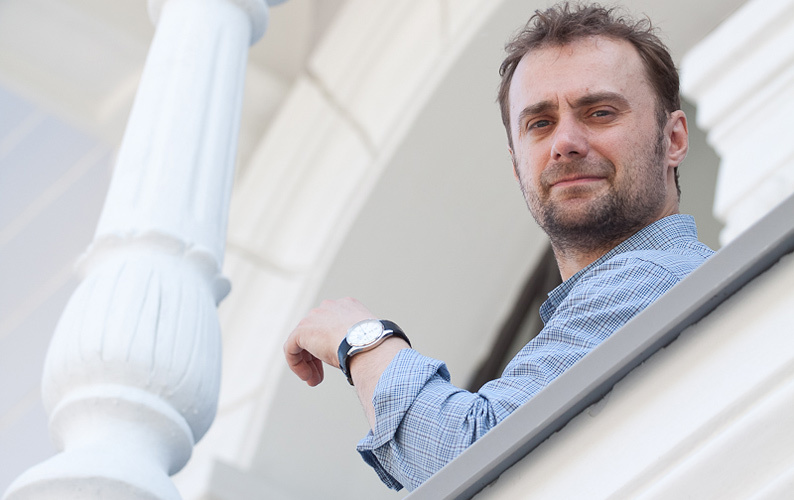
Colta.ru continues a series of materials summing up the results of the theater season-2013/2014. At the request of the editors of Larisa Barykin, she talked with the obvious triumph of the ballet season - the Khudruk of the Yekaterinburg Ballet and the Golden Mask laureate - 2014 by the choreographer Vyacheslav Samodurov, who had just released the prime minister of the Florodelikiy -headed troupe.
About the premiere
- The modern ballet theater is characterized by two types of performances: “full -length” plot and one -act plot, large and small shapes. In “Fillingizer”, consisting of three monitoring the music of Tchaikovsky (“Mozartian”), Pyurt ( perpetuum mobile and fratres ) and a bullet (“rural concert”), you seem to try to create a kind of hybrid: on the one hand, get away from the narrative, from telling the plot, Story , but at the same time build a trochac The performance as an extended and conceptually integral statement. Wasn't that the main task of your new work?
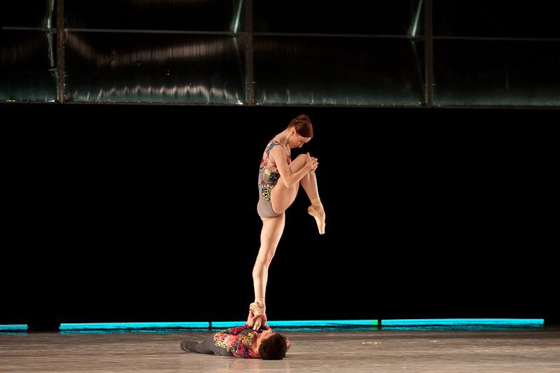
- Not in an eyebrow, but in the eye. A multi -act plot ballet and a plowing one -act - these are two main vectors of ballet development today. Despite the fact that before I staged two plot performances in Yekaterinburg, one is less successful, the other is more, narrative in the ballet does not seduce me much. When the curtain rises and I see the beginning of the “story”, I often lose interest. And it does not matter how modern the scenery, design, music and theatrical language are - all this is somehow blind with the help of the same ancient egg solution. I need not a storyline, but a choreographic one. The idea with the “color scheme” was impudent and risky: making in Eburg it is not just an evening of ballet from different single -asses, but a single triptych. Without love, betrayal and other plot undergrounds. I had a desire to make a performance that would take the audience on a trip and after it she would leave the hall of another. This is an escape from today, an escape to irreal, to romanticism, mysticism, game element. This is almost a fairy tale, but instead of “three piglets,” I wanted to talk about the relationship of two people. Irrationally, I feel that I tried to answer the request of time.
- It seems to me that the “color scheme” has become an argument in favor of a large ballet form, the crisis of which we have been observed everywhere in recent years. Of course, conceptually compiled programs of one -act ballets appeared earlier, but they were usually performances of different authors. Will you continue to work in this direction?
- I would really like to develop this particular ballet form. I could be mistaken, but the reaction of the public was super -positive.
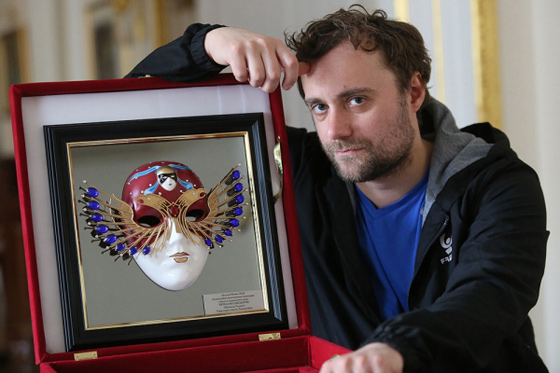 © Tanya Andreeva
About the profession
- What do you usually feel after the premiere?
- A simple question that is almost impossible to answer. It seems to me that no one can be completely satisfied with his work. Reveling in your own work is not my case. For me, the main thing is when artists give out one hundred percent quality or something close to this. The artist is the medium with which the choreographer communicates with the public. So after the premiere - joy, disappointment, and devastation - all in one evening.
- And when does the desire to start the next work arise?
- Sometimes immediately at the end of the production of the last tacts of the ballet you are working here and now. The performance has not yet been released, to the premiere still rehearse and rehearse, and you are ready to start setting the next ballet.
- How can you describe your staged process? You come to a class with ready -made text in your head or improvise, starting from the psychophysics of specific artists ...
- And so, and such. You come to the hall with the idea and vector of development. In any case, the first movement for the impulse has always been invented. Previously, I more often came with the finished text, but now it’s more interesting for me to search directly in the hall: it is more unpredictable, more dependent on the artists, since they need to respond faster to the proposed ideas. Sometimes the result surprises you yourself - it happens, and with a minus sign. But in all this there is more life.
- What serves as the main impulse for you as a choreographer?
- Music. In general - a sound series, background, rhythm, anything. Music for me is the main catalyst. I’m listening for a long time, I’m listening to me, and a specific performing interpretation is important to me (for example, the pulse of the Ballet “Minor Sonates” (Mikhailovsky Theater, 2010) was the record of the clavier sonata of Domenico Scarlatti performed by Ivo Porkopolych. - Ed. ). For me, dance is a dialogue with music. My preferences? In principle, I am omnivorous. Our views on music are changing with ourselves. Isn't it?
- Probably, there are authors whose music you will definitely never put?
-As soon as you say that you will not do something, this will happen to you right away. More recently, I told you in a conversation that I did not perceive Tchaikovsky’s music, and now, you see, a ballet on his “Mozartian” has been put - although this suite with a double bottom is not quite a Tchaikovsky ... Today, I am probably absolutely alien to Rachmanins - with his “vast sea of melodies”, his pathos ...
- Why now practically does not appear new music in ballet?
- Partly the issue of office work: the production of ballet is already a long process, and if a new score is already written, you need to throw another year. It is much easier to take ready and know what you are dealing with than to give your fate in the hands of the unknown, to depend on many factors ...
I understand that in every house there is old furniture: it can be stored, but no need to block the passages.
- In the history of the ballet, we know at least two examples of creative tandems that were not afraid of dependence on each other: Tchaikovsky - Petip and Stravinsky - Balanchin. Or is the very idea of joint creativity for you?
- The library of already written music is sufficiently rich. But I am open to co -creation.
- What do you think is the deficit of choreographers that exist today in Russia?
- Let's clarify: choreographers of academic ballet, carrying out their work in professional troupes. Despite the repertoire of the last 15 years, when the most famous theaters have mastered a wide western repertoire, the most part of the country both lived and live in isolation, washes in endless versions “Swan Lakes”, “Nutcrackers” and “Bayadarok”. There is no such degree of blindness in any other genre. No one denies the greatness of these textbook things, but over a hundred years that have passed since their creation, the world ballet offered an infinite variety of choreography. And such a cult of classics that exists in our country is able to poison everyone and everyone, and it is clear that young people are running from this ...
- Who is running and where? I do not see a large number of "apostates" ...
- Choreographers run towards modern, Contemporary Dance ... Modern ballet may not give them enough relevance, humanism. And it is much easier to prove yourself in the underground - the academic ballet scene is more demanding on all parameters, I am completely convinced of this. The second and most importantly - where do they, in fact, work? Who invites them to productions? Young choreographers have nowhere to try themselves.
-That is why, having not worked in Yekaterinburg and the year, you organized the Dance -Platform, a kind of startup for young choreographers, and, I must say, so many this initiative was amazed. In the eyes of the public, you yourself were a young, novice choreographer - and, instead of engaging in yourself, loved ones, you began to take care of others ...
-“ Dance -Platform” corresponded to the large number of my requests at that time: working with the audience, recruiting like -minded people ... and, of course, the upbringing of artists. Several young choreographers come to the theater, sixty percent of the troupe begins intensive work, it is possible to prove themselves in solo numbers - creative libido increases in people elementary. All the ambitions of the troupe are directed to one goal, a kind of joint egocentrism is generated. And most importantly, of course, the help of choreographers. Yekaterinburg will definitely go down in history as a place where the creative biography of many choreographers began. From the first “platform” we did not know what to wait - it was a roulette, but Konstantin Keichel, Vladimir Barnava, who are now not just actively working, but in the near future will determine the face of Russian choreography.
- Is such a choreographic city of Kitezh loaming for this, is it not to dream of Yekaterinburg to the glory of the capital of the Russian Contemporary Dance to add the status of the Ural Stuttgart?
- It is interesting that Kranko, not being such a strong choreographer, managed to give an impetus to the appearance of Neumayer, Kilian, Forsyte. But not a single person can explain articulate that there was special in the Stuttgart of those years. Living in Yekaterinburg, not in my dear city, I would like to have as many creative people around as possible here.
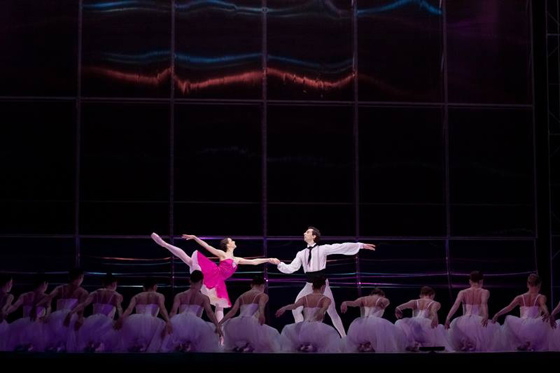 "Colorbodge"
About ballet
- Let's talk about ballet as such. By the way, what do you mean by the concept of "modern ballet"?
- “Modern Dance”, “Modern Ballet”, Art Nouveau, Contemporary , Neoclassica ... There are a lot of confusion, but terminology issues do not really bother me. Sorry, but this is rather your headache as a theatrical critic. As a choreographer, I am interested in women's dance on pointe and male athleticism in a classic ballet ... It seems to me that the time has come for choreographers working in the academic sphere with large classic troupes. For some time it was considered ashamed to put in a classic manner, everything was supposed to be shifted somewhere to the side and upstairs. Today there was a revaluation: a vertical is returning, it is necessary to be able to play with it, it can be destroyed, taken into balance and returned back. I now have the process of a new knowledge of the language of classical dance and desire, as in playing a cube of the Rubik, to rebuild it again.
- That is, you feel better in the framework of the canon than in free space, when there are no prohibitions and restrictions?
- There are restrictions always and everywhere. When you put it-you are already limited: the troupe, its capabilities, the number of people, the scene parameters ... I got out of the Vaganov school, re-healed a bunch of ballet parties in the best giant troupes. Why should I change my passport? Why run from what I know so well?
- What do you see the origins of conservatism of domestic ballet?
- It's hard to say. Russian classics are always the lack of problems with Box Office : the stars adore, the audience is satisfied, even if the performances are shown in a castrated tour. But in Europe it is believed that art should develop and each production should bring something new, and not be a museum object. These are just two different mentality - we and them.
- Yes, we love not so much to meet with the new one as to learn the old and endlessly nostalgic. But how exactly we love the classics is also a plot for conversation ... When I am sitting on some next gala concert and I understand that a thousand people in the hall are waiting for Fuete, and before that, some sophisticated male jumps, I feel like a stranger to the life of jubilant balletomanians. I love the ballet not for this, but today it is precisely the technique and the trick ...
“You're right, but not everything is so sad.” Would you remember what numbers were especially applauded loudly on our last gala concert with the participation of world stars?
- Those in which there was the most interesting, sophisticated choreography! But after all, in Yekaterinburg it became possible in the third year of the existence of such projects ...
-If every day a person is fed by some burger king, then he will get used to eating fast food. The experience of the London royal ballet is important to me: they make a gala concert once a year, and it never turns into a demonstration of tricks. Nobody canceled the skill of artists, but choreography is, first of all, including the new one. In general, we can look at ballet conservatism differently. Ballet is one of the few types of art that did not chase sociality and relevance. The classic ballet began to develop in the direction of abstract art, whose heyday happened only in the 20th century.
“Do you mean the“ White Ballet ”of Petipa and everything that followed him?”
- Yes, this is a pure example of abstract art. And there is no need to plop here all kinds of “spirituality”, it is not there: there is an art form, an abstract drawing of choreography, and the smaller the ballerina builds the “corn with a house”, the better. The ballet told the world about something very important before everyone else.
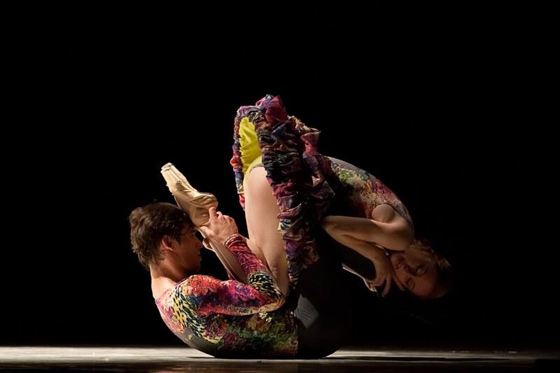 "Colorbodge"
About Yekaterinburg
- Three years ago, after St. Petersburg, Amsterdam, London and Berlin, you suddenly ended up in Yekaterinburg. What was the main disappointment for you here - and what, on the contrary, a pleasant surprise?
- For me, a cold shower for me in this theater was the concept of the final point, the idea of which direction we move and where we should arrive. I can be mistaken, but the limit of the dreams of provincial theaters usually looks as follows: let's need as many classic ballets with painted decorations (which will be mint and worn out for the year of operation and storage) and add performing quality. For the acuteness of sensations, add something to Grigorovich or Jacobson-and that’s all. Of course, this diverges with my ideas about how the modern ballet troupe should develop. But there was a huge plus: Yekaterinburg artists are deprived of snobbery, they understand that they have where to strive and what to achieve. This is the lack of a protective wall, their openness is a great thing, the foundation on which you can build a new theater.
- Did you manage to find like -minded people not only among artists?
- Ballet artists turned out to be the most susceptible part of the entire theater - even by the flexibility of thinking. Of course, gradually appeared those who are interested in high -quality movement forward, but in general the theater is not without inert people. I would like to move faster. I understand that in every house there is old furniture: it can be stored, but no need to block the passages.
-After all, you had to say goodbye to one of the favorites of the local public?
- This is an inevitable process. Every year, all the troupe of the world are significantly updated. The leader chooses his artists, just as they choose their leader. Changes are normal.
- This season you released the premiere in the royal ballet of Flanders. How often do you need to work not with your own troupe, but with third -party theaters?
- I repeat: I like changes, they are always useful. In one place you begin to get used to it, the eye is blurred, you think that everything is o'key. You return - but no! On the contrary, however, it also happens - although, of course, less often. But more recently, I suddenly realized that I like to sit here in Yekaterinburg, in one place, it stimulates me as a choreographer. And not only because you know the artists well, but they are you: if you work with the same troupe and you have a conscience, you try not to repeat yourself. And if you are also art, then I must think about giving work to soloists, luminaries, cor debalet to develop ...
- The first time I hear this: usually what is considered a burden, burden, - the duties of the head of the troupe - for you, it turns out, serves as an incentive?
- Yes! And then after the premiere you get high not only from your choreography, but also from how great artists work.
- Is this your main conclusion after three seasons of work in Yekaterinburg?
- More recently, during the stage rehearsal of “Fillingizer”, I thought: how good it is when there is a place where you can carry out such large -scale projects when there is an understanding from the artists and from the leadership of the theater.
- And you yourself - what leader? You happened to work with a variety of ballet directors ...
-Mahar Vasiev in Mariinka, Monica Mason in Covent Garden and Wayne Eling in the Dutch ballet were completely different from each other, but everyone got a lot from their wards. What I appreciate in these people is their vision of ballet as a finished system. For me, the ballet director should be different - this is a collective image. Do not laugh, but you need to be an ideological leader. Understand what is the meaning of everything that is happening in the theater - and this is the main thing. And you can achieve quality work from artists with different methods. Although, of course, the question of the style of my leadership should be addressed rather not to me, but to the Yekaterinburg dancers.
 "Colorbodge"
About success
- Did you expect such an incredible success that happened to the Yekaterinburg ballet on the last Golden Mask?
- It was, let's say, a pleasant surprise.
- After the show of “ Salieri variations ” on the Golden Mask, the patriarch of ballet critic, Vadim Moiseevich Gaevsky told you (and us!) The following: “Such an event happens several times in your life - when you understand that you are present at the birth of a new choreographer. I am very glad that I saw it ... ”How do this episode and spilled on you and the troupe of the“ golden masks ”are relate to you and the troupe?
- Official success is important not only for me, but also for the theater, for the troupe, for my relationship with artists. A personal conversation is something else, much more intimate and deep. She gave a lot of effort. Успех карьерный и успех — признание людей, которых ты уважаешь, — вещи одинаково важные, но все-таки лежащие в несколько разных плоскостях.
— А много ли у тебя людей, чьим мнением ты дорожишь?
— Их не может быть много. But they are.
— В прошлогоднем интервью COLTA.RU ты говорил, что тебе очень дорога екатеринбургская труппа и что ты бы хотел «довести здесь дело до конца». Что именно ты имел тогда в виду?
— Переформатирование труппы и зрителя — вот моя цель.
— А можешь очертить контуры того театра, который тебе хотелось соорудить?
— Что такое настоящая классическая труппа? Это чистота кордебалета, техничность танцовщиков, эстетическая цельность и универсальность труппы как таковой. Таких трупп мало. Чтобы пересчитать их, достаточно пальцев одной руки. По-настоящему, без скидок, русскую классику могут танцевать только два театра: Мариинский и Большой. Все прочее в силу объективных причин есть и всегда будет более, а чаще менее удачной копией. Поэтому важна эксклюзивность репертуара, чтобы театры не походили на, условно говоря, сеть «Шоколадница». Прелесть и сложность работы в Екатеринбурге в том и заключается, что нужно переубедить довольно большое количество людей, заразить их новой идеей — именно это и дает энергию…