
Translated material
Housing and communal services: cook sledges in the summer
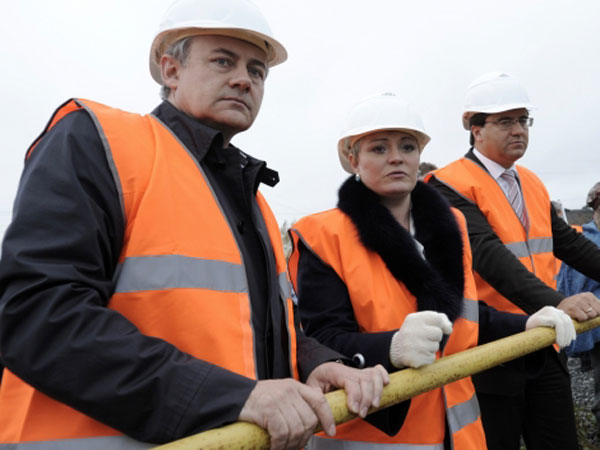
The problems of housing and communal services have a very strong resonance in the northern regions. There, due to low temperatures in winter and the long heating season, the reliability of heating and energy supply systems is especially important. At the same time, the costs of heating and electric and water supply are high, which requires constant optimization, so that the population is provided with everything necessary. Cases are indicative when, for example, in the Murmansk region, energy companies could not cope with these tasks, as a result of which tariffs for water and electricity unexpectedly grew ten times, which caused great alarm among the population. As a result, the matter came to the intervention of the regional authorities and the removal of directors of companies from office. There were cases of problems with the distribution of the budget of energy companies, when employees stopped paying salaries or companies lacked funds to fulfill certain tasks. The authorities, for their part, are taken into account, and preparations for the new heating season have already begun, since during the summer it is necessary to carry out preventive work and update the equipment.
So, in the Murmansk region, the preparation of housing and communal services, which are subordinate to the Russian Ministry of Defense, is carried out in constant cooperation with the regional authorities. After the incidents in the past, the acting governor of the region Marina Kovtun promised to modernize heating and energy supplying systems, as well as to strengthen control over management companies, so that in the future there were no similar cases. Representatives of the Ministry of Defense, as well as employees from municipalities and resource -supplying companies, take part in the preparation for the heating season.
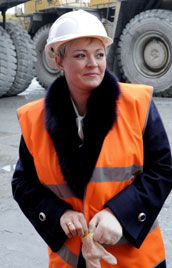 Marina Kovtun
About 380 million rubles were allocated for large -scale repair work in boiler rooms in the region. In addition, a comprehensive repair of energy supply facilities will be carried out, as well as an emergency supply of equipment and materials. Finally, the overhaul of residential buildings that need it is planned. An important condition for successful planning and completing the tasks is cooperation between all responsible participants in the process. At the end of June, Marina Kovtun expressed the opinion that this was achieved. “We have achieved such interaction,” the official regional governor's portal reports her words. - Today we see that there is a direct dialogue. In those issues where the heads of municipalities express fair concern, the Ministry of Defense perceives this, its representatives are ready to work pointily for each such object. This gives confidence that by the beginning of the heating season, all municipal entities will receive a readiness passport-last year some municipalities did not receive them due to the unpreparedness of housing and communal services of the Ministry of Defense. Both civilian and military people must live in comfort and warmth. And in order for this to happen, Sani, as they say, must be prepared in the summer. ”
There is another condition for success. In order for it not to be one, the sphere of housing and communal services needs constant optimization, which would increase the efficiency of resource distribution and reduce costs. This already requires research and investments. Note that the process of modernization in the Murmansk region is now developing very energetically and largely. Work is underway on the development of the Murmansk transport hub, clusters (public-private partnerships) are created on the basis of local institutions, designed to increase the investment attractiveness of the region and, accordingly, the level of its well-being.
Housing and communal services - a traditional source of problems, expenses and losses for almost all cities without exception of our country and the world as a whole. The modernization of housing and communal services is an extremely important aspect of the modern economy, and the authorities, in particular, neighboring Murmansk northern countries are betting on innovative projects in the housing and communal services.
Dogging housing and communal services and innovation into a single efficient mechanism is not an easy task. Unlike industry, which is no less acutely in need of modern developments and non -standard approaches, utility suppliers most often do not even have minimal means for investing in such projects.
As one of the most striking examples of effective optimization of heat supply, they often talk about Sweden. In the early 1990s. There was a course to optimize the energy consumption of heating. For this, experimental projects were introduced in different cities designed to test this or that technology for effectiveness. So, for example, in the city of Veashtesh, the volume of fuel consumption in the period from 1993 to 2006. decreased by 30% with the prospect of further reduction. Large -scale experiments were also conducted in some areas of Stockholm. For example, such sources of heat energy as specially grown bioenergy resources (in particular, wood), solar energy, fuel elements, windmills, and the energy of the ocean waves were used.
In general, Sweden is characterized by a wide variety of heating systems. Partly the choice of the type of heating depends on the possibilities and preferences of the residents. So, for example, direct electric heating is technically convenient, but it is expensive, so it is not popular. However, some houses are equipped with oil or water batteries working on electricity. Gas heating can only be found in large cities, and even there this format is not popular, since there are cheaper and effective sources. Gradually, this type of heating systems die out. The same applies to central heating on oil. Due to the instability of prices for this raw materials and the high cost of servicing objects of such systems, they are becoming less and less. In rural areas, wood is often used as a heat source. This is cheap, but requires a large time to workpiece. In addition, the owners of houses with this type of heating should have specially area for storing a large stock of firewood.
Granuls from biosyuria are considered much more convenient, which are used for both central heating and heating individual houses. The disadvantage is that this heating method requires regular (at least once a month) equipment cleaning. In addition, fuel is consumed quickly and, accordingly, a lot of space for storage of reserves is required.
It is worth noting that Sweden from all European countries is closest to Russia in terms of the central heating system. At least 80% of apartments are connected to it. Currently, the predominant scheme for heat energy in Sweden is the burning of various kinds of garbage, or the so -called solid household waste (solid waste). For one heating season, about two million tons of solid waste go. The same way is a significant amount of electricity. Now the 47% of the Swedish central heating system operates on renewable bioenergy resources (solid types of biofuels (for example, chips, granules or fuel briquettes made of wood, beams or straw). 16% are provided by household waste processing plants, 7% are per share of thermal (primarily geothermal) pumps and 6% - per share - per share. The rest is still provided with non -renewal resources in the form of oil, natural gas and coal.
The Swedish authorities strive to ensure that the country generally ceases to need non -renewable natural resources and gained complete energy -dependence. There is a special commission for the development of the strategy of exemption from oil dependence. Now a thorough base is being prepared for this. First of all, this consists in the separate collection of different types of waste (in particular, houses are equipped with several special garbage chips). This is necessary for the initial distribution of waste for different types of processing and acceleration of the corresponding processes. What is characteristic, at the moment, Sweden does not provide itself with this fuel. To produce an appropriate amount of energy, you have to import waste from neighboring European countries, where they are traditionally buried in the ground.