
Translated material
"These expenses will be transferred to viewers"
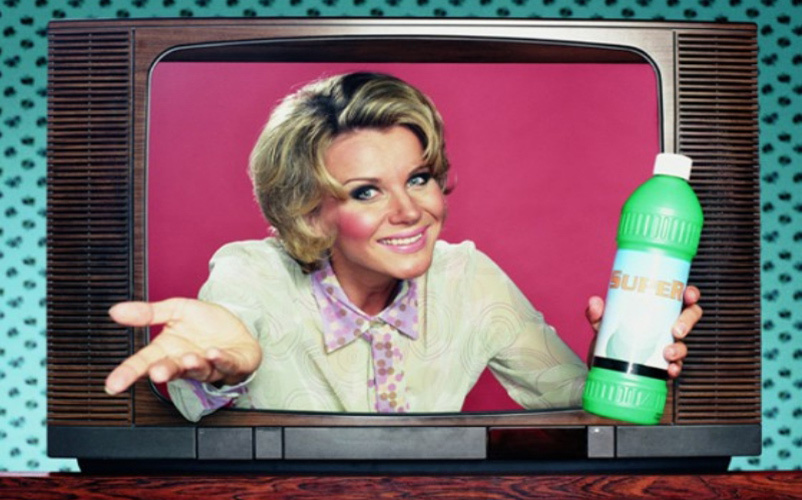
Today, the Federation Council approved the amendments to the law on advertising proposed by the State Duma, according to which paid channels lose the opportunity to place advertising. COLTA. Ru asked those who are related to paid, satellite and cable television, comment on these amendments, asking them the following questions:
1) What is approximately the percentage of income is now advertising for paid channels?
2) How will the amendments to the law on advertising in the economy of paid channels be reflected? Will changes in their work be required and which ones?
3) Why, from your point of view, these amendments were accepted so hastily and practically without consultation with industry participants?
4) What, in your opinion, will there be a positive effect of the adoption of these amendments for some market participants?
Alexander Vinokurov
Entrepreneur, owner of the Rain TV channel
1) everyone has differently. For yesterday’s “rain” (2013, before changing the strategy), advertising was 68% of the revenue. Now we plan to receive more income from subscriptions, payments from paid TV operators and Internet advertising (it seems to have not yet been banned).
2) We, due to a number of circumstances, were better than other television channels are ready for the emergence of this strange anti -market law.
3) I don't know. Apparently, the real initiator of these amendments secured support at a very high level of our power vertical.
4) television advertisers are not very different among themselves. The audience of television channels differs more strongly. And recently, it has improved greatly on non -ethereal channels both from the point of view of the quantity (12-15% of the share on all, almost both that of the NTV channel) and from the point of view of quality - this is thanks to Kiselev, I think so (this refers to the migration of spectators from large air channels to small non -electrical. - Ed. ). Therefore, the television rooms quite amicably and confidently moved here for a quality audience. If we talk about the economic effect, then perhaps these amendments will be beneficial to the air television channels. And especially - large sellers of televisionlack. True, this will not be very large in the coming years. And if we talk about the future, when the fractions of the federal channels dangle below 10% (the share is the number of spectators of the transmission or a temporary segment of broadcasting as a percentage of all those who watch TV at the moment), I think that there will be no longer these laws.
Nikolai Orlov
General Director of the First TWFA television company (channels "Hunter and Fisheries", "Control", "Film Screens" and others)
1) I can say that advertising revenues we have a noticeable percentage of income.
2) In general, commenting on this bill is very difficult, because there are only about 30 words in the content part, but what they mean is incomprehensible. For example, two terms are used there - “paid channel” and “decoding device”, they are completely clear from a household point of view, but from the point of view of jurisprudence are not determined in any way. The possibility of showing or non -reporting advertising is related to how these terms apply to the channel. Due to the fact that they are not legally defined, it is still difficult to say how the law will affect our channels and industries. Maybe there will be some ways to go around. In addition, we still hope that after all, he will not be accepted in this form. Now we had a press conference of the largest public professional organizations-the Russian Cable Television Association, the National Association of Russia's TV presenters, they unanimously declare that it is impossible to adopt such a law, it is incomprehensible and not at all discussed by a professional community, it is a complete nonsense.
Nevertheless, according to our commercial service, a mixed model - advertising and subscription - in Russia use about 150 thematic channels. If they have a significant part of the income, they will not have any other option, except to compensate for this due to the licensing deductions of operators, which will lead to an increase in the subscription fee, the operators will transfer these costs to viewers. The advertising market on thematic channels itself is not so large, it is estimated at 4 billion rubles, but a large number of channels, according to our information, are in the investment stage, that is, they gain the audience, hoping in the future to receive advertising revenues, and if they take such an opportunity, raising fees for viewers can be disproportionate for these 4 billion. Some channels will not be able to endure this financial burden, they will close. This will lead to a decrease in competition, and the remaining channels will be easier to raise the price for operators.
It is impossible to adopt such a law, it is incomprehensible and not at all discussed by a professional community, this is a complete nonsense.
3) This, of course, is the result of a very powerful lobbying. Last Thursday, the Committee on Economic Policy met in the State Duma, and a number of lawyers from different thematic channels came there. As a result, representatives of the committee said that the bill is raw and it needs to be postponed in the fall, the deputies confirmed this, and the messages about this even leaked to the press. But already in the evening of the same day, this committee urgently gathered, and the document was nominated to vote in the second and third reading. Moreover, he was not in the preparatory lists of documents for a meeting of the State Duma, on Friday he was simply taken and submitted for consideration.
4) I can only say for which market participants there will be a positive effect. It will be for central, federal channels. All this is lobbied by them and accepted in their interests. This directly follows from the text of the bill.
Mikhail Silin
Vice President of the Russian Cable Television Association
1) All television clinics are estimated in the amount of 150 to 200 billion rubles. On paid television - 4 billion rubles. Divide and get the answer. That is, it is a small percentage. On the question of how cable television depends on advertising, it is important not to mix television and operators. Cable operators from advertising receive practically nothing, but they receive thematic channels. In different channels, these are significantly different numbers-someone depends 100%, and someone does not receive anything from advertising money at all.
2) the changes will be required very significant. This law will greatly affect the market. And most of all, it will affect small domestic companies, because they are just quite dependent on advertising. Foreign channels now have more income, but they depend less on advertising, because they have large distribution markets. Russian companies, due to the fact that their market is limited by Russia, are forced to look for additional sources of income to maintain high quality content, and advertising is one of them. So far, they do not have very much in this market, but they counted on a lot. They planned that in the future as they develop, they would have a stable income from advertising.
When discussing possible increase in fees for subscribers, it is important to understand that the channels do not increase the cost for subscribers, they increase the cost for cable companies, they have no relationship with viewers. But we do not know how an increase in cable companies will affect the cost for subscribers. You see, there is no direct connection here. Cable companies will have two methods of behavior: the first - they will raise the price for the consumer, the second - they will simply refuse these channels in distribution. Here the cable company has gained a customer base, they will raise prices, they will begin the outflow of customers. Why do they need it? They will better say to some channels that excuse me, but we will not cooperate anymore. The fact is that there are a lot of channels with not very high ratings that have not earned anything. They seemed to be really free and earned advertising, there was a certain status quo on the market. They are now told: no, you have to earn money. They may also want to earn money, but only who will give them.
3) I don’t know, I have no answer.
4) There is no positive effect for anyone. I do not share the opinion that I will not share the federal channels from this law, and for what reason. Now these channels can lose positions presumably for two reasons: advertisers go to thematic channels, and there is a drop in ratings. So, this law will not restore their ratings, because the thematic television will still remain, and the advertisers actually do not go anywhere. Because advertisers of federal and thematic channels are different. On federal, this is a large business, there is a very expensive advertisement, and on thematic it is small and medium -sized businesses, it is targeted advertising, a completely different advertising market. It turns out that just State Duma deputies came up with some regulation for something non-existent. I mean paid television - the law does not define what it is. At the same time, the deputies probably think that they understand this market and understand everything correctly. I'm not sure about it.