
Translated material
Crimea as a slogan and aria
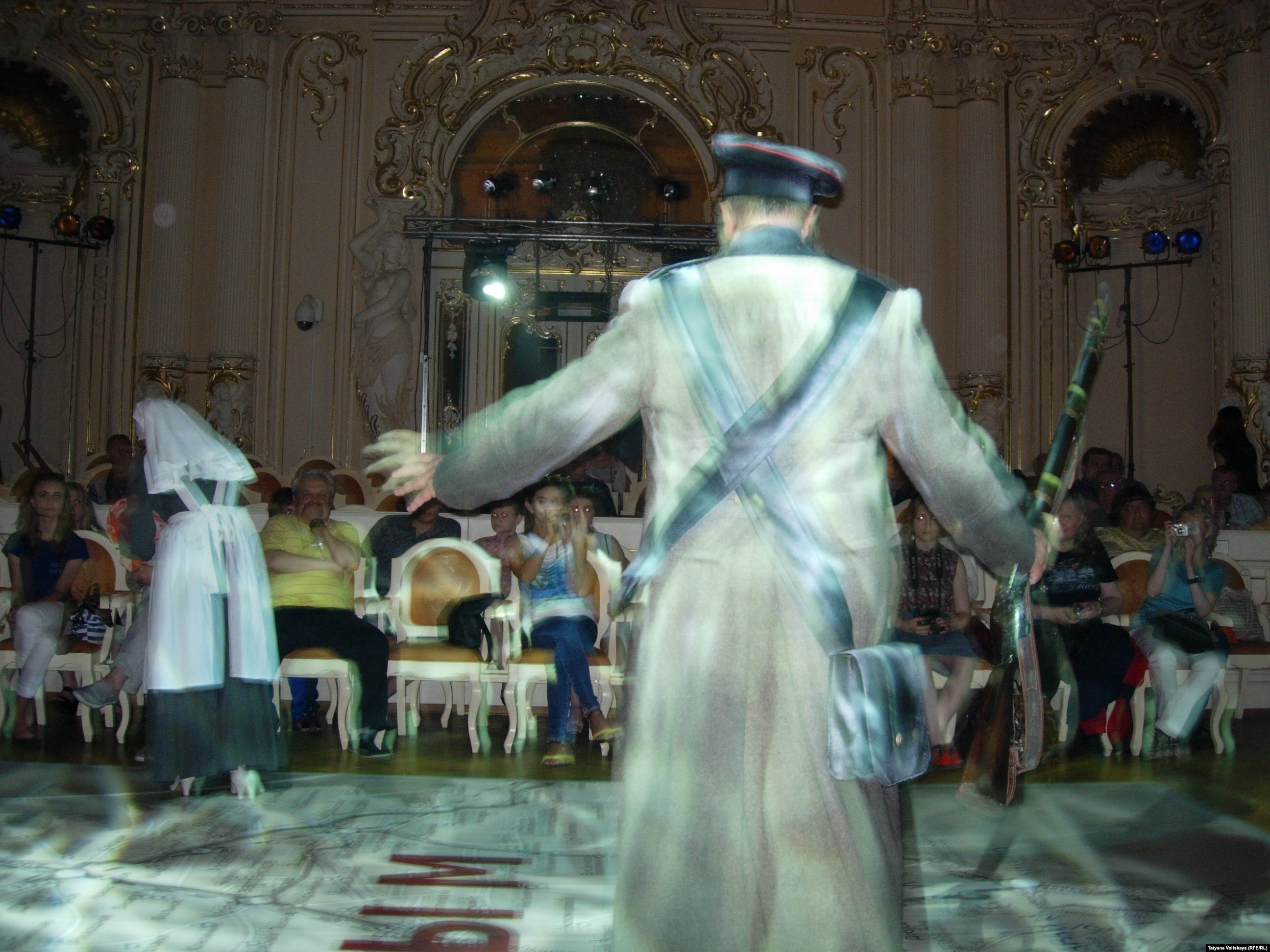
Theater "St. Petersburg Opera" staged an ideological musical performance about Crimea
In St. Petersburg, the prime minister: July 10, the Musical Chamber Theater "St. Petersburg Opera" shows the opera "Crimea", which was based on the Sevastopol Opera, the forgotten composer Mariana Koval-about the defense of Sevastopol, written during the Great Patriotic War.
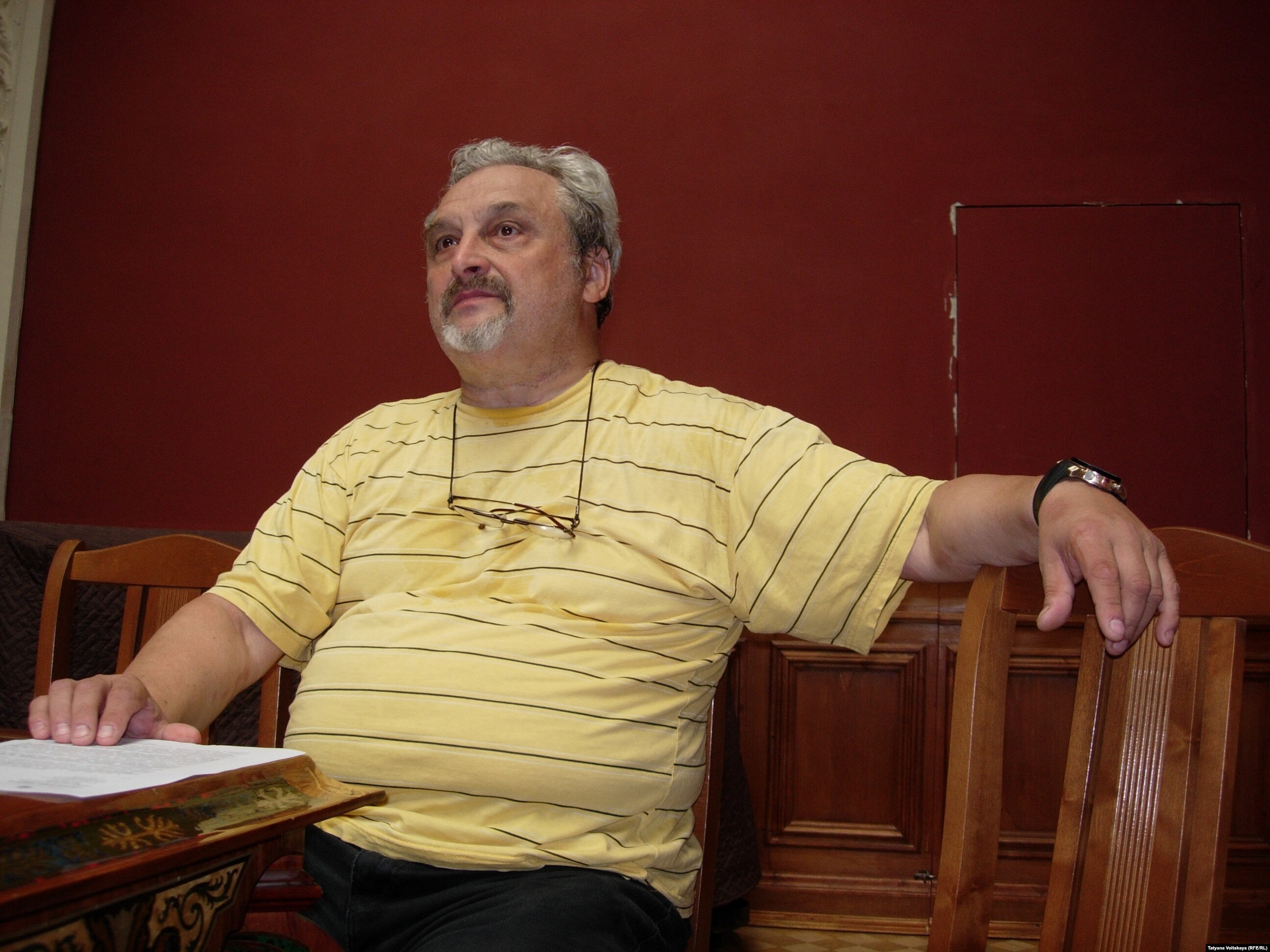
The work was a large and monumental, but the artistic director of St. Petersburg Opera Yuri Alexandrov raised from there both hymns of Stalin and a love plot, leaving exclusively a love of his homeland. He himself is the author of the idea and the author of the script, he instructed the poems to write the theater employee, he included the entire team without exception. To the question-what if one of the artists does not share the main idea of the play “Crimea was, is and will be ours”-Yuri Alexandrov answers briefly:
- This is not accepted for us. We have a state theater, I am a state -owned person, no one can refuse to work. I simply did not have such a question. Based on my age, I can say that young people have not yet encountered such a misfortune in their lives: due to their youth, they still did not arise the question with whom they are. They are still such singing birds, they want to eat well, work in an interesting theater, and a new job is always interesting for them - if it does not infringe on their human dignity. They are obliged to participate in the play if they are assigned. All issues arise among people of mature age, and they, young, even the Great Patriotic War perceive abstractly, do not know what Afghan war is. And we all know this, and my task as a teacher and teacher to direct them in the channel in which I understand this.
Opera-mining is, according to Yuri Alexandrov, a completely new, interactive genre. The hall will even have peculiar "protocols", where viewers will be able to record their impressions.
- Our main position is clear and fundamental: we defended Crimea, he is ours, and we will not give it to anyone. How to stop the tragedy of death, we ask people. We do not know how to do this - this is not our level, not our possibilities, we can sing, turn to the public for help, wake up, slow down, try to cause a powerful, strong reaction, adrenaline, it is important for us to compensate for our mental costs, get back what we threw back into space. These events fell on our heads, and we realized that we could not keep silent.
According to Yuri Alexandrov, he dreamed of showing a performance somewhere on Palace or Red Square, but this question was tied somewhere "upstairs." Yuri Aleksandrov knows that composer Koval took a lively participation in Shostakovich’s persecution, but relate to this calmly, calling the grass "a dispute of supporters of socialist realism and avant -garde players."
- After all, no one was killed at the same time, it was shot and exiled in the Union of Writers, and the clever Khrennikov retained everyone. I looked at the music, if there were no real music, no one would force me to put this performance.
Interestingly, the conductor of the opera Crimea Maxim Valkov did not answer the question of whether it is good music.
- This opera was placed and performed, but there was no score or orchestral material left, only claviers. As for the quality of music, then, I'm sorry, I am a performer, let musical critics judge this. And if a person picked up an instrument, a conducting stick, then he must perform and do it well. I have been working here for the second year, and I must say that I am generally interested in working in this theater.
Theater critic Yevgeny Khaknazarov refers to the premiere with enthusiasm:
- I have been familiar with Yuri Alexandrov for a long time, I know him as a very talented person, and this idea seemed interesting to me, he generally does all things talented, regardless of the semantic and in this case, the ideological component. As for Mariana Koval, I once again convinced that the Stalinist prizes were given not in vain: magnificent pathetic music, the best example of the Stalinist musical empire, it is very superimposed on the meaning that Alexandrov puts it into it. This is not only campaign material, this is a work of art, I think it will be successful.
The image of the president, appearing in the play, does not bother criticism.
- Russia is an independent state, and just like the United States that use the president’s image in their Hollywood films, we also have the right to interpret events. Nobody canceled ideology, says Khaknazarov.
From the lack of ideology, the opera-improving "Crimea" does not suffer. And the character in a gray suit, similar to Putin President, appears in him from the first minute
Indeed, the lack of ideology of the opera-improving "Crimea" does not suffer. And the character in a gray suit, similar to Putin President, appears in him from the first minute - he, standing on a large map of Crimea, reads the penetrating poems "My Crimea". The action generally takes place on this map replacing the scene, the audience is located around. In the first part of the sister of mercy, bloodied bandages put on their knees - a symbol of losses in the Crimean War of the 19th century. The second part is dedicated to the Great Patriotic War, the sailors are pathetic with girls, explosions rumble. The third part is a peaceful life, the songs of a Tatar girl surrounded by cheerful children, but everything is overshadowed by the sounds of shots again, the children scatter, and only a little girl continues to ask a person in a gray suit about who wants to separate the children who have become friends in Artek, and why some foreigners dictate their rules for them. Foreigners immediately appear-a gray-haired man with a scarf, somehow not in our opinion, runs out onto the stage, sings something incomprehensible, but it is clear that-bad. And a good person offers the public to answer whether it touches its "children and old fate", asks about Russian, which cannot be prohibited, because he is "our holy" and "guiding star", his voice grows stronger under thunder rollers - "is true - yes! Yes!". In the final, the choir sings: "Take us with you!"
The passionate "I can not be silent" Aleksandrov to pain reminds the directness of an honest old man from the Schwartsevsky "Dragon"
Not all critics share the enthusiasm of Yevgeny Khaknazarov - some of the present have the impression that the passionate "I can’t be silent" to the pain reminiscent of the directness of an honest old man from the Schwartsevsky "dragon". Many were alerted by the pedaling of the word "state" and "Russian" - Yuri Alexandrov repeated many times that he has a state theater, they have recently been engaged in Russian productions, and this is also a Russian opera.
“Actually,” notes the theater critic Elena Volgust , “this is the case when the state has not asked for anything.” Judging by what I saw, to hope for a great artistic result prematurely. Here everything was permeated with ideology, apparently, Alexandrov was silent for many years, hoping that the donated person would return to the host’s house. Actually, for my life, I made different people a lot of valuable gifts, people behave differently, but it never occurred to me to select gifts.
The fact that the Russian intelligentsia, signing letters in support of the country's leadership policy and puts such performances, behaves in this way, and not otherwise, does not surprise the philologist, professor of pedagogical university named after Herzen, deputy of the St. Petersburg Parliament Alexander Kobrinsky.
- Our intelligentsia behaves exactly as it behaved in 1914, shouting in enthusiasm that “the Bosphorus and Dardanelles will be ours!”, “Long live the Russian army!” Everyone loved the king very much, the state, however, bashfully turning away from the German pogroms that passed then
Our intelligentsia behaves exactly as it behaved in 1914, shouting in enthusiasm that "Bosphorus and Dardanelles will be ours!", "Long live the Russian army!"
In Petrograd. Only two years passed - and in 1916 the attitude of the Russian intelligentsia and Russian society to power changed 180 degrees. Unfortunately, this is a normal phenomenon for us. The word "intelligentsia" in the understanding of Dmitry Likhachev has always included the ethical component, it is now excluded, therefore, educated people who occupy high bureaucratic posts are called intelligentsia. Open social networks now - there, in the nationalist circles, the theme “Putin is a traitor” dominates - he did not finish the matter, did not conquer Ukraine. But he could not do this, he is the leader of a weak country with a weak economy. Maybe America would be able to do it, but not to him, it was originally a foregone conclusion. And now all these excited people begin to rush at him, and he understands the danger, closes the border with Ukraine. So the change in the mood of our intelligentsia is just around the corner. And the fact that children participate in this performance - well, so, I don’t think this is so adverse for them. Practice shows that children grow, study, form and begin to understand everything. You can’t wash the brains to infinity, someday they become in place naturally, ”says Alexander Kobrinsky.