
Translated material
There are searches in Mosoblbank
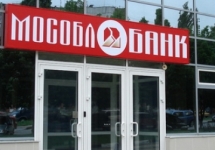
In Mosoblbank there are searches related to the actions of previous shareholders and leadership. This is reported by Interfax with reference to a source close to the bank.
"Investigative actions are held in an office located in the Semenovsky business park. Everything is quite correct. Searches are related to the events that took place before the sanitation of the bank," the source said.
Earlier, the deputy chairman of the Bank of Russia Alexei Simanovsky stated that the Central Bank plans to send information about violations in Mosoblbank to law enforcement agencies. To prove the fraudulent scheme requires operational-search measures, and the Central Bank has no authority to conduct them, he explained.
On May 11, the Bank of Russia reported the beginning of the reorganization of Mosoblbank, the Investment Republican Bank (Inrebank) and the business bank financial bank. These credit organizations were controlled by Andrzej Malchevsky and his son Alexander.
According to the Central Bank, Mosoblbank falsified reports to circumvent the restrictions on the regulator. The funds of depositors were not reflected on the balance sheet of the bank. Thus, it was possible to hide about 76 billion rubles.
Over the year, the Central Bank recalled the license from more than 70 banks. After bankruptcy, only the Master Bank and Pushkino Bank paid more than 50 billion rubles to the depositors of these credit organizations.
On June 30, President Vladimir Putin called on the head of the Bank of Russia Elvir Nabiullin to correlate the cessation of banks with the capabilities of the Deposit Insurance Agency . "Of course. And we, by the way, are always, if possible - an economic opportunity, another - we use a decision to reorganize, and ASV works accordingly," Nabiullina answered.
In early June, the deputy chairman of the DIA Andrei Melnikov said that the deposit insurance fund is now about 118 billion rubles with a diet of funds that were already reserved for payments. Six months ago, this amount amounted to 185 billion rubles. According to the calculations of the DIA, by the end of the year another 70 billion will enter the fund.