
Translated material
The apostle of liberalism
Valeria Novodvorskaya - about Nabokov and Freedom
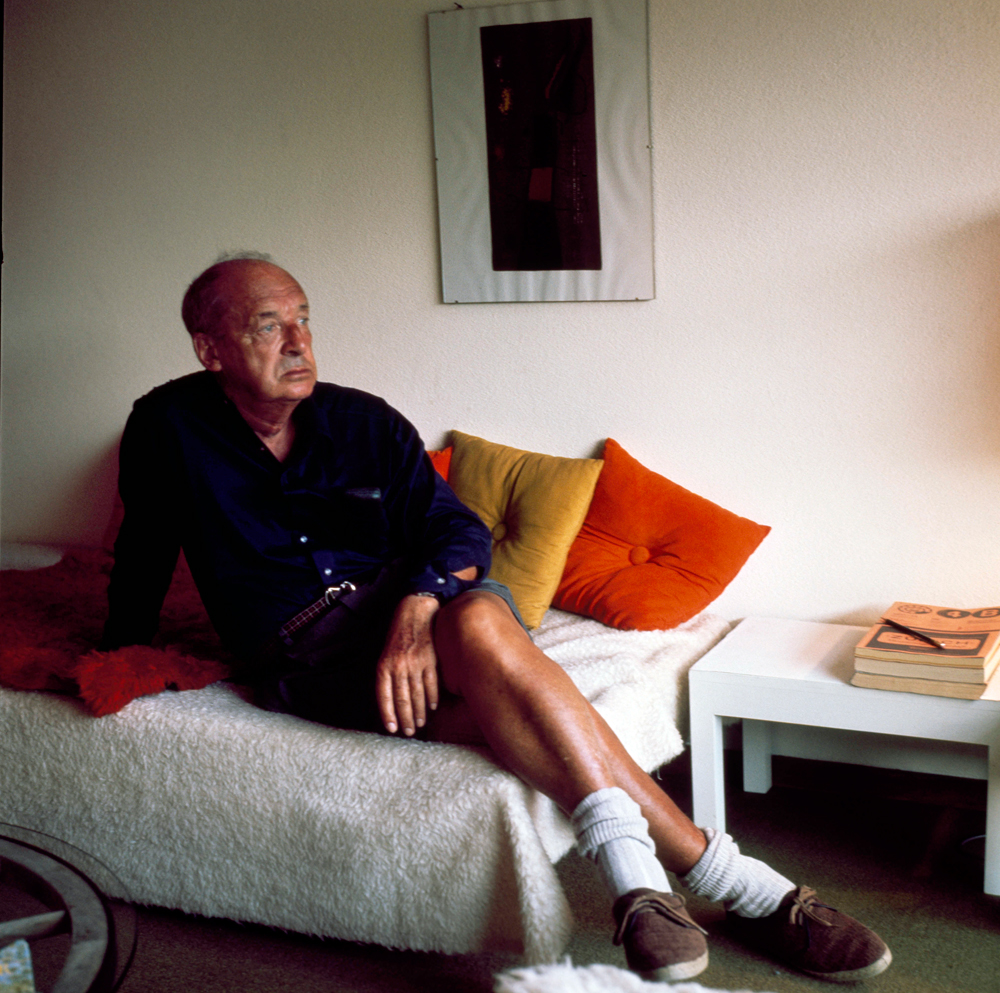
Vladimir Nabokov. GSTAAD, Switzerland, 1971 /Photo: Horst Tappe Fondation /Fotodom
We never thought that we would be so needed. Vladimir Vladimirovich Nabokov, gentleman, entomologist, exile, individualist and classic. Aristocrat in blood and spirit, an irreconcilable fighter with totalitarianism. 115 years ago, April 22, 1899, he was born in a luxurious St. Petersburg mansion. He had proper heredity. Three generations of liberals. Not slobish Oblomovs, loafers on the couch, but tough, smart, devoted to the idea of freedom of Westerners.
Grandfather, Dmitry Nikolaevich, was the Minister of Justice, co -author of the judicial reform of 1864. Father, Vladimir Dmitrievich, one of the leaders of the Cadet Party, served 90 days in prison signed under the Vyborg appeal after the dissolution of the first State Duma. "Do not give the government any taxes or recruits." He died in 1922 in Berlin, closing Milyukov himself, at which some Black Highway shot at a public lecture.
In 1919, young Vladimir Nabokov was taken from Russia forever. He became a recognized writer of Russian abroad, earned the admiration of Bunin and did not choose between two colors of time, black and red, fascism and Stalinism, and rejected both from the threshold.
Nabokov was a liberal, not a democrat. In the “extermination of tyrants” (1936), he wrote: “I don’t care about the good of humanity, and I not only do not believe in the correctness of any majority, but generally tend to reconsider the question of whether to strive to resolutely be half-dry and semi-literate.” Even in Berlin, Nabokov taught his little son Dmitry to laugh at Hitler's portraits (“mustachioed moron”, “insignificance”). In 1937, the Nabokovs moved to Paris, and in May 1940 they sail around the ocean, to the bastions of untouched freedom. "
Nabokov did not choose between two colors of time, black and red, fascism and Stalinism, and from the threshold he rejected both
“Vladimir Nabokov returned to Europe (Switzerland, Montreo) only in 1960. He lived until 1977 and threw himself at the USSR until the end, offering to make portraits of the leaders no more than the postage stamp, propagating samizdat, printing appeals in defense of dissidents (for example, Vladimir Bukovsky).
He yearned all his life, but understood that returning to Russia would become surrender. “Do not look at me with expensive blind eyes, regret it, don’t look for me in this coal pit, do not feel for my life! For the years have passed the centuries, and for grief, for flour, for shame - late, late! “No one will answer, and the soul will not forgive anyone.”
Our meeting with Nabokov is inevitable. We used to imagine tyrants. And now we will read and re -read: “The growth of his power, glory corresponded in my imagination an increase in punishment that I would like to apply to him. So, at first I would be pleased with his defeat in the elections, cooling the crowd to him, then I already needed his imprisonment, even later - the expulsion of a distant flat island with a single palm tree like a black footstep, which is always reducing loneliness, shame, impotence; Now, finally, only his death could quench me ”(“ extermination of tyrants ”). And this is also suitable for the Hague: “In vain I would assure me that he himself seemed to have nothing to do with it, that he was elevated and now holds on a reinforced concrete throne the inexorable development of dark, zoological, Zorlandic ideas that my homeland surpassed. The idea selects only an ax, a person is free to finish the ax - and apply. ”
The children of the new wave of emigrants will meet with the Nabokov “feat” (1932), where Russia is a fabulous forest inhabited by cannibals. We need to resist the psychology of the victim, the accomplice of our own executioners, as in the “invitation to the execution” (1936). Everything is better than complying with the standard "Prisoner's meek is a decoration of a dungeon."