
Translated material
Lera, how is it without you?
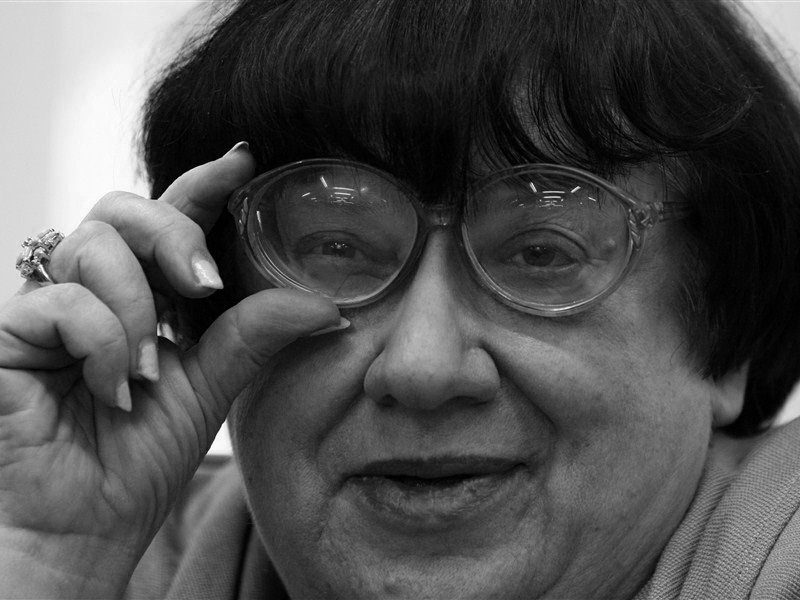
Lera, Lera ... Well, where are you? How is it without you? Why didn’t they call, didn’t they say that it’s bad? Why, Lera? We lived together - 331 numbers, 7 years and 6 months, and in each - your column. And how now?
She lived a terrible life. They tried three times, twice in prison of the Lefortovo KGB, two years of the terrible Kazan “Special Psychiatric Hospital”, 17 administrative arrests ... She lived such a life, which was destined in our Fatherland, who devoted himself to the struggle against the regime.
She put everything on the altar of this struggle: youth, health (about wild injections in a psychiatric hospital in which she was treated for anti -Sovietism and faith in human rights, she always remembered), love, simple female happiness, the opportunity to have children.
She lived an incredibly happy life, because she saw the collapse of the communist ideology and the Empire of Evil - the USSR; Because with all her oddities, she was loved, and if they did not love her, then people of the most different edges of Russian politics were certainly respected. She was not just readable - many opened the magazine from her columns, she was discussed, she was quoted, they referred to her. She was recognized as a person of ideas and intelligence, as an unbending fighter, sometimes addicted, sometimes even short -sighted against politicians who shared her eyes, but for whom morality was beyond their understanding - she forgave them, not expecting from them, and from many that they know that bar that was absolute for her.
You can’t betray.
You cannot go against your views.
You can’t sell.
You can’t knock.
You can not mean for the sake of soldering.
You can’t forget who and against whom you fight.
You can’t stop fighting.
Watching different ups and downs inside and around The New Times, she said: “From here they will only take me forward.”
She lived in the world of Absolute, neither on yota without reducing the bar.
For yourself.
She wrote about writers, poets, artists - Akhmatova, Feikhtwanger, Nabokov, Gogol - 331 columns, you can’t list, about the events and rotary dates of history. And she always wrote about one thing - about Russia, which she realized without a trace, which she loved, how her mother loves an endlessly sinning daughter: you can’t quit, and accept such a prodigal, with a down on gold and the strong men raping her is not possible. She whipped this harlot on her cheeks, she shouted to her: “Why are you worshiping my idols? Why don't you see the light? ”, She hated her for weakness and vices and loved her, because she couldn’t do otherwise - she did not know another love, and because she gave her her life.
“Zhenya,” she called on Friday evening. “You do not mind if I write about ...” - “Lord, Lera, whatever you want ...”
"Zhenya, so I will go?" - She asked on Monday at about six: after the fly, to which she almost always came to, and if she came, she always made a review of the number (“Five plus,” she said, just “five” meant that we released the most perfect shit) “Lera wrote a column at her table - she wrote by hand, the computer remained for her. - “I passed the column. So I will go? ” “Of course, Lera, thanks.” She stood holding the wall and breathing heavily: there were ten meters between our offices.
Then she, leaning on the hand of her driver, greatly limp, crossing her large body from one sore leg to another, went to the door, then she had to go down 4 long spans ... (Lera, Lera, forgive me: I was so embarrassing that you were tormented and descending on foot. I was looking for a room with an elevator, first of all, I did not have it. Lera, forgive me.)
She was a man of encyclopedic knowledge - she read from the age of 5, she knew Russian literature as no one else - quoted from memory and rarely was mistaken. She easily translated from French and Italian-after all she studied, until they expelled (in 1969) for organizing an underground anti-Soviet student group and, most importantly, for the anti-Soviet leaflets abandoned from the Bolshoi Balcon (December 5, 1969-on the Brezhnev Constitution Day), at the Institute of Foreign Languages named after Maurice Torez.
She was categorical, cutting in grades, did not know half -tones. She was brilliant in her own way, rejected and at the same time attracted a variety of people to her.
She was one of her kind, exceptional, unlike anyone around. She was and will remain a great fighter for human freedom and for her happiness, as she believed, his homeland.
Valeria Ilyinichna Novodvorskaya, May 17, 1950, Baranovichi - July 12, 2014, Moscow.
Lera, Lera ... How can you do without you?