
Translated material
Novodvorskaya: Man and meme
The human rights activist and dissident Valeria Novodvorskaya died in intensive care in Moscow. This was reported, referring to sources in medical circles "Interfax" and "Lenta.ru".
According to the interlocutor of the “tape”, Novodvorskaya died of infectious-toxic shock in the intensive care unit of purulent surgery of GKB No. 13. There she was delivered in serious condition on July 12. For several hours, doctors fought for her life, but could not do anything.
The deputy mayor of Moscow on social development Leonid Pechatnikov told Ekhu Moscow that Novodvorskaya died of a complication of one of the chronic diseases. He added that relatives will determine the place and time of her funeral. “She suffered for a long time a number of chronic diseases and died of one of their complications ... I can only sympathize with her relatives and friends. I think that this is a serious loss for all those who knew and loved Valery Ilyinichna, ”Pechatnikov said. On Echo, Novodvorskaya had his own program at different times.
In the Soviet years, Valeria Novodvorskaya was a famous dissident. She pursued her for political views: in the 1970s-the 1980s, she was arrested more than once and sent for forced treatment with a diagnosis of sluggish schizophrenia. In the house of Novodvorskaya, searches were carried out. Despite this, she continued to engage in human rights and political activities. After the collapse of the USSR in 1992, it created the Party of the Democratic Union of Russia.
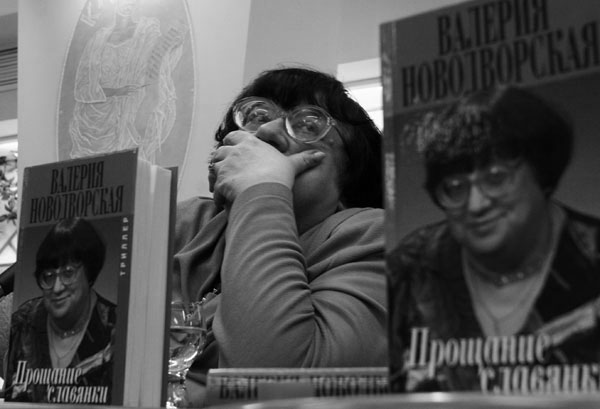
In 1995, she ran to the State Duma, but lost the election. Novodvorskaya wrote several books: “Above the abyss in a lie”, “My Carthage must be destroyed”, “On the other side of despair”, “Farewell of the Slav”, “Poets and Kings”. Her articles were published on Echo of Moscow, Brani.ru, The New Times. In The New Times, she led her column until the last day. As reported on the website of the publication, Novodvorskaya wrote for the magazine every week. At the same time, to write her texts, she never used the Internet: Valery Ilyinichna remembered all the quotes and dates by heart.
 Alexey Makarov
According to the member of the Council of the Human Rights Organization of Memorial Alexei Makarov, “Valeria Ilyinichna was one of the few surviving and active dissidents and prisoners of psychiatric hospitals. Her original polit. The career is very interesting. In her memoirs, she managed to reflect her revolutionary undertakings of youth and turn them into a constructive. She is called the grandmother of Russian democracy, since she created the first opposition political party in the USSR - a democratic union. Of course, its sharpness at all times was objectionable to the authorities. It will also go down in history as a participant in the last political cause of Soviet times about the insult of Gorbachev. The case was closed in 1991 in connection with the changed circumstances. ”
 Sergey Kovalev
Human rights activist and dissident Sergey Kovalev: “In many ways, Valeria Ilyinichnaya and I were opponents. However, both me and her did not cause any hostility. I’m almost sure that we start discussing the topic of our disagreements, she would say: “We tried so that people live freely without being tonsured under one comb. Of course, at such moments, all these disagreements acquire their inherent price - all these are trifles. She was characterized by a sense of responsibility for the society in which she lives, and the country in which she lives. As well as a feeling of shame if her efforts do not lead to the result. Of course, this sense of responsibility is higher than what is called patriotism and, moreover, the subordination of power. And this is actually the main thing. Valeria Ilyinichna was the person for whom the words "drink for our hopeless business!" were literal. Higherness did not bother her. This is a rare property, to take on hopeless affairs-this is the property of large people-Don Quixes and Lancelots. ”
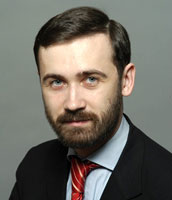 Ilya Ponomarev
The deputy of the forefront Ilya Ponomarev recalled that the biography of Novodvorskaya once intersected with the biography of Vladimir Zhirinovsky.
““ Democratic Union ”was then created by Novodvorskaya and Zhirinovsky. The first meeting was held in the Moscow Youth Palace, I came there as a young man interested in politics and saw this “sweet couple ''. Both passionarians, calling ahead, both talk about the future of the USSR, about transformations, ”the“ Interfax ”quotes him (Zhirinovsky, of course, did not create DS, but only for a short while he looked there, he tried himself in different structures until he stopped at the LDPS - the future LDPR -“ Polit.ru ”). The politician admitted that what he saw and then finally pushed him to engage in politics.
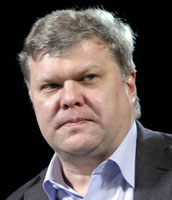 Sergey Mitrokhin
According to the leader of the opposition party "Yabloko" Sergei Mitrokhin, "in the modern opposition movement, moral frames and moral criteria are very intensively erod. One of the guarantors of these criteria was Valeria Ilyinichna. Her departure is a very big loss for a democratic movement. ”
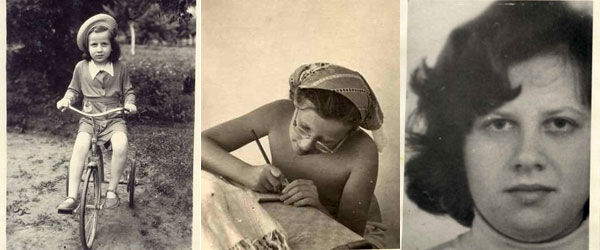
Novodvorskaya was born on May 17, 1950 in the Belarusian city of Baranovichi. One of her ancestors, according to Novodvorskaya herself, was a Maltese knight and served Poland. The great-grandfather of Valeria Novodvorskaya was a revolutionary, in Smolensk he organized the first printing house of the Social Democrats. Both parents, mother - doctor, father - engineer, were members of the CPSU. Valery Ilyinichn was raised by grandmother. When Valeria was nine years old, the Novodvorsky moved to Moscow. In 1968, the future politician graduated from high school in the capital, then studied at the French department at the Moscow Institute of Foreign Languages named after Maurice Torez in the specialty “Translator and Teacher”. Subsequently translated medical literature. At the university she organized an underground student group, where they discussed the need for an armed uprising to overthrow the communist regime.
At the age of 19, in the Kremlin Palace of Congresses, Novodvorskaya committed her first loud political act. She handed out leaflets with her own anti -Soviet poem. The poetess quickly arrested the KGB. She was accused of anti -Soviet agitation and propaganda. The next years were associated with numerous arrests and forced treatment from "sluggish schizophrenia." Arrests and drug treatment from non -existent diseases tempered Novodvorskaya. She began to replicate and spread samizdat. Despite the arrests, in 1977 she graduated from the evening faculty of foreign languages of the Moscow Regional Pedagogical Institute. In 1988, dissident Novodvorskaya became one of the creators of the Democratic Union party. In September 1990, she published an article “Khaly, Gorbachev!”, At rallies tore portraits of the first and last president of the USSR. Then she was accused of public insulting the honor and dignity of the President of the USSR and insulting the state flag.
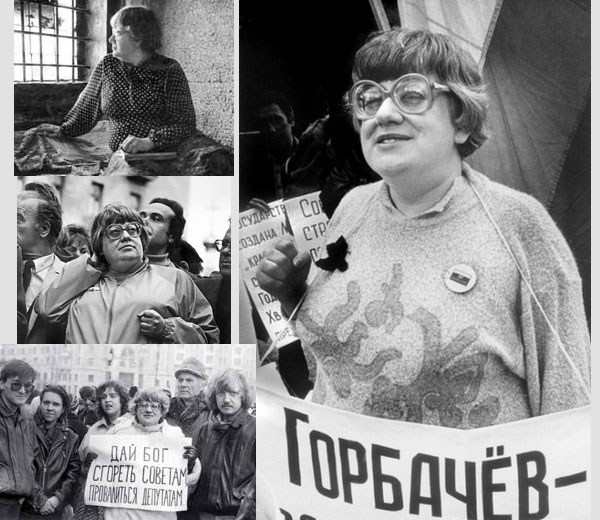
At the end of 1992, the Novodvorskaya and part of the members of this party created the Organization of the Democratic Union of Russia. In September 1993, after the decree of Boris Yeltsin on the dissolution of the congress of people's deputies and the Supreme Council, she organized rallies in support of the president. After the assault on the building of the Supreme Council, the politician celebrated this, treating the passers -by with champagne faithful with champagne. In June 1994, he was one of the founders of the “democratic choice of Russia”. In 1995, she ran to the State Duma, but lost the election. In 1996, before the presidential election, she supported the candidacy of Grigory Yavlinsky. After the first round, along with the “Democratic Union”, she invited the leader of “Yabloko” to give the voices of his supporters to Boris Yeltsin. In February 2008, for the protection of the interests of Lithuania, he was awarded the Knight's Cross of the Order of the Grand Duke of Lithuania Gyadiminas.
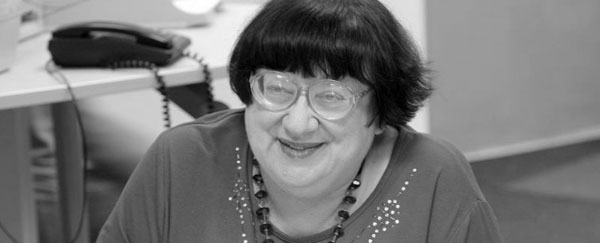
In March 2010, she signed the appeal of the Russian opposition “Putin must leave”. In March 2014, she joined the activists of the Ukrainian “Right Sector” with a call to more actively influence the Ukrainian government in order to confront Russia.
Novodvorskaya was polyglot, freely mastered French and English, read in German, Italian, Latin and ancient Greek.