
Translated material
Through fences in "Leninsky places"

Eco-activists of St. Petersburg organized an inspectorate to fight the invaders of the coast of rivers and lakes
Activists of the Open Coast and the capture of the lakes are going to contact the supervisory authorities to influence the invaders of the coast of rivers and lakes of St. Petersburg and the Leningrad Region. Previously, for the collection of materials, they decided on Sunday, July 13, to spend a walk, which was called "in Lenin's places."
Eco -activists of St. Petersburg and the Leningrad Region, residents of the Sestroretsk and the village of Pill are preparing a new appeal to the prosecutor's office following the results of the control eco -inspection "in Leninsky places". Previous appeals to the supervisory authorities and the local administration were made in the fall, when people found that the unauthorized seizures of the shores of the lake of the spill, with which they were fighting for many years, continue, leaving people less and less space for approaching water. The indignation was the greater that the activists recently won the courts and sought the ideas of the prosecutor’s office, which ordered to demolish several illegal fences that block parts of the coast adjacent to private land plots.
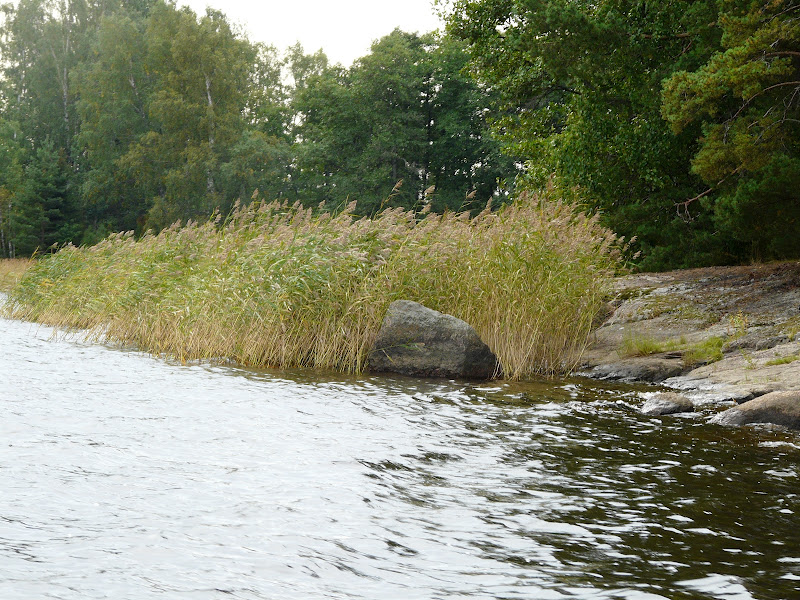
Activists decided to go for a walk along the shores of the spill - to check how the decisions of the courts and the presentation of the prosecutor's office are actually executed. They called their “walk” in Lenin's places, because the lake of spill since Soviet times is known for the fact that on its shore there is a memorial complex - Lenin “Shalash”. It was here in the summer of 1917 that Lenin was hiding under the guise of a Finn-cosse from the Provisional Government, which issued an order to arrest, hence the Finnish stoker, he fled to Finland. The simple thought of activists is that in our time Lenin would not have disappeared from anyone and would not have run away anywhere-he simply could not go along the shore of the lake because of fences, artificial channels and concrete berth arranged by the owners of the summer cottages, who were not established before temptation to extend them to the very water, the coordinator of the movement “against the seizure of the lakes” Irina Andrianova: Irina Andrianova :
- We want to check how the control and supervisory authorities fulfill their duties to combat the seizures of the shores on the spill. We are interested in those areas in which for many years correspondence with the prosecutor’s office, Rosreestr and other organs have been going on, about which claims were filed about the liberation of the coast, and in some places they were won. We are also interested in those sites where the prosecutor’s office did not find any violations, as well as those whose owners after going to court announced the complete pre -trial satisfaction of all claims - that they demolished all their illegal fences. It is necessary to see if this is really so, and in practice, make sure that the effectiveness of the fight against this problem. Our experience shows that in this case, a frank sabotage is present from the prosecutor's office. For example, we have answers from the prosecutor’s office that the fence is 20 meters from the water, and there is actually good if there are 2 meters. In front of the sections of the Lord Vakhmistrov and Filimonov, huge stripes of the coast are fenced with artificial channels, but the owners assure that these channels arose naturally. And the Rosreestr after checking several times underestimated the area of the fenced shore - this is also similar to sabotage.
Our experience shows that in this case, outright sabotage is present from the prosecutor's office
Irina Andrianova believes that this problem is also characteristic of the Leningrad region, but within the city where there are so few recreational zones, it is especially acute. She also notes that the lake of the spill is the lake closest to St. Petersburg, in which you can swim, and in addition, it still has the status of a strategic source of drinking water:
- I believe that such a number of captures at such an object is a spot at the work of the city environmental prosecutor's office. Well, they would have at least a couple of demonstrative demolitions of illegal fences, but there was not a single demolition over all these years. Of course, we will send an application to the prosecutor on the fact of the audit.
A resident of Sestroretsk Roman Larin believes that the problem of unauthorized seizure of shores is a systemic disease that is aggravated by impunity:
- People see: one neighbor fenced off a piece of shore, the other neighbor fenced off, and there was nothing for anyone, and they themselves begin to do the same. Even decent people fall under temptation, seeing that they do not punish anyone for this, and the seizure of the coast takes an avalanche -like character. We have a number of addresses at which we wrote statements to the prosecutor’s office, to the cadastral departments, to the administration. We want to see what happened since our appeals, whether fences are demolished where it was prescribed by the prosecutor's office. In fact, only activists work-they write about violations, collect documents, file lawsuits in court, that is, they do all the work for the prosecutor’s office, which is inactive.
Even decent people fall under temptation, seeing that they do not punish anyone for this, and the seizure of the coast takes an avalanche -like character
Roman Larin believes that it is necessary to change the legislation, since 800 rubles of a fine cannot stop the invaders of the coast. Anatoly Krivenchenko , a member of the Eco -Inspectorate of the Spill, also agrees with him, the deputy of the Legislative Assembly of St. Petersburg, however, he says that recently the fine has been increased somewhat to three: thousand to three:
- We are taking all possible legal measures to stop this outrage, so that the guilty in the seizures of the coast are responsible for this. We have already come out with a proposal to increase the share of administrative responsibility for the capture of the coast and we will go out more, and now it is important for the invaders that we do not think that we are in the fall, that the Governor's meeting was held, where it was said to take measures, and this was all over. No, it has not ended, we will seek the implementation of the law. In the fall, according to the results of the audit, we will once again collect the commission at all these addresses.
It is unlikely that walks, inspections and commissions will help the case, said Boris Vishnevsky , deputy of the Legislative Assembly, who belongs to the possibilities of combating the seizures of shores very skeptical:
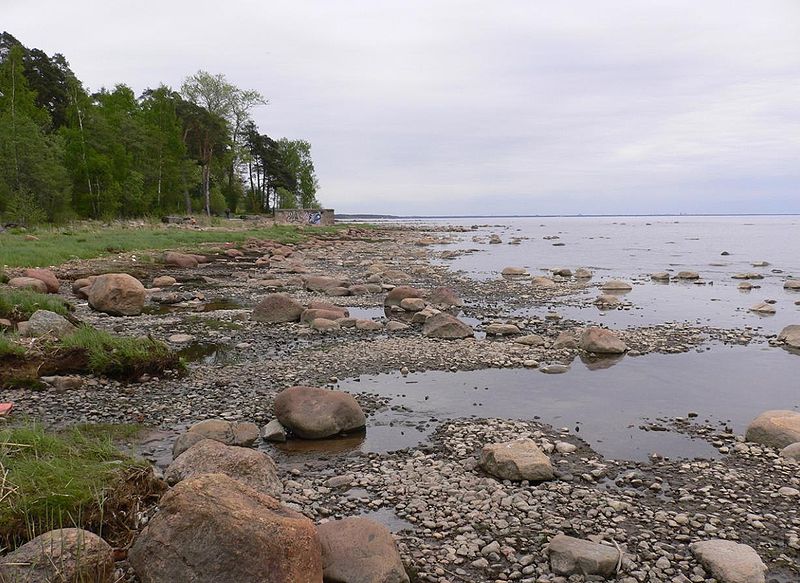
-Unfortunately, the norm of federal legislation on the preservation of a 20-meter coastal strip in mass order is violated both in the lakes of the Leningrad Region and in the Gulf of Finland, and in other regions too. Housing lawlessness continues for two reasons. The first reason is the small value of fines, the second is the inaction of law enforcement agencies. It is extremely difficult to make the police even just fix the violation, they simply do not want to contact this. I believe that it is necessary to establish such fines so that the person who paid, I no longer wanted to install the fence for the second time. And if this does not help, there must be forced seizure of the site so that the state redeems it at a set price - and goodbye. But there would be enough fines if law enforcement agencies, the prosecutor’s office and the court worked normally. But in a situation where the police are inactive, or even for small money, covers the invader, it is pointless to increase fines. If the police are corrupt, it is pointless to demand from legislators to increase fines. The fines will increase - the question of their non -payment will arise. And in general, if we cannot find election commissions in the municipal districts before the elections, so then it’s surprised that the municipal authorities turn a blind eye to destroy the approaches to the lakes! Until we change power, nothing will change.
Nevertheless, Boris Vishnevsky says that in the fall, lawmakers will try to return to this issue. Although, most likely, federal legislation will have to be changed, and this does not happen quickly.