
Translated material
Big terror: without quotes
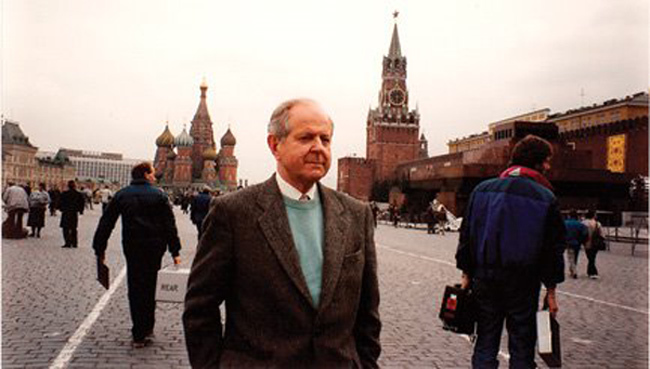
Forty years ago, a book was published in Russian, which gave the name the most terrible era in the history of Russia for the entire time of its existence.
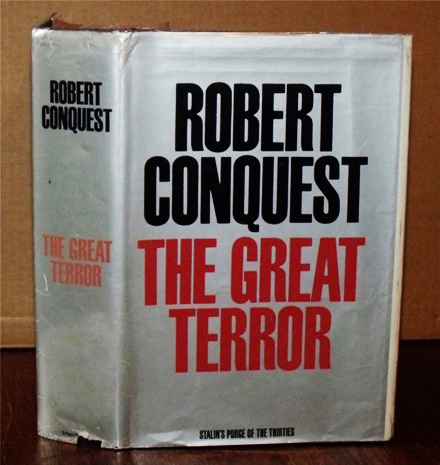
The weighty “brick” was dressed in an elegant silver-gray bag. On its front side, the author’s name was indicated in large black letters: Robert Conquest. Below - large raspberry - the name: Big terror.
Despite the fact that before that Robert Conquest was not published in Russian, his name in the “most reading country in the world” was known. He was especially known on Lubyanka, where very soon after the release the book with the ominous name turned out to be. There, as part of the fifth (ideological) main department of the KGB, there was a department engaged in Tamizdat - anti -Soviet (according to the Gabistic definition) literature published in Russian outside the territory of its main use.
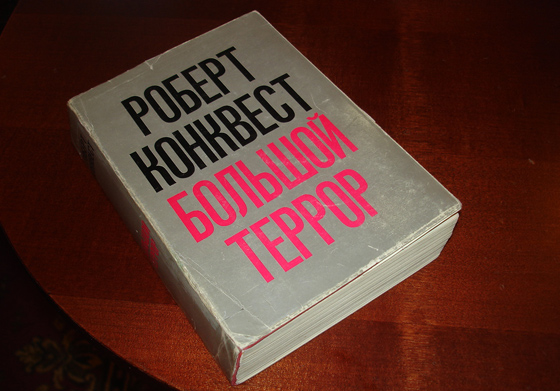
Starting acquaintance with one or another book novelty of foreign origin that came to them, the employees of this department first looked at the page with its weekend. It is logical: the enemy should be known not only by person, but also by passport.
In the source it was: Robert Conquest. Big terror / translation from English Leonid Vladimirov. Firenze: Editione aurora, 1974.
What? What other Florence? What is Aurora? There has never been such a publisher in this Italian city. What is there? And there is a city of Rome. And in it there is a vile anti -Soviet office called Ali , created ten years ago by the American CIA and they are funded. He publishes all sorts of ideologically non-possessed and frankly harmful books in Russian: the aesthetic emigrant Nabokov, the renegade of Pasternak, the abstruse Irish Joyce, Camia, the Misanthropus and the Absurdrian Kafka, the bastard Orvell, some other villains ... Now, and the conquest of the conquest of the conquest has reached.
And after all, what is cunning, these cereusniks: their filthies are published every time or under linden weekend - like this one - or even without them. They hope that we will not recognize. Well, well ...
And who is the translator? Vladimirov? Which Vladimirov? Ah, Leonid! .. How, how, we know this ... only he is not Vladimirov. He is Finkelstein. The malicious anti-bearer-Restor Leonid Finkelstein, aka Vladimirov, is he Donatov, he is also hares ... or something, is all the pseudonyms? Fleeing in June 1966 in London. Where he went on an obvious oversight of the competent authorities as a Soviet tourist. Now slander his Soviet homeland according to all sorts of “voices” ...
The decision was unequivocal: in special security. At the same time, the book was forbidden to import into the territory of the Soviet Union, and for its storage or, God forbid, the spread of a Soviet citizen was expected to be held accountable under Article 70 of the Criminal Code of the RSFSR (“Agitation and Propaganda”). As well as for Solzhenitsyn, Autokhanov and Orvella. If, of course, they catch.
There were such times.
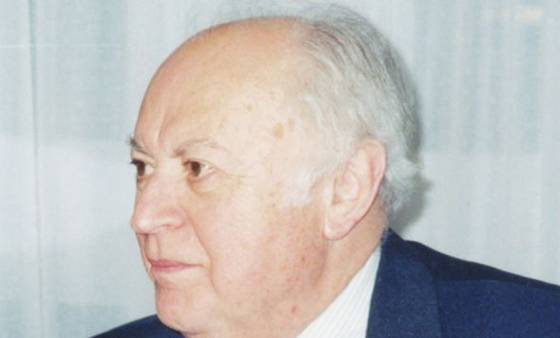 © svoboda.org translator Leonid Vladimirov (Finkelstein)
* * *
The Book of Conquest, in the original called “The Great Terror: Stalin's Purge of the Thirties” (“Big Terror: Stalin's Cleaning the Thirties”, was first published by the British publishing house Macmillan in September 1968.
The time for publication was the most suitable. The whole world was buzzing like a worried bee hive. The Soviet troops have just invaded the “fraternal” Czechoslovakia and tank caterpillars crushed a timid attempt to reform the porely and cruel system of government, to make, as they called it, “socialism with a human face”. As soon as it began, their reformist campaign was crushed by the Kremlin, to death frightened by the hypothetical possibility that the wind of change will fly from Prague to Moscow. The “Brezhnev doctrine” was declared throughout the world, the essence of which-translated from the Kremlin party Feni to normal criminal jargon-was formulated by one phrase: “What is ours, then ours, and that yours, we will talk ...” as the only argument, the number of tank and motorized divisions, capable of 48 hours to get from cigarette overcarp La Channel. The panic at Brezhnev, Andropov, Suslov and other figures was almost the same as that of the current inhabitant of the Kremlin-with the only difference being that then the distance from the Soviet-Chekhoslovak border to Moscow was still significantly more than now-from the border with Ukraine.
The necessary retreat is completed. Let's move on to literature.
And let's start, as expected, - with the personality of the author.
* * *
The biography of Sir Robert Conquest is well known. We can say - too well to retell it once again. Those of you, dear readers, to whom this name still does not say anything (I have no doubt that there are such among you) can look at least the same Wikipedia. (I only recommend its English version; the text of the Russian-speaking is, firstly, tracing with English, and secondly, reduced tracing paper.) I will tell about it in my own words, using information gleaned not only from this source.
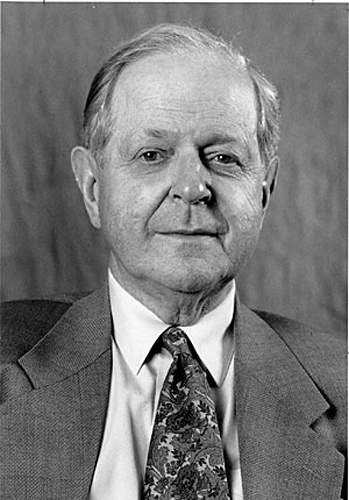 Robert Conquest
The future Anglo-American historian and writer Robert Conquest was born on July 15, 1917 in the Milover, the county of Wostershire. This fact subsequently gave the possession of a fair -up sense of humor to the Conquest to argue that he is the same age as the July crisis in Russia, and therefore there is nothing surprising in the fact that the fate itself was intended to become a historian engaged in both the Soviet Union and the world communism in general.
In the prewar years, the young Robert received a brilliant education: first at the Winchester College, then at the University of French Grenoble and St. Magdalena's College at the University of Oxford. Consistently received the degree of bachelor and master in philosophy, politics and economics and doctoral degree in Soviet history.
Unfortunately, the evil towers that seep in those years on the eastern side of the “sanitary zone” (as the semi -official’s semi -official’s diplomatic slang, which bordered on the recently arising Soviet empire), did not pass the young conquest. In 1937, returning to his homeland after a one -year stay in France and traveling to Bulgaria, where he became interested in studying the Bulgarian language, Robert signed up for the English Communist Party. However, the virus of this infection, most likely on the continent, was not fatal, and, having illuminated communism like chickenpox, Robert Conquest acquired a persistent immunity for his subsequent life.
In the fall of 1939, after the start of the Second World War in Europe, Conquest, like thousands and thousands of other young British, driven by a patriotic impulse, went to serve in the British army. The military registration and enlistment office sent him to the infantry regiment, and the regimental commander determined the reconnaissance. Then his linguistic hobby was useful to the future historian-the study of Bulgarian. As soon as his higher authorities learned about this, Conquest was seconded to the Slavic and Eastern European studies in 1942, where he studied the Bulgarian language on a professional basis, preparing to become a professional intelligence officer.
In 1944, the Conquest was sent to the Communications Officer to the Bulgarian partisans, who was influenced by the Soviet command; At the end of the war, he was transferred to the diplomatic service and for several years a press attache worked at the British embassy in Sofia. Leaving Bulgaria in 1948, Conquest did not leave empty-handed: firstly, in his baggage there was an invaluable collection of documents and his own observations of the process of rapidly attending this small Balkan country, which was carried out by local communists led by his Kremlin Big Brother; Secondly, he took out his mistress, Bulgarian Tatyana Mikhailova, who married already in his homeland, after a divorce from his first wife Joan Watkins.
Until 1956, Conkvest worked in the department of information of the information of the British Foreign Ministry, created by the British government to combat Soviet propaganda. But the public service began to weigh it. Having left Forin Office, Conquest switched to free bread. Her Majesty’s government, very saddened by the loss of such a valuable employee, thanked him according to the merits, awarded the Order of the British Empire-which, as is known to everyone who at least a little understands the intricacies of the English state and social structure, automatically provides the owner of this very honorary reward right to be called not just Robert Conquest (or,, by say,. Seva Novgorodtsev), but - with the prefix "sir".
Having tried many classes in the field of intellectual labor (in particular, in 1962-1963 he worked as a literary editor of the Ruper of British intellectuals- Spectator magazine), Sir Robert Conquest was finally convinced that any extraneous activity distracts him from the main purpose in this life-historical studies about what nevertheless the catastrophe happened in the catastrophe. October 1917 in Russia and what it can turn out in the future for this unfortunate country and for the world surrounding it.
His first books - “Common Sense About Russia” (“with common sense of Russia”), “Power and Policy in the USSR” (“Power and Politics in the USSR”), “The Soviet Deportation of Nationalites” (“Soviet deportations of peoples”) - were released in 1960-1961. They were followed by “Courage of Genius: The Pasternak Affair” (“Courage of a genius: Pasternak case”, 1961), “Russia after Khruschev” (“Russia after Khrushchev, 1965) and many others.
The versatile interests of Concvest did not close, however, on historical research alone. He tried his creative forces in literature, so to speak, pure, without impurities of social studies. Simply put, composed and published fiction and poetry.
As the translator Leonid Vladimirov wrote in the preface to the Russian publication of the Book of Conquest:
“The English writer Robert Conquest is one of the most amazing writers of our time. The author of three poetic collections, the novel and the story, Conquest wrote six more large historical research. There are fans of poetry who are not even suspected of conquest-historian; There are scientists who are ready to laugh at the thought that their colleague historian Robert Conquest writes poetry. But the remarkable feature of the writer is that neither in his poetry, nor in prose, nor in scientific work, and the shadow of amateurism is a truly professional, and a talented professional, in all these distant areas of literature. ”
As stated in such cases, a talented person is talented in everything. I don’t know if this saying is true for all the gentlemen of the Order of the British Empire, but this is pure truth in relation to me here.
* * *
Robert Conquest himself, in the author’s preface to the first Russian publication of the Great Terror, dated July 1971, so explained to the potential reader why and for whom his book was written:
“I wrote this book not for the Russian reader. And therefore, of course, you will find many places where the author is trying to explain the circumstances completely clear to you. But these explanations are necessary for a Western reader who does not have the experience of Stalinism. The fact is that it is extremely important for people of the whole world to understand - accurately and clearly - the true nature of that period. Stalin's rule is one of the most important episodes of modern history; If its essence is not learned, then it is impossible to fully understand how the modern world is arranged in general, for it is impossible to know the world without studying its largest part.
In the West, many books have been published describing certain aspects of Stalinism. My book, however, is the first attempt to give a complete and general report on the events of certain years. <...>
The Russian reader will perceive this book not like Western. For there will be nothing new for you here. According to many episodes, the awareness of some Russian readers undoubtedly exceeds mine. Nevertheless, friends from Moscow unanimously tell me that a full report on the second half of the thirties in the USSR is a revelation for a Soviet citizen.
In addition, I have the feeling that the proposed chronicle of events will convince those who survived after terror: their suffering is not forgotten, not crossed out of the memory of mankind (and they may think so). ”
This is a very accurate and deeply correct observation. Prior to the writing of “Big Terror”, Conquest did not spend a single day in his life in the Soviet Union, and by that time he had acquired all the knowledge about this country by that time, acquaintance with the documents of the British Foreign Ministry with the Grif “for official use” and due to personal contacts with former Soviet citizens - emigrants, irrevocable, and crossmen. Nevertheless, he definitely understood one tragic feature of the life of those who survived their stay under the Bolshevik yoke and managed to break out of it: these people were deeply offended. Offended by the fact that they were not believed in the West. They did not believe their stories about a terrible life in the USSR (“It cannot be, because it’s too scary”), they didn’t try to understand them (“Why don’t you want to return to your home? In the same place your relatives, family ...”) And - most importantly, they did not understand what the fugitives from the Kumachovaya hell tried to warn them: communism is violence and terror, communism is slavery.
Historian Robert Conquest understood this one of the first in post -war England. It is no coincidence that he wrote everything in the same preface the following words:
“Everyone who loves the Russian people deeply touches its tragic story. The country, so rich in talents, so promising, so generously gifting world culture, suffered serious torment without any real reasons. If you do not believe in any supposedly “scientific” theories of the historical process (and I do not believe in any of them), then it seems that Russia was simply unlucky many times in a row when, on the turns of the history of events, they could go a different, much better course.
But the truth and humanity, no matter how fiercely they are suppressed, are never trampled to the end. In all corners of the world, people of good will look forward with hope. And I would like the Russian reader to accept this book as a modest contribution to the Foundation of Pravda, as a list of facts made to discuss humanity. ”
Concluding his preface, Conquest expressed the following consideration:
“Of course, it would be much better if the history of that period was written by a Soviet specialist. I understand the difficulties that stand before the foreigner in such work. Unfortunately, however, in the current state of affairs, an objective study of the period and serious publications about it can be undertaken only outside the limits of the Soviet Union. ”
After a couple of decades, the situation has nevertheless changed. The Soviet Union was not eternal.
* * *
The destruction of the Soviet Empire was facilitated not so much by the Bolsheviks of the Free World of Technology and the Arms Race, as the very famous psychological war of the 1940-1980s, in which the USSR suffered its main, crushing defeat, which led it to collapse and death.
The most important role in the struggle for the minds of Soviet citizens was played by Western publishers and media - primarily the very “radio reasons” by which the Lubyan comrades - the fugitive journalist Leonid Finkelstein were convinced of this. And if only he ...
The single Seva Novgorodtsev, sitting in the BBC Russian service studio and bubbles on the air of some 1983 Pink Floyd (“Brezhnev took Afghanistan, and Reagan took Beirut ...”) In the request of radio listeners, posed for the Soviet regime a threat is much more terrible than ten armored divisions of NATO countries standing standing. On the East German border. And that is why the Soviet secret police fiercely fiercely, trying to eradicate on the territory controlled by it any manifestation of dissent and isolate dissidents from influence on wide masses. Anti -Soviet literature was seized and destroyed, foreign radio mercilessly muffled, distributors of harmful information were arrested and planted. However, in the place of some arrested and planted from where others came from, the American Congress constantly increased the capacities of transmitters and financing radio stations and publishing, and the Intourists were more and more willing to carry through Soviet customs the pocket volumes of Archipelago and Bricks of Big Terror.
The Book of Conquest was valued in the USSR for gold. This, of course, is a metaphor and a literary stamp, but that is how it was. The book became an invaluable source of information about the country’s not so remote past, whose population in the vast majority knew nothing about their ancestors beyond the third knee and where there were people in almost every family among the closest relatives, about whom they spoke in the Ezhovschina, “settled the top ten,” “arrested and shot”.
К сожалению, перевод Леонида Владимирова, для которого английский был языком не родным, а приобретенным, причем уже в зрелом возрасте, к тому же делавшийся явно в большой спешке, не был надлежащим образом отредактирован. Как следствие, текст книги «Большой террор», изданный ALI , грешит множеством терминологических неточностей и неудачных лингвистических оборотов — хотя и мелких, но не менее от этого досадных. Но что может значить сие прискорбное обстоятельство по сравнению с тем, что книга все-таки была издана и стала доступна многим из тех, кто в ней действительно нуждался, — прежде всего по эту сторону «железного занавеса» — хотя бы посредством чтения ее по западным «голосам»?
Приобрести книгу Конквеста, находясь в Советском Союзе и не имея контактов с иностранными дипломатами, журналистами или спецслужбистами, было делом совершенно нереальным. На книжном черном рынке она не продавалась — ни из-под полы, ни тем более открыто. Самиздатовские машинописные или же фотокопии также не продавались. Они выдавались страждущим приобщиться к запрещенной коммунистами информации — только по знакомству, на очень короткий срок и под клятвенное обещание не оставлять в трамвае и не забыть вернуть в положенный срок. И горе было тому, кто, получив копию, не мог или не хотел потом вернуть ее обратно…
* * *
Что же сделал Конквест? Отчего эта книга возымела такую ценность и значение?
Он перелопатил тонны бумажных носителей — изданных в Советском Союзе и на Западе книг, журналов, газет и бюллетеней. Извлек из всего этого невообразимого бумажного девятого вала необходимые ему для написания книги крупицы, граны и скрупулы информации — и с их помощью создал стройную и завершенную картину того исторического процесса, который в наше время во всех соответствующих работах именуется им, Конквестом, введенным в оборот термином — БТ. Большой террор то есть.
Книга Конквеста великолепно документирована. Любое утверждение автора имеет обоснование в виде приводимой тут же цитаты. А любая закавыченная цитата имеет постраничную сноску-примечание с указанием на то место, откуда она извлечена. Достаточно сказать только, что в книге объемом в 1066 страниц имеется 2297 сносок с примечаниями, чтобы читатель мог осознать, какую титаническую работу проделал ее автор, выстраивая свое исследование. В подавляющем большинстве использованные Конквестом источники имеют советское происхождение. Это в первую очередь официальные большевистские документы, советская периодическая печать, различные мемуары и тому подобные сочинения, в которых без соответствующих навыков чтения между строк никогда нельзя разобрать, где правда, где полуправда, а где откровенная ложь. У Роберта Конквеста такие навыки были как мало у кого на Западе, кто занимался исследованием сталинского террора в СССР.
Любое историческое явление прежде всего нуждается в определении точной его хронологии. Хронологические же рамки Большого террора с точностью не установлены по сию пору. То есть они установлены, но далеко не всеми серьезными историками признаны как единственно верные и правильные. Подавляющее большинство современных российских историков определяют хронологию Большого террора отрезком времени в семнадцать месяцев — с 1 августа 1937 года, когда на всей территории СССР был введен в действие оперативный приказ наркома внутренних дел СССР Николая Ежова № 00447, на основании которого и началась охота сталинских опричников на простых и не очень советских человечков, объявленных «врагами народа», и до 1 января 1939-го, когда после смещения того же Ежова с занимаемого им поста и назначения на его место Лаврентия Берии деятельность сталинской карательной машины была стремительно свернута и тотальный террор как бы сам собой сошел на нет.
Роберт Конквест с такой концепцией был категорически не согласен. Он определил хронологию Большого террора гораздо более широкими рамками. А именно с 1 декабря 1934-го, когда в Смольном был застрелен глава ленинградских большевиков Сергей Киров, и вплоть до того момента, когда в марте 1939-го в Москве состоялся XVIII съезд ВКП(б), на котором Сталин формально «закрыл тему» террора, объявив о том, что «жить у нас в стране стало не только лучше, но и существенно лучше» и что «партия у нас теперь стала несколько меньше по количеству, но гораздо лучше по качеству». А это никакие не семнадцать месяцев. Это — четыре с лишним года. Другое дело, что после загадочного убийства Кирова тотальный террор начался далеко не сразу, на организационную подготовку его ушло у Сталина и его приспешников более двух лет, но суть происходившего в Советском Союзе от этого ничуть не меняется. Поскольку Сталину уже тогда, в начале 1930-х, когда в Советском Союзе проводился чудовищный эксперимент по уничтожению крестьянства как класса и превращению его в бессловесных рабов большевистской партийной диктатуры, было ясно, что советская империя нежизнеспособна и не может существовать сама по себе, в изолированном от остального мира вакууме, сколько-нибудь продолжительное время. Вот у него и возникла вполне логическая в его положении мысль: захватить весь остальной мир — или не весь, но столько, сколько удастся, — и пожрать его, чтобы отсрочить собственный конец. А потом видно будет, как из всего этого выкручиваться. Поскольку на его жизнь, вероятнее всего, награбленного хватит, а после него — известно что: да хоть потоп…
Очень точно это сталинское намерение сформулировал хорошо всем известный современный историк Второй мировой войны Виктор Суворов (он же Владимир Резун):
«Советский Союз должен был расширяться на весь свет, ибо не мог существовать рядом с нормальными государствами. Спасение коммунизма было только в его распространении по всему миру, в уничтожении нормальной жизни в остальных странах — чтобы для советского народа не было страны, о которой можно мечтать, не было страны, в которую можно убежать, не было в заграничье другой, не такой, как у нас, жизни. Надо было установить коммунизм везде, чтобы через несколько поколений люди забыли, что возможна какая-либо другая форма существования.
Вот почему Вторая мировая война для Советского Союза была желанна, необходима и неизбежна. Сталин затевал Вторую мировую войну как этап в борьбе за распространение коммунизма по всему миру. Расширение на весь мир — не прихоть Сталина и не территориальная экспансия Российской империи, это не идеология, а жестокая борьба за жизнь. Так борется за жизнь кукушкин птенец-подкидыш, вылупившийся из яйца в чужом гнезде. Он просто обязан выбросить из гнезда законных обитателей, погубить их, чтобы выжить самому».
Для того чтобы осуществить эту безумную идею — сокрушить, захватить и поработить весь остальной, цивилизованный мир, Сталину необходим был крепкий тыл в собственной стране. Чтобы при наступлении его воинства на Запад тому в спину из обрезов не стреляли.
Для того чтобы обеспечить себе крепкий тыл, Сталину необходимо было уничтожить — или, как выражались большевики в ту пору чудесную (в которой, по счастью для нас, им не приведется больше жить никогда), выкорчевать — так называемую пятую колонну. А заодно с «социально далекими» — всеми этими «бывшими кулаками и белогвардейцами» — еще и «социально близких», которые имеют наглость сомневаться в том, кто именно является их Отцом и Учителем. Ну и тех из собственной большевистской банды, кто не испытывает круглосуточной готовности по первому его прищуру бросаться плясать перед ним гопака или кувыркаться через голову на коврике, как Никита Хрущев.
Вот именно поэтому Сталин и устроил в советской империи ту чудовищную — беспредельную, не поддающуюся осмыслению и абсолютно беспрецедентную в мировой истории — вакханалию смертоубийства, которая получила благодаря Роберту Конквесту ныне ставшую общеупотребительной дефиницию — «Большой террор в СССР».
* * *
В конце 1986 года в Советском Союзе началась горбачевская перестройка. Одной из важнейших ее составляющих стала повторная кампания десталинизации советского общества «сверху». (Кампания первая, хрущевская, осуществлявшаяся в 1961—1964 годах, оказалась чрезвычайно куцей, непоследовательной и была мгновенно свернута после дворцового переворота 14 октября 1964 года, когда Никита Сергеевич был смещен своими ближайшими подельниками со всех постов и посажен под домашний арест.) В начавшей сперва медленно, но с каждым месяцем все быстрее и быстрее меняться империи стали приоткрываться ранее находившиеся за семью печатями архивы. И из этих архивов стали просачиваться в печать — сначала по капле, затем робкими ручейками, а потом уже и вовсе полноводными реками — документы. Да такие, о существовании которых прежде не подозревали не только советские «историки», но и сами высшие коммунистические начальники, которые в те приснопамятные годы еще только учились читать по складам по букварю с физиономией Ульянова-Ленина на обложке. Что уж тут говорить об историках иностранных…
Ознакомившись с начавшими публиковаться в СССР документами по истории сталинских репрессий, Роберт Конквест увидел, что он все описал в своей книге совершенно верно. Но сделал это двадцатью годами раньше. И не имея никакого доступа к секретным документам. Только и всего. О чем не преминул во всеуслышание заявить.
Когда же издатель попросил его подготовить к публикации новое издание «Большого террора» с учетом всех только недавно рассекреченных в СССР сведений, Конквест предложил тому выпустить переиздание под названием «I Told You So, You Fucking Fools» («Я же вам говорил, гребаные м*даки!») — явно имея в виду бесчисленных западных критиканов-леваков, поборников «истинного социализма», не перестававших все те два десятилетия нападать на него.
Несмотря на столь яркую идею, второе издание «Большого террора» вышло в мае 1990 года под гораздо более скромным названием «The Great Terror: A Reassessment» («Большой террор: переоценка»).
Тем не менее на Западе и в то время снова нашлись критики, которые обрушились на Конквеста с яростными нападками, подвергая сомнению как приводимые им сведения о количестве жертв сталинского террора, так и сделанные историком выводы. Например, в части оценки данного явления как геноцида российского народа, осуществленного захватившими власть в стране уголовными элементами, прикрывавшимися фальшивыми лозунгами о построении «светлого коммунистического будущего». Not surprising. Как говорится, им плюй в глаза — а они в ответ: «То божья роса…»
* * *
В августе 1991 года покончила с собой Коммунистическая партия Советского Союза. Сам Союз пережил ее ненамного и столь же бесславно помер, развалившись на множество прежде составляющих его частей, организованных по этническому признаку. Хотя реальный распад империи случился на исходе 1991-го, после подписания главами России, Белоруссии и Казахстана так называемых Беловежских протоколов, де-юре процесс этот начался еще в марте 1990-го, когда одна из балтийских республик — Литва, незаконно оккупированная и аннексированная Советским Союзом еще летом 1940-го, официально объявила о восстановлении своей полной государственной независимости и о непризнании действия на своей территории советских законов. К этому же были близки и две другие республики Балтии, Латвия и Эстония, но их руководители осторожничали и тянули со столь решительным шагом до самого конца СССР. В одной из них — Латвии — в том самом судьбоносном для нее 1991 году было осуществлено первое советское издание книги Роберта Конквеста «Большой террор» на русском языке. Первое, оказавшееся и единственным.
Фактически это был репринт итальянского издания 1974 года; правда, не в одном томе, а в двух. По-видимому, имевшиеся в распоряжении рижского издательства «Ракстинекс» полиграфические мощности просто не позволяли изготовить такую внушительную по объему книгу под одной обложкой. Да и тираж рижского издания ни в какое сравнение с итальянским не шел — было отпечатано 50 000 копий.
Тем достоинства издания и исчерпывались. Все прочее — кривая картонная обложка, похабная бумага, дрянная брошюровка, мерзкий клей — было несравнимо с цэрэушным качеством первого русского издания. Однако по сравнению с привычными самиздатскими машинописными и фотокопиями налицо был гигантский прогресс.
Тираж рижского издания мгновенно разлетелся по городам и весям. Затем распался Советский Союз, вслед за ним кануло в небытие издательство «Ракстинекс». Выпущенная им книга Конквеста с тех пор ни разу на территории бывшего СССР не переиздавалась. По-моему, это безобразие, причем вопиющее. И его следует ликвидировать. И как можно быстрее. Не все же еще российские издательства перешли на штамповку сочинений какой-нибудь Агриппины Васильевой. Куда, например, смотрит правильное издательство «РОССПЭН»? Хотелось бы мне знать.
* * *
Существует такая довольно распространенная теория, гласящая, что негодяи живут долго. For a very long time. Чтобы потом, на том свете, им нечем было перед Богом оправдываться — мол, молодой я был и глупый, вот и натворил, вот и наворотил делов… Для того им долгая жизнь якобы и дается, чтобы хватило времени осознать всю тягость содеянного и попробовать прозреть еще здесь, в этом мире.
В качестве подтверждения верности теории ее сторонники чаще всего приводят в пример таких мерзавцев, как Молотов, Маленков, Каганович и примкнувший к ним Шепилов. В самом деле, пример впечатляет, и весьма: Вячеслав Скрябин, более известный как Молотов, прожил девяносто шесть лет, Георгий Маленков — восемьдесят шесть, а уж Лазарь-то Каганович и вовсе до столетнего рубежа всего трех годков не дотянул. И примкнувший к ним Шепилов, тоже изрядный долгожитель, умер восьмидесяти девяти лет.
Насколько эта популярная теория верна, я не знаю. Но вот что я знаю, причем совершенно точно, — так это то, что если она даже и верна, то в ней имеются исключения. То есть когда и человек хороший, и живет долго. И не только живет долго, но и работает продуктивно. И на свое собственное, и на благо миллионов окружающих. Даже если они — окружающие — об этом и не подозревают. Поскольку не умеют читать книги, издающиеся для их просвещения, и не имеют обыкновения слушать передачи иностранного радио на родном для них языке.
И в качестве ярчайшего подтверждения верности этой моей контртеории о связи долголетия и человеческой деятельности на Земле я всегда первым делом вспоминаю журналиста и писателя Леонида Финкельштейна (коему в прошедшем мае исполнилось девяносто лет), а вторым — сэра Роберта Конквеста. Которому сегодня, 15 июля 2014 года, исполняется девяносто семь.
Please, accept my most sincere congratulations, sir. And God bless you.