
Translated material
Former co-owner of Vimm-Bill-Danna criticized the anti-offshore campaign of the authorities of the Russian Federation
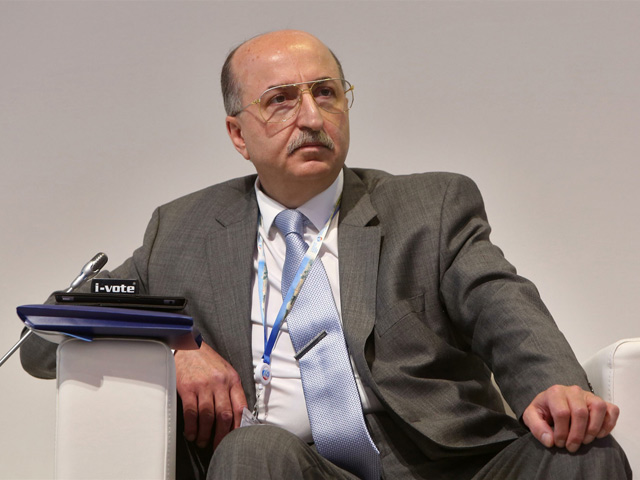
One of the most successful Russian entrepreneurs, a former co-owner of Vimm-Bill-Danna, David Jacobashvili criticized measures against offshores in Russia and promised to invest more in his native Georgia. About this, as Inopressa writes, the businessman told reporters of The Financial Times .
According to Jacobashvili, a policy of deofshorization is one of several political decisions that impede investments in Russia.
“No American or European sanctions can compare with our common sanctions, sanctions that our own Duma sometimes imposes against the business,” he says. “Sometimes they introduce rules that do not join at least at least something reasonable.”
Jacobashvili praised the investment climate in Georgia. His call to invest in Georgia sounds at the key moment, the newspaper notes: in June, Georgia entered into an agreement on the association and freedom of trade with the EU, and relations with Russia are carefully improved.
There are still favorable opportunities in Russia, but local investors are not sufficiently protected, added Jacobashvili. “People withdraw money, and then bring it back due to the shortcomings of our legal system,” he explained.
David Yakobashvili-Vice President of the RSPP and president of the Russian-American council of business cooperation. In 2010, he sold his share at the Wimm-Bill-Dann company Pepsico. Now its largest asset is a stake in PetroCas Energy Group, which owns a network of gas stations in Georgia, Armenia, Azerbaijan and Kazakhstan and two oil terminals in Georgia (Poti and Batumi). The businessman at one time graduated from the Tbilisi Polytechnic Institute with a degree in industrial construction and engineering. He lives mainly in Sweden.
Deofshorization and its softening
Recall that President Putin spoke about deofshorization in 2012. “We need a whole system of measures to deoffshorization of our economy,” he said, speaking with a budget message to the Federal Assembly on December 12, 2012, and promised that Russia will develop a national plan for the fight against offshores.
The head of state brought data for 2012, according to which Russian goods passed through offshore or close to them in jurisdiction in the amount of $ 111 billion, a fifth of Russia's exports. At the same time, half of the $ 50 billion of Russian investment in other countries also fell on offshore.
A year later, in the next message, the president said that the results of the deofshorization of the Russian economy are still inconspicuous. Then Putin suggested “pressing offshores” - to deprive state support and the opportunity to perform state contracts of those companies that work in Russia, but are registered in foreign jurisdiction. He also supported the proposal of the Ministry of Finance by which companies registered abroad, but having assets in Russia, must pay income tax on Russian law.
In March of this year, President Vladimir Putin, speaking at the Congress of the RSPP, called on entrepreneurs to "understand his measure of responsibility": "Russian companies should be registered in our country and have a transparent property structure," Putin said, which is why the task of deofshorization was set.
Almost simultaneously, a bill prepared by the Ministry of Finance containing proposals for taxation on the profit of controlled foreign companies (KIK) and increased efficiency of tax administration of foreign organizations was published. According to this document, Russian individuals and legal entities that control offshore organizations must pay taxes from their profits if it is not distributed in the form of dividends. Taxes were proposed to overplay those who own at least 10% of a foreign company.
The bill suggests that Russian individuals and legal entities that control offshore organizations must pay taxes on their profits if it is not distributed in the form of dividends. Taxes are proposed to overplay those who own at least 10% of a foreign company. The threshold of ownership of 10% remains the subject of discussion. The bill is one of the measures to deofshorization of the Russian economy.
However, under the pressure of entrepreneurs, the government refused to accept amendments to the Tax Code on taxation of offshore schemes for withdrawal of income in the previously set time - until July 15, 2014. The heads of the RSPP reminded the authorities that, for example, in the United States, the struggle with the withdrawal of funds in offshore began in 1962 and only now it reached certain results, that is, it took more than 50 years. To do this in Russia in two months, as the same David Jacobashvili stated in June this year, "it would be reckless, because we could make a lot of mistakes."
On June 18, after discussing the disagreements between the Ministry of Economy, the Ministry of Finance and the RSPP, Prime Minister Dmitry Medvedev, on Wednesday, a more liberal option is adopted as a basis, which establishes for Russian companies a threshold of affiliation with an offshore of 50% plus one share. The final decision is postponed in the fall, it will most likely be the president.
First Deputy Prime Minister Igor Shuvalov then explained to reporters that the Cabinet of Ministers would ask the president to postpone the consideration of the document on deofshorization. And he said that the law will be enforced for three to five years.
The other day, the Ministry of Finance agreed to mitigate the antiofshore bill on controlled foreign companies. The new version includes some proposals of the RSPP and the Ministry of Economic Development. According to the previous version of the bill, Russian owners of companies had to declare the profit of offshores if it exceeds three million rubles. Now the Ministry of Finance wants to set this threshold in stages: in 2015 it will amount to 50 million rubles, in 2016 - 30 million, and then will decrease to 10. This will protect the tax authorities from processing too large data.
In addition, the approach to the recognition of the Russian owner has also changed by the controlling person of a foreign company. In 2015, the threshold of possession of offshore will be set at 50 %, in 2016 - 25 %, and then lower it to the previously planned 10 %. In addition, officials are ready to postpone the punishment for non -compliance with new rules until 2017. The agency involves the payment of a fine of 20% of the unpaid tax, but not less than 100,000 rubles.
At the same time, the RSPP and the Ministry of Economy insist on further softening of the bill.