
Translated material
"Folklore escaped to freedom"
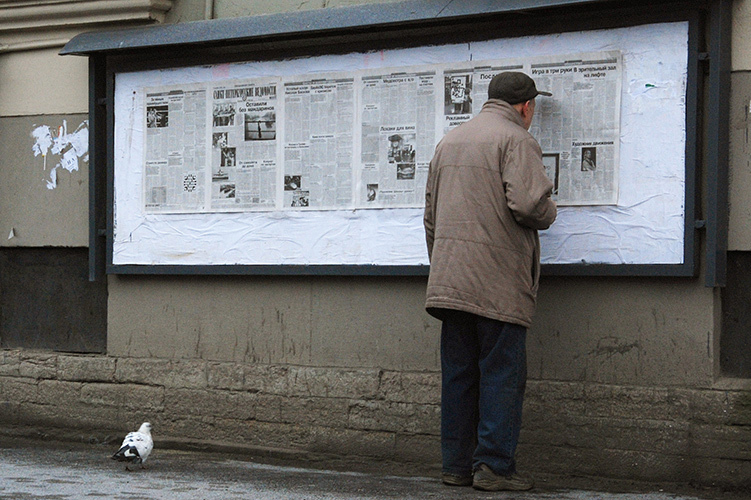
Anecdotes about the new Russians, legends about a snowy man, stories about giant rats in the subway, sects, conspiracies for money-all this in our minds is firmly connected with the 90s. The folklorist Alexander Arkhipova told where all these stories came from, why they appeared so actively in the 90s and what happened in the minds of urban residents at that time.
-How did the 90s affect folklore and oral tradition?
-First of all, one phenomenon must be mentioned, which determines the features of urban texts of the 90s. In the 50s, the Americans launched the famous Harvard Project, during which they recorded an interview with former Soviet residents. One of the questions that interest the researchers is which sources of information are relevant for different social groups of the Soviet Union. According to the survey, 73% are among the peasants, 41% among workers, 32% among professional groups, 22% among employees determined rumors as the most important source of information, and 50% of the total number of respondents called them the most regular source of information. If the party and the government officially deny or are silent for something, but the information about this comes through the Radio OBS channels-“one woman said”, then from the point of view of mass consciousness this “something” really exists.
The second trend, the exact opposite, is the complete confidence of folk culture to the printed word. I remember how I went on an expedition to Northern Kazakhstan and my informants spoke about the existence of a kind of wild “forest man”, a cousin of a “snow man”. The newspaper was given as evidence of existence, in which yesterday an interview was printed with a person who saved from the lustful claims of the “forest woman”. Of course, I tried to find a newspaper, but there was no interview in it. Nevertheless, everyone said that there was an interview and therefore all this is true.
The Soviet era, completely atheistic, denying everything that moves away from the classic dogmas, did not allow texts about the snow person in the newspaper either in a positive or in a negative sense.
These two trends that seem so opposite at first glance, actually determine all the communicative features of folklore of the 90s: faith in the printed word and trust in oral information transmitted through rumors. This is not characteristic of traditional culture: the printed word was never a defining “rod”, and “high” culture has always despised oral sources. As a result, in the 90s, the all kinds of yellow press such as the beautiful newspaper Speed-Info printed in the mass order and, I suspect, in many cases invented a huge number of city legends. First of all, these were “sales” texts that allow you to increase the circulation and income, however, the consumption of these texts and the high level of trust that “consumers” had to have for them led to the fact that new texts were generated. A closed system was created. "Giant ceremonies live in the Moscow metro!" This is true because it is written in a newspaper that quotes Uncle Vasya from a neighboring entrance.
Folklore escaped to freedom. For many reasons, including political ones, the Soviet power of urban folklore did not complain: the class of workers can not have any folklore, because folklore is the stage of development of feudal and post -feudal consciousness. No publications or research were impossible. The Soviet era, completely atheistic, denying everything that moves away from the classic dogmas, did not allow texts about the snow person in the newspaper either in a positive or in a negative sense. After the collapse of the Soviet Union, the ideological taboos fell, and the texts that could only rotate only in the courtyard, the pioneer camp, the prison were widespread and recognition.
-And what other similar stories and practices were in demand in the 90s?
- Children's horror stories were very popular that you had a cutlet, and a human bone was in the cutlet. Sadist poems. School profiles in notebooks. "Holy letters." These stories and practices seem to us born in the 90s, but in fact they existed before. Baby horror stories have been recorded in the Baltic states in the Baltic states in the post -war period. With school profiles, everything is also very non -trivial: this is a popular salon game of the XIX century. As you know, Karl Marx and his daughter played, she was widespread in the foggy Albion and came to us at the turn of the century. Such profiles were filled with Gumilev, a block. The Soviet government quickly stopped this, because it is all the philistinism and drawing of some favorite flower does not contribute to the construction of socialism. Then the attack on city folklore began. There was even a public autodaf: in 1931, girlish albums of factory workers were collected in the Donbass and burned. After that, all the profiles went deep underground: apparently, they were in prisons, in provincial schools - where ideological control is weakened. And in the 90s, all this survived the last decisive surge.
-That is, we can say that all these specific practices of the 90s always existed, only the Soviet government interrupted them, and then they recovered?
-Yes, some interrupted, and some forced me to leave "underground." Questionnaires, “girlish albums”, which, as you know, were among seminarians and hussar in the 19th century. From school practices there were still so -called comic dictionaries, otherwise - "school chronicles." Schoolchildren-Schoolboards sat and wrote during the lessons comic interpretations of school realities. In one column, the concepts known to us, and in the other, are quotes from literature, films, political realities. “What is the answer at the board? “One in the field is not a warrior.” “What is a pedagogical council? “Ali Baba and forty robbers.” This is also a legacy of gymnasium entertainment. Or another example: circular "holy letters." Remake this letter seven times, and you will be happy. This practice is difficult to call the new one: it arose in the first centuries of the existence of Christianity, and in the Middle Ages, Europe was embraced by a whole epidemic of “holy letters”. The Soviet government that saw in them (along with jokes) a dangerous way of spreading anti -Soviet propaganda paid a lot of attention to them. In the 90s, enthusiasm for “holy letters” experienced another “flowering”: people who were brought to despair of what is happening around, tried in all possible ways, including magical ones, to influence what is happening.
“The little boy found the dollar. With the dollar, I went to Birch. Then the committee laughed for a long time. The dollar was returned, but no boy. ” I quoted this rhyme from the first grade and did not know at all, neither the committee was mentioned, nor why he laughed, nor why they returned the dollar, but there is no boy, nor what is the “birch”.
-And what of these practices ended with the 90s?
- All of the above practices now do not exist in the same form. In a sense, I destroyed them - I say now as a modern Luddit - an iPhone. In other words, if it used to be funny to make questionnaires and ask a neighbor on the desk to tell what her favorite flower is, or with friends to come up with sadistic rhymes during the lesson, now everyone is sitting on iPhones and facebooks, and network communication has been replaced by a collective paper form.
- And the poems about a little boy? After all, they also disappeared, although not paper.
- Sadist rhymes existed both orally and in writing. In the 80-90s there was, of course, an explosion. I remember how we sang joyfully: “The little boy found the dollar. With the dollar, I went to Birch. Then the committee laughed for a long time. The dollar was returned, but no boy. ” I quoted this rhyme from the first grade and did not know at all, neither the committee was mentioned, nor why he laughed, nor why they returned the dollar, but there is no boy, nor what is the “birch”. That is, in this poem it was not clear to me anything other than the prepositions and the word “boy”, but it was still very funny. Now this kind of collective form of pastime has passed the line of extinction. Of course, there are many other collective and individual forms containing ridicule of the day. For example, you can make demotivators.
-Is there any special practice that was generated by the 90s and which was not the revival of something old?
- Yes. After the collapse of the Soviet Union, we encountered a market economy, poverty and complete instability, that is, the inability to calculate either income, nor expenses and in general to understand what to do with money. A social paralysis came in the country, caused by the fact that we suddenly formed a huge number of rich and a huge number of poor. I do not want to say that in the Soviet Union there were no rich people - they were, the Soviet nomenclature was rather rich, but it was all hidden. Think about what is ridiculed in all jokes about the new Russians. It is not the very fact of wealth, but the fact that the new Russian wants to put this wealth as much as possible to the public. It is usually very unsuccessful. Well, like in a joke. The new Russian buys a large golden cross in Italy and says: "Only take off this gymnast." Or as you can buy a tie from Versace for two thousand dollars more expensive around the corner.
Here, one person in a small town is bad, and the neighbor suddenly suddenly became rich - how is it that it is regulated? Cash practices and magical rituals aimed at “luring money” arise. Money is perceived as a certain external substance that can be influenced. If they “love” them, then they will “come” to you. Such an irrational attitude to money and the refusal to understand social inequality give rise to a crazy, monstrous shaft of practices associated with money. For example, some informants informed me that when you brew tea, a foam was formed, and this foam had to be removed and smeared with her hair - “for money”. They cooked money in milk to increase wealth and good luck. They showed a silver coin to a new moon or, as an option, to the full and said: this is how the moon shines so that my money arrives. This practice, by the way, is a traditional common Slavic. Now it is transformed: isomorphism disappears between a silver coin and a moon, so everything is already showing - bills, dollars, even a credit card.
-And how did all this intertwined from abroad, for example, oriental practices?
- Apparently, these things did not penetrate at once. There are separate mention that they were partially known at the beginning of the twentieth century, and huge Chinese diasporas lived here - my own diaspora was in Moscow, I am silent about Vladivostok and Irkutsk. So these practices, although they did not go to such an extent beyond the limits of diasporas, were already familiar. But in the 90s, local beliefs were globalized. For example, three things came from China: a frog, a money tree and a Buddha figure. The frog arose from the city medieval Chinese ideas about the cult of the god of wealth. This god lured his enemy, turned into a toad into a pond, with a coin on a rope. Gradually, the toad/frog with a coin in the mouth has become an allegory of wealth. A money tree hung with bills or imitation of money is actually a fragment of the Chinese cult of the dead. Well, the Buddha, who needs to scratch his tummy. All this became extremely popular and, of course, overgrown with various kinds of local Russian practices: you need to put it in the right place, otherwise the money will not come, but you need to leave, or the frog must be dipped in milk, or with the help of a special ritual to put the money under it. Sometimes it happens that the traditional Slavic ritual - to put money under the beams during the construction of the house - begins to resemble Chinese practice Feng Shui - when moving to a new house, spread coins in four corners.
The senior pioneer leader in school comes out and says: “What are you standing here? The pioneer organization was canceled. You are no longer pioneers. Go home. " And I remember my feelings and the discomfort that covered me. If this is canceled, then what is proposed to believe further?
-Why did magical practices and services gain such widespread in the 90s?
- Apparently, this is in a sense associated with the crisis of the religious system. After all, there is a faith as an institution - there is a church, it is necessary to go to it. And there is a system of ideas that surrounds us. The Soviet government fought with religion both as an institution and as a system of beliefs. And quite successfully won both. In exchange, atheism was proposed. Moreover, there were also several options for atheistic campaigns in Soviet times. For example, there was a Trotsky initiative, when all Christian holidays were replaced by Soviet - Red Easter, Red Christmas. In the 1920s, the temple of Marx and Engels was built in Moscow, and there was the Icon of Demyan Poor. Unfortunately, how it looked, we definitely do not know. With the collapse of the Soviet Union, the atheistic system also fell apart, and the Orthodox was weakened before. This does not mean that a person did not remember what to believe in. But the system rules have not been preserved. And a holy place is not empty. Therefore, everything that was in the heads of people besides this poured here.
- Why was there such a willingness to believe in different sects?
- Because there is no dogma. Because if a person to impose certain dogma for three generations, and then remove them, then a person begins to cognitive dissonance. So I well remember how I was a pioneer. I’m standing on the clock near the pioneer room, protecting the pioneer banner, and there is some kind of noise, adults come in, clap their doors, swear, and then the older pioneering school comes out and says: “Why are you worth it? The pioneer organization was canceled. You are no longer pioneers. Go home. " And I remember my feelings and the discomfort that covered me. If this is canceled, then what is proposed to believe further?
- Why not in Orthodoxy?
- Well, why. Many people went to church, the number of parishioners is growing now. But we must not forget that after all, the Orthodox Church was subjected to strong discrimination, and the memory of this has not gone anywhere. And then, sects actually work well. They talk to you. They help you in your problems. They often help solve simple household issues, for example, to bring a bag of potatoes to a sick grandmother. What is on average the church is not very preoccupied. We have social assistance from the church very small, and these sects provided all kinds of support - both psychological and social. Another thing is what they wanted for this help. Well, our love for the unknown played a role, since there were very few sects in Soviet times and almost nothing was known about them. The church was traditionally scolded, any Soviet schoolboy knew a lot of bad things about it, and they did not know anything about sects, there was neither a sign plus nor a minus sign.
Think about what is ridiculed in all jokes about the new Russians. It is not the very fact of wealth, but the fact that the new Russian wants to put this wealth as much as possible to the public. It is usually very unsuccessful. Well, like in a joke. The new Russian buys a large golden cross in Italy and says: "Only take off this gymnast."
-Changed life, a large number of new technology somehow reflected in the oral tradition?
-A certain number of city legends appeared about how a cat was burned in a microwave. But these are actually “stray” city legends, and in Siberia the function of the brownie - the traditional character of Slavic mythology, looking at the cattle and house - sometimes includes tracking the work of home equipment. But this is by no means everywhere. There are jokes, as the new Russian bought a computer, a day later calls the master, says the stand for coffee has broken, and it turns out that CD-ROM has broken.
-Returning to the Harvard Project: is there any fundamental difference in the folklore of socialist countries and democratic? Does folklore depend on socio-economic conditions?
- Of course, there is. But this is the matter. There are a huge number of stray plots that are universal. The most popular, probably available absolutely everywhere, is a plot about the disappeared hitchhiker, which also came to our country in the 90s. The rain, bad weather, the car rides, sees a voting person, picks him up, he sits in the back seat and is silent, the driver turns, but there is no person there. And then at the nearest gas station or parking, in the village or city they tell him that a person died in this place or there a girl from unhappy love strangled. There are more exotic options: in Oceania, the goddess of the volcanoes Pele appears before eruption. But this is still one plot, it is everywhere regardless of culture, the difference is only quantitative and variant. And there are, of course, plots that are associated only with socialist, and in democratic countries they will be expressed much less. But what is important: there are plots, but there are practices. The plots are easily borrowed, they are easy to retell and translate into another language, but practices, that is, what is performed by the team, is borrowed much less often.