
Translated material
Real sanctions
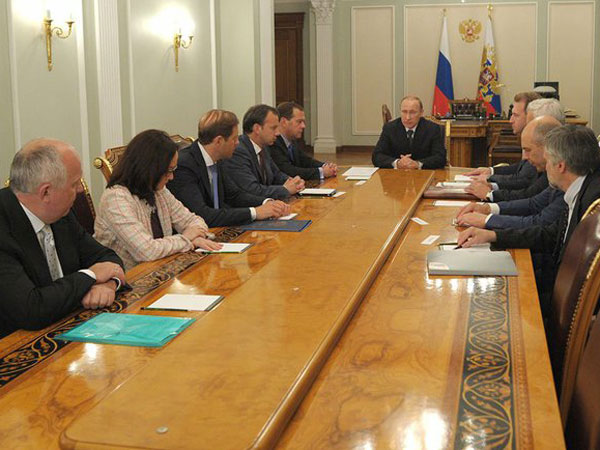
A new wave of sanctions, the introduction of which the Ministry of Finance of the United States announced on July 16, may directly affect the Russian economy. Previously, sanctions affected influential citizens and their companies and only indirectly reflected in the country's economy, now truly system -forming companies, such as Rosneft and VEB, have fallen into the sanctions sheet.
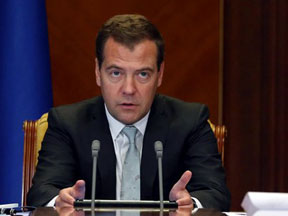 Dmitry Medvedev
Prime Minister Dmitry Medvedev yesterday, July 17, stated that the government this time was forced to respond to the introduction of sanctions, first of all, adjusting the budget policy. The likely weakening of the ruble, which has already begun the day before, and after the fall of the Malaysian aircraft in the zone of control of the Donetsk separatists, it became especially noticeable, it can again help the budget with some additional revenues, but it will clearly not solve all problems.
All previous sanctions affected the Russian investment climate, but did not have a serious influence on the economy. This was also used in the federal government - companies that were on the list, provided some help, but it was not too burdensome for the federal budget, rather these costs could be described as “image”.
Now the American government has closed its market for lending to the largest Russian companies, which will definitely lead to an increase in the cost of loans in Europe. Considering that all modern large and not very companies practice re -loan - that is, borrowing in order to make payments on current debt on time and without problems - increasing the interest on the loan can very seriously affect their activities.
Earlier, the government and the Ministry of Finance, in particular, managed to recapture the “attacks” of those who wanted to distribute state funds concentrated, including in the FNB, between those in need. The very presence of a “cubic”, of course, leads to the fact that there are people who want to get money from it, but until recently, their problem was the impossibility of arguing the need to print reserves.
The introduction of serious sanctions against Russian companies will lead to an influx of those who want to receive state funding and to weaken the position of those who are inclined to maintain budget discipline. So the government, in principle, has two alternatives - either to tighten the budget nuts, arguing that there is still not enough money, or finally get on the rails of protectionism.
“We are forced to rebuild the economic models of development in connection with these solutions, to move on to import substanting technologies, to more use internal growth sources, including financial resources. This is normal, but in some ways it is even not bad for our economy, in some ways it is even useful. But pressure on Russia cannot but affect our budget policy and its priorities, ”said Prime Minister Dmitry Medvedev at a cabinet meeting.
Import substitution announced by the head of government is a logical step for the statesman. The point here is not even that Western oil giants will no longer cooperate with Rosneft and, accordingly, transmit technologies to it. It’s just that loans in foreign banks become more expensive, the funds raised from abroad will be less and less, and debts need to be repaid-it means that this will take a noticeably large fraction of the currency than the originally calculated. If there is little currency in the country, then there is nothing to purchase foreign goods and technologies - hence the import substitution.
We will remind, earlier the Central Bank and the Ministry of Economic Development predicted that the outflow of capital in 2014 would not exceed $ 100 billion, but experts surveyed by Kommersant are confident that it will be at least 110 billion, and may even exceed the threshold of $ 150 billion. The decline in the economy in the second half of 2014 can also be added to the outflow of capital - this will also negatively affect the budget indicators.
In these conditions, the country's leadership is faced with a political choice. It is possible to reduce state expenses, save money, conduct a tough budget policy. On the other hand, you can continue to occupy funds in foreign markets, if not in American and European, then in Asian. This will be expensive, since the credit rating of Russia and all Russian companies is unlikely to remain at the same level, but it will allow, at least for some time, to maintain the economy at the proper level and even technically re -equip the enterprises so that they can do import substitution.
And if the Kremlin and the White House did not pay much attention to previous sanctions, now they will be forced to make some kind of decision. The head of the Web, who fell under the sanctions, has already stated at negotiations with the Ministry of Finance yesterday that the work of the bank as a management company by the pension savings of Russians would “improve”. These words, of course, can mean anything, but the VEB has long sought to expand the possibility of using pension savings of citizens, which is 1.8 trillion rubles. Probably, now this change will push it easier.
Lobbilists who achieve an increase in the role of the state in the economy have intensified - it is believed that state investments should lead to growth. Already now, about half of all investments account for either the state or to state companies and banks, if the lobbyists are strong, then this share will increase again.
Perhaps for the first time on the side of the Ministry of Finance may be a private business. Earlier, the Ministry of Finance was a supporter of an increase in tax burden on business and citizens-this allowed at least somehow to make ends meet regional budgets that would have hung otherwise the dead load on the federal government. Now the business is counting on “unjust” working conditions, said the head of the RSPP Alexander Shokhin - that is, he hopes that the government will not raise taxes, since the private sector will have to be hard in the conditions of the cost of the loan.
The Ministry of Finance, of course, will be a shame to abandon the idea of raising taxes - but this will be an excellent arguments against increased waste of funds and general weakening of budget discipline.
In any case, the decision will be political-and this is perfectly understood in the leadership of the country, otherwise looking at Novo-Ogarev would not have passed a meeting on the economy.