
Translated material
"Detective" without a detective
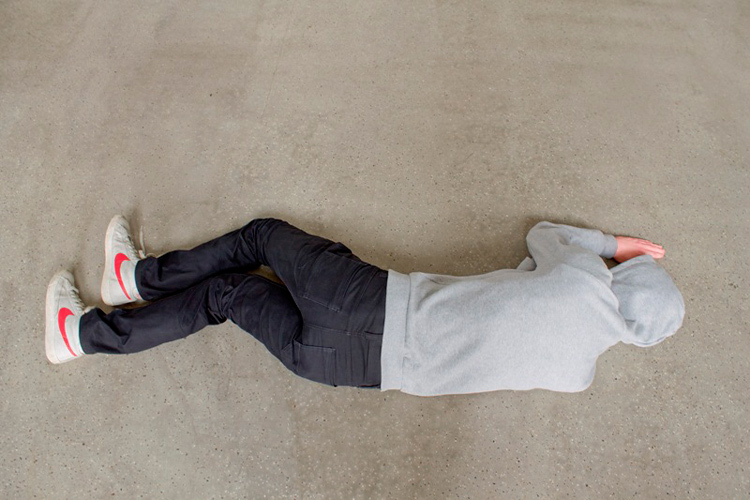
Bertolt Brecht called the detectives “a special cut of real life”, contrasting them with psychological novels, much more introduced into reality than a detective genre. A way of eliminating reality, a transition to another plane of existence in a detective is a kind of mysterious event, an incident that violates the laws of a familiar life. The detective - the main figure of any detective - is just those who restore the lost balance of the usual life of society, that is, in fact, he is the conductor between reality and its back side, when the usual course of things is damaged and only ownership of logical thinking will help to return the lost order to the intended chaos. Moreover, he is the one for whom, according to the Soviet writer, Yeremey Parnov, detectives are written. The criminal commits his malicious acts specifically for an opponent-detective (a classic example-Sherlock Holmes and Professor Moriarty), just as “an experienced playwright drives roles for specific actors” (therefore, Brecht’s love for detectives seems to be such logical, while many of his “associates” were very neglected about this genre).
In connection with this position of the figure of the detective in the detective genre, it is especially interesting to consider the exhibition “Detective” Valentina Dyakonov in MMSI, the name and form of which he opens up a wide scope for interpretations.
Obviously, the curatorial function of Dyakonov in the space of his exhibition is most identified with the function of the narrator. He designed a special artistic reality based on objects from the world around him - the world of art. But deaconov creates a “detective” that violates one of the most important rules of the genre - there is no detective in it. At first glance, every viewer is invited to the place of the detective. He falls into a closed space, in which, as he says in advance, something happened, some tips are given, possible track paths (this is done using a definitely specified route, museum architecture and distribution of exhibits that form important intersections, pushing the viewer to the interpretation given by the curator). But in fact, this is nothing more than the classic position of the reader in the detective: he usually does independent logical work, following the progress of the narrative. That is, in fact, we are dealing with a detective detective. Dyakonov himself, of course, cannot claim this role, since he knows in advance the “denouement” of the created project; His whole plan is embodied precisely in a riddle, the unraveling of which the viewer may try to find.
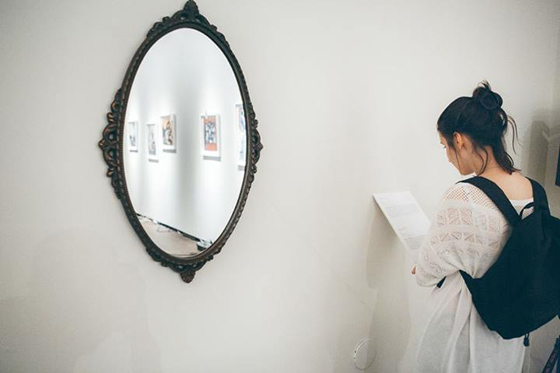 © Dmitry Smirnov, MMOMA
“Reducting what? - The logical question of the visitor to the exhibition. - How then does a mystery sound? " Any detective, even if you discard all the games with the author, the detective and the reader, is, first of all, as it was said, the presence of a strange incident, a riddle, a question that requires an answer. So, such a question should be in this exhibition. And you can try to formulate it as follows: "What happens to contemporary art and where will it move on?" To this question, the viewer - with a share of tips determined by the genre - will have to choose the answer on your own.
The core of the exhibition is composed of works by young artists, those who were formed in the mid-2000s and began active activity at the turn of the 2010s. Once Dyakonov himself in a polemic article -also during the Youth Biennale in Moscow, only four years ago-defined this group of artists, dubbed them with “new boring” ones. “Boring” at that time were opposed to various kinds of “wild”, “exotic” manifestations of Russian art. The community of aesthetic attitudes and orientation on the international language of contemporary art was reinforced by a historical community. Most of the artists attributed to the “new boring” artists studied at the Institute of Modern Art of Contemporary Art with Stanislav Shuripa, and then trained in Sweden, in the Goetourg Art Academy. In a dialogue with the artist Arseny Zhilyaev, Dyakonov finally articulated the term, adding to modesty, asceticism and standardization, like a Swedish wall from the IKEA store, a critical coloring and anti -spectacular research orientation. Following the publication of the dialogue, a number of critical articles were followed against the aesthetic principles put forward by Dyakonov, who himself held a distance, without saying “yes,” nor “no” to the described phenomenon. The quintessence of the polemic around the “boring” was published in the journal Artforum an article by Ekaterina Dygot, which tried to reinterpreting the art of young artists of the end of the zero already in terms of critical discourse. Dyakonov’s answer secured the theses voiced earlier.
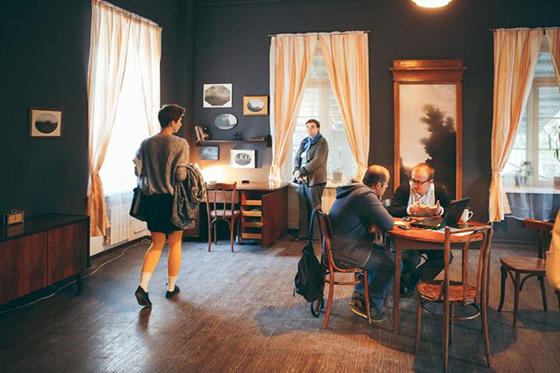 © Dmitry Smirnov, MMOMA Ilya Orlov. Untitled. 2012
But, as it happens, despite the first negative reaction of critics and the participants in the process, the history of the latest Russian art appropriated this name - “new boring” - to himself in the future to offer it in the form of an established term.
At the Detective exhibition, Dyakonov for the first time practically turns to the works of those artists whom he really knows, being to those who first described them theoretically and gave a name. Working with the material, thus, goes to his special level, and an attempt to determine the place of these artists - entering them in the register of art history - was made with breathtaking demand to the duties of the curator. One of these very subtle techniques is to show fakes under landscapes of Russian artists of the second half of the 19th century, made by Swedish authors. It is important here to know about the proximity of the landscape traditions of these national schools, as well as the fact that so many leaders of the generation of “new boring”, as has already been said, were studied in the Swedish Gotyrga, and their cold, strict art is largely connected with the relevant European artistic trends that are relevant in the mid-2000s.
There are a lot of similar no less interesting comparisons and interpretations at the exhibition: the connection with the cubism presented at the exhibition with the canvases of Lyubov Popova and Eduard Crimmer; An equally important, almost related relationship with Moscow conceptualism and art of the 1990s. Conducting the last analogy allows Dyakonov to argue about the absence of secondaryness, in which they sometimes reproached “new boring”, claiming their imitation of an exceptionally high -gloss European fashion, associated with the heyday of neo -motorist practices, criticizing the modern process and attempts to go beyond institutionalism. Although, on the other hand, the same links indicate that even the Russian avant -garde, the main pride and flag of Russian art is a complex processing of the material brought from outside, which is much closer to the truth and avoids the eternal far -fetched opposition “Slavophilism - Westernism”.
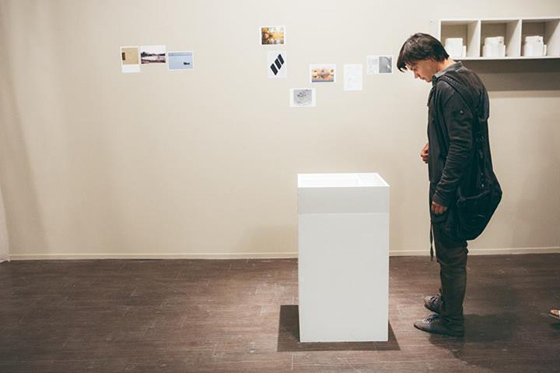 © Dmitry Smirnov, MMOMA
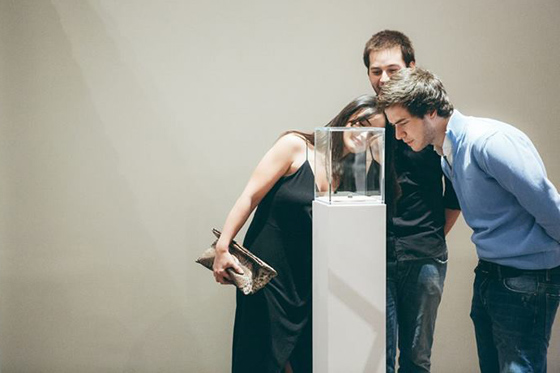
Most of the students of Stanislav Shuripa in his, already one might say, the “golden” period was just engaged in the fact that she translated the international trends of the 2000s into Russian, the main of which was interest in rethinking modernism. However, at the beginning of the new decade, they have, and it is probably time to list their names: these are Arseny Zhilyaev, Anna Titova, Alexander Sukharev, Alexander Posner and others - there was a clear transformation, displacement towards the less modernist and pretentious “museum”, that is, an appeal to the museum as a medium of the exhibition, which is much closer to Moscow romantic conceptualism and to Moscow The more critical conceptual trends of recent years (the largest manifestation of interest in the museum is, of course, the 2013 Venetian Biennale, no matter how much it treated). Arseny Zhilyaev appeared in his exhibitions “New Museum of Revolution” (it was shown in Voronezh in early 2009), and then the “Museum of Proletarian Culture” appeared in his exhibitions. Industrialization of bohemia ”” 2012 and “Pedagogical Poem” (2012; Sokurator - Ilya Budraitskis). The exhibition presents the scandalously known “Dreamer”, part of the “Museum of Proletarian Culture”. Interest in museology is also traced among other Voronezh residents. In the Azu project (2012-2014), Ilya Dolgov addresses the methods of the first naturalists and museums of natural history. At the exhibition in the MMSI, the viewer sees, in fact, Azu himself is a semi -inventive appearance of creatures that are in the intermediate stage between living and inanimate nature, as well as several old, shabby windows with naturalistic sketches. Nikolai Alekseev represents part of his project, first shown in the Gallery 21, where an archive of forms and photographs with references to the first encyclopedists and classifiers is exhibited. Anna Titova, who has gone from experiments close to the work of Martin Boyce, to spectacular sculptural installations, hanging somewhere between the canvases of Stanislav Shuripa and the conceptual formalism of Liam Gillik, presented at the detective exhibition the development of the “Resistance Rituals” project (2013). Again, this is the artist’s museum, where special attention is paid to the methods of representation and art history. And, finally, Stanislav Shurip himself, who shows in MMSI a project that arose as an impression of visiting an ethnographic museum in Gotheborg, once again the artist pushes the viewer with materialized conventions of the museum display.
 © Dmitry Smirnov, MMOMA
It is not by chance that Deaconov focuses on certain artists and their specific works, thereby pushing the viewer to awareness of the importance of this relatively new but clearly designated approach in art. It is important to make another remark: the detective genre is inherently as conservative as possible. It reflects the fears of the bourgeois world order before chaotic, revolutionary changes that will forever twist the usual world. Even a strict genre division into bad and good, black and white speaks of the longing of the late XIX - early twentieth century by the usual clarity and order. Therefore, a detective who, in many detectives, is a representative of the authorities, the police, directly personifies the "law and order."
If we recall a number of important differences between the concept of the Detective exhibition from the classic model of the genre, the name of which it is named, including the most important thing is the absence of a detective, in the traditional bourgeois attitude - a representative of the authorities that protects from a possible revolutionary evil - the destroyer of the usual society, it will be obvious that the connection of the Dyakonov exhibition with the same genre is exclusively formal or claims to be exclusively formal or claims The fact that in the modern world the power was transformed by losing a pronounced subject. The curator himself in his text to the project writes about the lack of personality.
This form - the maximum game, entertaining - in contrast highly highlights the features of the method of the whole generation of “new boring”, which are close to Dyakonov himself. The conservatism of the genre, the entertainment of the form only strengthened the modernist techniques of artists. “Only social conditions make a crime possible or necessary,” wrote Brecht in connection with the detective. If you rephrase it, we can say that only social conditions make art possible or necessary. Today's turn to conservatism and reaction sets the art of recent years and even decades in a new, not very comfortable position, and one of the possible exits, how the exhibition “Detective” is striving to tell us, is the use of a traditional form of museum display as a special exhibition medium filled with new critical content.