
Translated material
"We will eat you anyway"
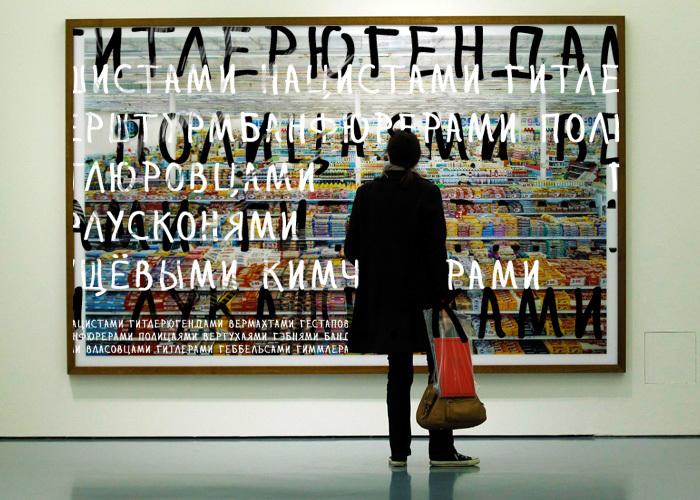
Read Valeria Nugatova - to study the history of diseases of a huge country, with a considerable amazement of finding itself by the middle of the zero in the circumstances of the plague luxury, in a situation of depravity of the socialist project, which was provided with expensive hydrocarbons on the smoky ruins of the socialist project.
It seems that all the textbook arguments of Marxist criticism, once perished, were revived in these monotonous-crap poems, with excellent impassiveness of the total alienation, commodity fetishism, petty-bourgeois morality and other inveterate vices of the Russian metropolis. It is more curious to notice that the variety of critical goals is quite clearly correlated with the variety of nugatov style used by nugatov: in his books you can also find funny rhymeal reproaches (“Poetry-Huezia / Great Poetry / Excellent poetry / Beautiful poetry / Pozhezia-Huyesia / Huyesia / Ambassia-Cyricoma”), and and seniority ”), and Verlibrov’s icy objectivism (“Giveowed for shopping / bypassed two malls and several clothing stores / bought new shins / bucutaries / and washed the purchases / so that they were well worn / sat on a bench / exhausted from the heat / peering in LiveJournal”), and - the most famous - the long rows of transfers, skillfully reducing the poet’s pattern to the banal Merchandizer, who exhibits kilometers of goods on the shelves of the World Hypermarket (“I don’t have a microwave, I don’t have a washing machine, I don’t have a dishwasher, I don’t have a blender, I don’t have a coffee maker”).
The best of Nugatov’s things convincingly demonstrate to us the incredible standard of any life scenarios and ideas about happiness in the era of late capitalism (“Swallowing a salary of two plasters swallow a leading position, you swallow a well -built apartment swallow a beautiful expensive car you swallow a rich prosperous family”) and the deepest, material, material, material, material, material, material, material, material, material, material, material, material, material, material, material Ideological) The split paradoxically experienced today by the Russian society as the norm accepted by everyone.
A good example of a critical strategy implemented by Nugatov is the poem “People say” from the book of 2012 “mainstream” . In it, in our opinion, one of the series of important processes is revealed under the global oil film of general apathy and stagnation. Nugatov begins by taking a completely innocent couple of concepts - or, as they say, a binary opposition: "Silence is speaking." Further, this pair is reinterpreted for the first and second persons (“I am silent - you say”) and is placed in the nutrient medium of the Late Putin glamor with its glossy brilliance, vulgar show, ubiquitous consumerism, mass cultural fast food, etc., and so on. In this environment, a monotonous development of the topic begins, based on the long listing of synonyms, which has become a proprietary sign of the Nugatovskaya style; On the one hand, “I have nothing to say about Luzhkov / I have nothing to say about Surkov / I have nothing to say about Medvedev / I have nothing to say about Shevchuk”, on the other hand, “you say incessantly, say, say / on the telephone on the radio on the intercom / on Skype on Livjornal on Twitter on Facebook.” Having increased the volume of such transfers significantly, we will receive the final text included in Nugatov in the "mainstream".
The effect of this, relatively simple, textual modeling model surpasses all sorts of reader’s expectations. Eating glossy affirmatives of the metropolitan gabitus, grain of simple binary opposition is swollen rapidly before our eyes, growing with huge clusters, becomes more and more, occupies new lines, stanzas, pages, recalling in its ruthless non -resistance metastases of a cancer, the beginning of which was laid by a simple mole: “I have nothing to say about Shnurov / I have nothing to say about Shnurov I have nothing to say about the nurses / I have nothing to say about the gay parade / I have nothing to say about the bloody regime / I have nothing to say about politics / I have nothing to say about life / I have nothing to say about people / I have nothing to say about God / I have nothing to say about you / I have nothing to say to myself ” vs. “Already commenting on a polemic, you are asserted by the ironic, you are unloaded with hyperbolize you shouting out criticize criticize Lukavita, frankly stem, you are wandering, you are admiring, you are supporting you support you will be overlapping.” Actually, this explosive growth occupies Nugatov most of all; He fixes him with the impassivity of the doctor, however, the very pile of words and similar grammatical constructions serves to escalate intonation, sooner or later breaking into cry and laughter, and now we are already observing the real monster - hysterical, angry, jealous tirade that does not want to resolve, eternal antagonism and a split (“and all the time, and all the time, the same P*Zyati P*Zadya and I am silently silent ”), the abyss in which life, society, norms, laws, rules, dreams and hopes are lying around, leaving only anxiety, fear and resentification. The unrecognizable pair of concepts of “silence-speaking” turns into the impossibility of any reconciliation, a fierce statement of contradiction, which is additionally emphasized graphically: the design “I have nothing to say” is recorded by Nugatov as poems, in a column, and “you are commenting on” as prose, a continuous index stream of words.
The simplest pairs of concepts, rapidly growing in the nutritious environment of the global supermarket, suddenly give rise to nightmare monsters, turn around the deepest moats and the highest barriers, destroying the very possibility of any consensus.
Another similar example is the grammatical opposition of the plural of the first and second person “We are you”, which suddenly becomes under the influence of Russian realities with an affective contrast of reference groups: “Rockers are we / bikers. We / hippies are we / kanka are we / bruises. We / Planokuras are we / the freaks are we Torchi is we / screw is we / dinosaurs are we ” vs. “Beautiful are you / healthy you / Happy are you / sexy you / Successful you / promising are you / rich it is you / famous you / talented are you / creative are you / free you / relaxed are you.” An example of the third is the growth of the pair “Progressive - Conservative” with the passing reduction of this most important division for the European tradition to the methods of Coitus: “Endy Warhol Eh*in the ass in your eyes / Yukio Misima Yo in your ass in your eyes / Michelangelo Bunarroti Yo*in your ass / in your eyes. Leonardo da Vinci ё*in the ass in your eyes / Piero Paolo Pasolini Yo*in the ass in your eyes / Lukino Visconti ё*in the ass in your eyes / Pedro almodovar ё*in the ass in your eyes / Sergey Parajanov Ehi in your eyes / David Boui ё*in the ass in your eyes " vs. “And you all remained the same / u*bishop natural homophobes / cattle with hopeless / backward stinking troglodites / Nazis by Nazis with Hitlelengers by the Wehrmachts by the SS by Obershturmbanführers by the Polis with Verseravians by the Bandera vansiovites by the Vlasovites by the Hitlers by the Hitlers with the Gitlers Gabbels. Himmplers with mussolini by the Berluskoys of the Putin Lukashenki Yanukovychi Turkmenbashi Stalin Khimchevs. ”
Through the deliberate monotony of poetic speech, anger begins to shine brightly, and the most surprising is that this frightening glow appears without any prerequisites - from the trivial difference between a pair of words and from a set of synonyms. And, perhaps, we should supplement a number of popular judgments about Nugatov’s poetry: his character does not “belong to the layer of protest subculture” ( Dmitry Golynko ) and does not “say“ for ”the subculture ( Danila Davydov ) - he is more likely to make the root causes and mechanisms of the emergence of gaps, scholars, borders between social strata and“ subcultures ”.
The greatest interest, of course, causes the device of these boundaries.
And here we need to recall a fairly famous fact: most of the contrasts used in everyday activity are not natural. Binar oppositions such as “Silence - Speaking”, which serve as grains of cited verses, despite all their apparent “evidence”, is nothing more than a metaphysical product that equally determines and distorting the knowledge of the world.
This is the main value of Nugatov’s texts: reading them, we begin to understand that the deepest split experienced today by Russian society passes along the lines of purely metaphysical oppositions.
The simplest pairs of concepts, rapidly growing in the nutritious environment of the global supermarket, suddenly give rise to nightmare monsters, turn around the deepest moats and the highest barriers, destroying the very possibility of any consensus. Let me, but wasn’t this the situation more recently described by Andrei Polyakov , noticing: “The words“ patriot ”and“ democrat ”should not be abusive. And in our minds they are abusive. If a person is a patriot, then there is always some Black Highway who will read the “Protocols of the Zion sages” and write graphomaniac revelations in marginal editions. And if a person is a liberal democrat, then an element of Russophobia will necessarily be built into this, sometimes quite obvious, sometimes light, it will definitely be broadcast in one form or another of the position of the US State Department <...>. Moreover, there is not only a dialogue, there is not even one space ”? In Nugatov’s poems, the splitness or absence of such a space, the obvious crisis of Russian public life, is primarily a textual crisis, generated by a naive perception of many artificial, rhetorical contrasts.
Of course, the general course of our reasoning, and the vocabulary we use (“metaphysics”, “binary oppositions”) cannot but remind the reader of a very influential tradition of intellectual criticism-deconstruction (in its rather socio-political than literary and philosophical, edition). It is in this line that, in our opinion, that the considered texts of Nugatov are moving, in the end only a tactical moment of a much wider strategy for identifying potentially dangerous foundations of thought. And in this particular case, the connection of politics with metaphysics seems very close.
The reaction of Jacques Derrida to a terrorist attack on the World Trade Center, voiced by him just ten days after September 11, 2001, is known: “A sober, abundant deconstructive criticism is required, attentive to the fact that through ... political rhetoric, the power of mass media and television names, spontaneous and organized manifestations of public opinion, inexpensively combines politics with metaphysics, with a metaphysician, with. capitalist speculations, with the perversions of religious and national feelings. ” This statement could be criticized both on the right (as an enterprising advertisement of the personally invented method), and on the left (as an excessive academicism that replaces real actions with comfortable reasoning), but it has a deep understanding of the situation - because it is the relapses of metaphysical thinking, the tendency to trust binary opposition, inevitably strengthening the picture of the world, leads to an increase in nationalism, and Xenophobia, to the totalitarian division of people into their own and strangers, to the shameful chauvinist pamphlets like the sad “rage and pride” of Oriana Fallochi.
However, in the absence of critical situations, in the calm and well -fed capitalist everyday life of a large city, this binary logic continues its destructive work, marginalizing and declaring millions of people around the globe. “Gay in San Francisco, black in South Africa, Mexicacial in San Isydro, anarchist in Spain, Palestinian in Israel, Mayan Indian on the streets of San Cristobal, a Jew in Germany, Gypsy in Poland, an Indian Mokhok in Kvebek, a pacifist in Bosnia, a single woman in metro after ten in the evening, a peasant without land, a peasant without land, a peasant without land, a peasant without land, a peasant without land, a peasant without land, a peasant without land, a peasant A bandit in the slums, an unemployed worker, an unhappy student and, of course, the Sapatists in the mountains ” - from the Lancandon Selva presented the world with a long list of victims of this style of thinking completely different the author . It is quite obvious that the contemptuous formula of the two Russia (“with an iPhone” and “with chanson”), and the disgusting genesis of “chock” and “fagots” in the minds of the domestic layman are determined exactly the same reasons.
Nugatov nourishes little illusions about the real situation. Demonstrating not just the existence, but explosive, exponential growth in oppositions like “we are you”, he brings the situation to the disaster. All his texts, cited by us above, end with direct aggression; Appeal to obscene vocabulary and threats of violence is the only possible way out of the created impasse: “Gades with bastards with goats with roosters with assholes govnyuki pis and fagots”, “All the nah*go away from me do not touch me, do not cling to ** rush,“ I hate you freaks ”,“ But we are all the same We’ll eat you / alas. ”
The tradesman corrupted by Putin's stability, who does not know other styles of thinking in addition to collecting artificial dichotomies, is ready to go to any cruelty to protect his calm and well -being. So fear and anger appear. So Great Russian chauvinism and gop-patriotism appear. This is how Kondopoga 2006, Manezhka-2010, Pugachev-2013, Western Biryulyovo and so on, and so on, and so on.
The list is open.