
Translated material
New EU sanctions against Russia will hit Sberbank and VTB, sources said
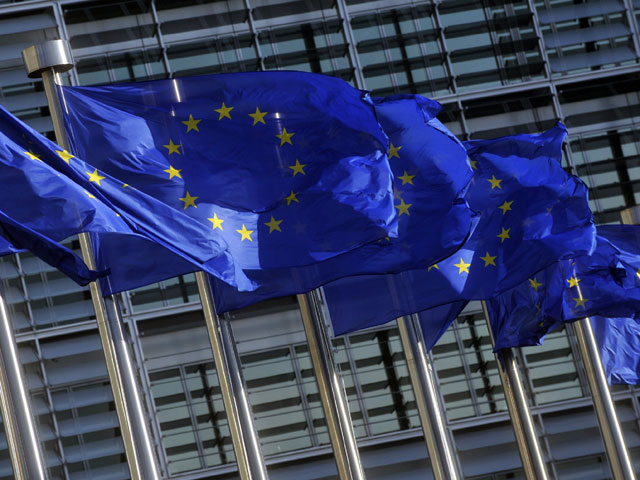
The European Union for the first time since the beginning of the Ukrainian crisis in a step from taking the "third phase" of sanctions against Russia - aimed at entire sectors of the economy, although until recently, despite pressure from the United States, the EU fears to cause damage to their own countries prevailed over the desire to put Moscow in place. The Committee of Permanent Representatives of the EU countries (Coreper) on Tuesday in the morning began to discuss sanctions against Russia in the field of finance, weapons, dual -use products and energy.
Last Monday, it became known that the heads of Germany, France, Italy, Great Britain and the USA in telephone conversations agreed to further expand black lists in relation to the Russian Federation in connection with the unwillingness of Moscow to follow the call of the international community and stop assistance, including weapons, separatists in eastern Ukraine.
According to the official representative of the European Commission (EC) Jonathan Todd, the chairman of EC Jose Manuel Barrosa expressed the hope that the Western countries have reached an agreement on the sanctions package this week. A source in the EU institutes told Interfax that the permanent representatives should agree on the proposals of the European Commission and the European Foreign Policy Service. “This will be a coordination of the issue, the achievement of consent, and not its resolution,” the agency’s interlocutor said, adding that “the decision of the EU Council will be required in any case.” According to the source, during Tuesday, this procedural issue may be clarified.
- Most Russians do not bother Western sanctions
- The press prophesies that sanctions against the Russian Federation will hit the world economy stronger than expected
According to the interlocutor of the agency, the debate in Coreper on Tuesday can drag on all day. The night before, the committee agreed to add individuals and legal entities supporting those who make decisions that undermine the territorial integrity of Ukraine to the sanctions list in Russia, a source in the EU said in Brussels.
According to him, the EU ambassadors also reached an agreement on targeted restrictive measures in relation to a number of structures responsible for violations of the territorial integrity of Ukraine - preliminary, we are talking about sanctions against a number of sectors of Crimea and Sevastopol.
The source also said that these agreements will come into force after approval in the EU Council and publication in the “official journal” of the European Union on Wednesday evening, July 30.
The European Commission representative Jonathan Todd told Kommersant that the EU agreed to resolve the issue of tightening sanctions against Russia until the end of July. According to him, the package of measures under discussion consists of several parts. Firstly, the Permanent Representatives of the EU discussed trade, financial, visa and transport restrictions on Crimea. Secondly, they agreed to expand the black list of Russian and Ukrainian individuals and legal entities, responsible, according to Brussels, for "actions that undermine the sovereignty and territorial integrity of Ukraine." Thirdly, on Tuesday, EU Permantians will discuss the legislative framework for serious restrictions on the Russian banking sector, energy and defense sections.
There are no official information regarding specific names and names of companies that this time will affect sanctions. The Wall Street Journal reports citing diplomatic sources that the EU is going to add five people and two companies to the black list.
The publication notes that restrictive measures will hit such powerful Russian structures as Sberbank and the VTB group. According to WSJ, EU sanctions will significantly limit the possibilities of these financial institutions.
In turn, an anonymous European diplomatic source in Brussels, close to the EU Council, said to ITAR-TASS that the European Union would probably bring four more individuals and three legal entities to Russia and Ukraine.
According to the European Commission, the loss of the Russian Federation from sector sanctions can amount to almost $ 100 billion in two years. The euoobserver publication, citing sources in the EC, reported that the adoption of these measures would cost Russia $ 23 billion this year and $ 75 billion in 2015. Meanwhile, according to the interlocutors of EUOOBSERVER, the EU countries will also suffer from the introduction of economic sanctions against the Russian Federation: EU losses can amount to $ 40 billion this year and about $ 50 billion in 2015.
However, the Russian authorities do not cease to declare that even such threats to the economy will not force Russia to deviate from such a policy that it considers fair and legitimate. The head of the Russian Foreign Ministry, Sergei Lavrov, at a briefing on the eve of a briefing, said that the West, insisting on transparences around Ukraine, demanding from Russia to change politics in this matter, did not want openness itself.
“I have not heard any political initiatives from Western partners, they say:“ Russia must change its policy until it changes it, there will be sanctions, ”Lavrov noted.“ What they mean by “changes,” I don’t know, ”the head of the Foreign Ministry of ITAR -TASS.
The United States, after the EU, can also introduce new restrictive measures against Russia in connection with the Ukrainian crisis this week, Tony Blinken, Deputy Presidential Assistant for National Security, said on Monday at a briefing.
“We believe that it is necessary to take additional measures, and this is what Europe and the United States intend to do this week,” Reuters quoted Blinken as saying. A senior official noted that tightening sanctions is due to the fact that in Washington “they did not notice strategic changes” in the position of Moscow. “We expect that this week European leaders will take additional steps directed, including against key sectors of the Russian economy,” Blinken emphasized. According to him, previously imposed sanctions are already negatively affected by the Russian economy.
In turn, the head of the White House press service, Josh Ernest, could not confirm whether additional sanctions would be adopted, but admitted that the United States is in principle ready to apply new restrictive measures against Russia, guilty of "destabilizing the situation in Ukraine." The press secretary emphasized that the possibility of imposing sanctions is still being considered.
Expert: There will be no rebellion of elites against Putin, despite the increase in the pressure of the West
The Wall Street Journal reports that the upcoming restrictive measures are part of the plan to strengthen pressure on Russian President Vladimir Putin, who, despite the repeated calls of the West, continues to pursue his policy and does not refuse to support separatists in eastern Ukraine. It should be noted that, according to Western intelligence, the clouds around Putin are thickening not only from the West - sanctions cause extreme discontent in the highest echelons of the authorities, whose representatives are trying to put pressure on the president.
On the eve of the German magazine Der Spiegel, citing German intelligence data, said that due to the tightening of Western sanctions in the country's top leadership, a split is supposedly ripening - a backstage struggle began between supporters of a tough political course and representatives of business elite, striving to minimize possible damage to their financial interests.
And although commentators are united in the opinion that in the confrontation between the West and Russia there is a turning point and there is a danger to Putin to become a source of dissatisfaction with his environment, according to experts, oligarchs, even despite the fears for their villas on the Cote d'Azur and billions on accounts in Western banks, will not go against the Kremlin. This, in particular, writes the editor of the Russian editors of DW Roman Goncharenko.
According to the author of the article, politicians and oligarchs are well aware that they risk life if they rebel against the head of state. At the same time, according to Goncharenko, President Putin will definitely not change his course against Ukraine, since he "burned all the bridges." The propaganda machine is promoted at full capacity, and Moscow will try to maintain its influence on Ukraine with all its might, even if it will be necessary to pay for this the war and isolation of Russia in the world.
Putin was in a difficult situation also because if he suddenly succumbs to the pressure of the West and changes his policy against Ukraine, in Russia this will be considered a manifestation of weakness, which for the head of state will be equal to political suicide, the expert believes. According to Goncharenko, Putin will go in the coming days and make the West “it hurts, very painfully” - for example, will impose sanctions against European and American companies working in Russia or block oil and gas supply.