
Translated material
Memory. Vladimir Zvorykin
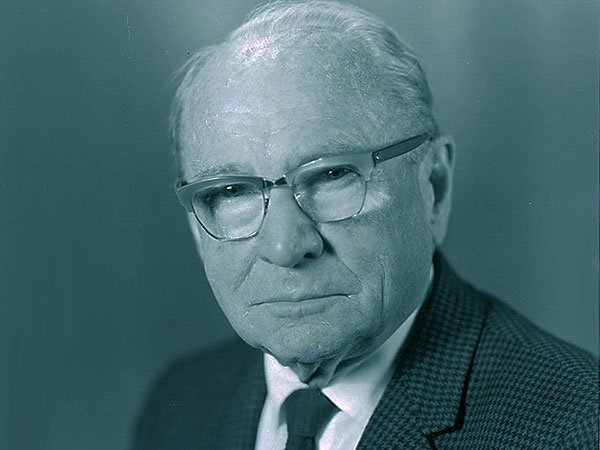
On July 29, 1888, Vladimir Zvorykin, an inventor of television, was born.
Personal business
Vladimir Kozmich Zvorykin (1888-1982) was born in Murom in the family of the merchant of the first guild, selling bread. After graduating from a real school, he entered the St. Petersburg Technological Institute, which he graduated in 1912 with honors, receiving a diploma of a technologist. During the training under the leadership of Professor Boris Rousing - the author of pioneer works on the electronic transmission of the image at a distance - conducted the first experiments in the field of “farming” and electronics. From 1912 to 1914 he studied at the Parisian college de France under the leadership of the Lanzhenen field.
With the outbreak of World War I, he served in the communications troops in Grodno. Then he worked in an officer radio school in Petrograd.
From the Civil War, Zvorykin fled to the capital of the white movement of Omsk. “It became obvious that it was not necessary to expect a return to normal conditions, in particular for research work in the near future. The new government issued strict decrees, according to which all former officers were obliged to come to the commissariat for draft in the Red Army. I did not want to participate in the civil war. Moreover, I dreamed of working in a laboratory to realize the ideas that I have naked. In the end, I came to the conclusion that for such work it is necessary to leave for another country, and America seemed to me such a country, ”the inventor wrote. During a business trip to New York in 1919, where Zvorykin negotiated radio equipment, the Kolchak government, and the scientist decided to stay in the United States.
Zvorykin got a job at the Westinghouse Electric research laboratory and already in 1923 submitted a patent for television, carried out on an electronic principle. However, the leadership of the company Westingauz did not appreciate the invention. In 1928, after a meeting with an emigrant from Russia, one of the heads of Radio Corporation of America (RCA) David Sarnov, received a RCA electronics laboratory. In 1929 he developed a kinescop, by 1931 he completed the creation of a transmitting tube - an iconoscope. In 1933 he demonstrated an electronic television system. In the 1940s, he developed the principles of color television, breaking a light beam into blue, red and green. Was a co -author of the development of a scanning electron microscope. During the Second World War, he developed night vision devices and air bombs with television fire. In the 1950s-1960s, Zvorykin was engaged in experiments in the field of medicine, was the director of the Center for Medical Electronics at the Rockefeller Institute in New York. To study reactions inside living cells, he created a unique microscope that reproduced a color image on a television screen. He died in the USA on July 29, 1982. He was married twice, had two daughters.
What is famous
One of the creators of modern television is first monochrome, and then color. The author of over 120 different inventions both in the field of television and in the field of electronic medicine and electronics of various types. He played a large role in the emergence and development of television in Western Europe and the USSR. It was with the American RCA that the Soviet Union entered into an agreement on the construction of the first electronic television transmitting station in Moscow. Also in the USSR, the production of TK-1 TVs with Kinescope Zvorykin was mastered.
What you need to know about
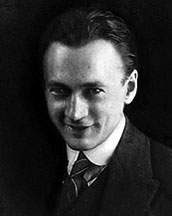 Vladimir Zvorykin
After the February Revolution on the complaint of one of the soldiers, he was called to the revolutionary tribunal. The soldier complained that Zvorykin was mocked at him, forcing a long time to repeat the numbers in the hole (microphone), while he was digging in some apparatus in the next room. Fortunately, the court figured out the situation and removed the charges from Zvorykin.
In the 1930s, the Soviet authorities called Zvorykin to return to his homeland. However, at the family council, the husband of his sister Anna cooled the joy of the inventor. Professor of the Leningrad Mining Institute Dmitry Nalivkin told Zvorykin that he was accepted in the USSR with great honor, as long as he is a value as a scientist and has an American passport. “Now imagine that you have changed this passport to the Red -brown Passport. For some, you will be a respected person who has managed to invent something very important. For many others, you will remain, firstly, the son of the merchant of the first guild, secondly, a former white officer, thirdly, in the recent past, an American citizen who had close ties with the world of the bourgeoisie. In an adverse set of circumstances, even one of these points will be enough for you to be far from the laboratories and apartment promised to you. Remember the process of the industrial party and believe me, this process will not be limited to this process. The risk is very large, I personally consider your desire to return to Russia unreasonable, ”the son of Nalivkin restored that conversation.
Direct speech:
“My return from the USSR was met with various feelings. Relatives and friends sighed with a huge invadation, because all this time they were afraid that I could be detained like a Capita. Many Russian emigrants, who had previously considered the trip too risky, were suspicious of my prosperous return, ” the scientist wrote in his autobiography.
“Interest in television continuously grew abroad, and therefore many visitors visited our laboratory. As I already mentioned, the similar system was developed in England, unlike ours, it had a smaller number of rows of scan, and the name "iconoscope" was replaced by "emitron". Our television system was also adopted in France, but with a large number of lines. In the end, the systems similar to ours were adopted all over the world, ” - ibid., About the development of television.
5 facts about Vladimir Zvorykin
- Since childhood, he perfectly mastered French and German.
- Despite the years spent in America, he spoke English with a monstrous accent. He also retained Russian habits and way of thinking.
- Zvrykin was able to receive a patent for his invention only fifteen years after filing the application - December 20, 1938, when many residents of New York already had televisions with his kinescope at home.
- The next year after moving to the United States, he broke up with his first wife. For a long time was lonely. After twenty years of bachelor's life, he entered into a new marriage with the Russian emigrant Ekaterina Polevitskaya.
- In 2013, monuments to Zvorykin were opened in Moscow and Murom. Then the National Association of Television and Distributors established a Zvorykin television Award.
Article about Vladimir Zvorykin on Wikipedia
Vladimir Kozmich Zvorykin - Television inventor
Julia Goryacheva "Zvorykin - Murom Father of Television"
Inventor of the iconoscope and kinescop Vladimir Zvorykin