
Translated material
Sanctions, sanctions, sanctions
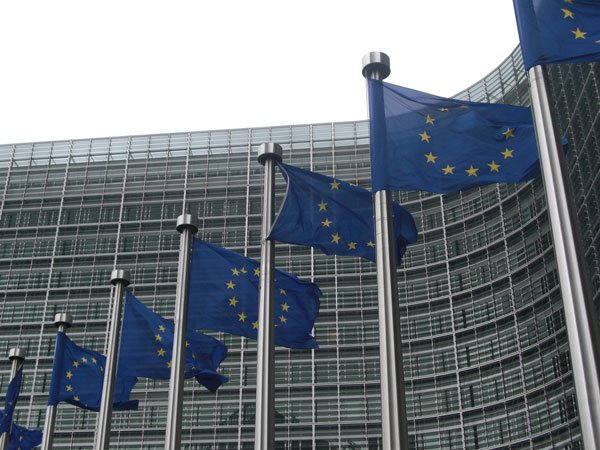
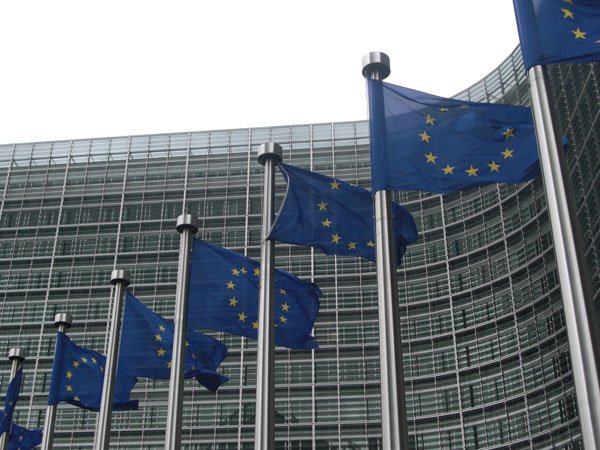 European Parliament photo: corporateeurope.org
On the eve of the diplomats of the European Union prepared an expanded list of persons and organizations that will fall under sanctions in connection with the situation in Ukraine.
This list, which includes 87 names and 20 organizations, can be published on Tuesday or Wednesday. According to Brussels, people and companies are responsible for "actions that undermine the sovereignty and territorial integrity of Ukraine." The defendants in this list will be prohibited from entering the territory of the EU countries, and their property is frozen there. According to the media, the list also contains well -known persons "involved in decision -making in Ukraine."
 Jonathan Todd
Jonathan Todd from the European Commission told Kommersant that representatives of the EU countries intend to resolve the issue of tightening sanctions against Russia “until the end of July”. According to him, the package of measures under discussion consists of several parts.
In particular, EU representatives agreed on July 28 to restrict trade and investment in Crimea, which will affect spheres such as energy, transport and telecommunications.
The developed measures were not published, but, as the source of the newspaper explained earlier, if the relevant proposals receive the approval of the leadership of the European Union countries, "European companies will have to think well before investing in Crimea or cooperate with Russian partners registered on the peninsula."
“The goods produced in the Crimea will not be allowed to the EU market. European firms cooperating with the Crimean will faced difficulties in doing business in Ukraine and the EU itself. Airplanes will not be able to fly from the EU to the Crimea, and European insurance will not apply to ships entering the Crimean ports, ”he listed possible restrictions.
In addition, on July 29, EU Permanent Representatives will discuss serious restrictions on the Russian banking sector, energy and defense sector. We are talking about the difficulty of accessing Russian banks to the EU capital market, a military embargo, a ban on the supply of Russia's dual -purpose products and technologies for the energy sector.
The authoritative publication EUOOBSERVER, with reference to sources in the European Commission, previously reported that the adoption of these measures will cost Russia 23 billion euros this year and 75 billion euros in 2015. Meanwhile, the EU countries will also suffer from the introduction of economic sanctions in relation to the Russian Federation: their losses can amount to 40 billion euros in the current year and about 50 billion euros in the following, since, it is expected that Russia will be expected to receive response measures for trading trade and financial sanctions.
The Eastern Committee of the German Economy, representing companies working in Russia, previously calculated that economic sanctions will jeopardize 350 thousand jobs directly tied to German-Russian trade relations.
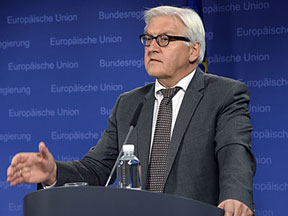 Frank-Walter Steinmeier
Nevertheless, the Minister of Foreign Affairs of Germany Frank-Walter Steinmeier said that Berlin would support economic sanctions against Moscow if their burden is “fairly” distributed among all EU members. According to him, "pressure on Russia needs to be strengthened, since it still provides support to separatists in the southeast of Ukraine, allowing weapons and militants to cross the Russian-Ukrainian border."
Earlier, the publication of Wall Street Journal reported that the European Union is preparing to add five more people and two companies to the anti -Russian sanctions list, and in the same article two largest Russian banks - Sberbank and VTB were mentioned.
Russian media immediately reported that Sberbank and VTB are included in the EU sanctions list, however, as it turned out later, many publications have incorrectly interpreted the material of the American newspaper, reports Russia Today.
In particular, the WSJ article spoke of Brussels introducing new sector sanctions that will affect the Russian economic system. And it was in this context that Sberbank and VTB were mentioned.
“Financial sanctions will sharply limit the ability of the largest Russian banks, including Sberbank and VTB, to attract funding in the EU,” the material says. However, many Russian media outlets concluded that Russian banks were blacklisting the EU.
In addition to the European Union, the United States may also go to further tightening sanctions against the Russian Federation. This was announced by the Deputy Assistant of the US President for National Security Ben Rhodes. Note that yesterday Barack Obama discussed by telephone this issue with the leaders of Germany, France, Great Britain and Italy.
At the same time, despite the sanctions, VEB, Gazprombank, Rosneft and Novatek, which were introduced in mid -July, will be able to use previously open long -term credit lines of American banks. The corresponding clarification was released the day before, the US Treasury, Interfax reports.
The document also notes that American persons are not forbidden to make transactions with depository receipts to the shares of companies from the Black List, if the shares that are a base tool for ADR are issued before the sanctions. Accordingly, transactions with ADR to shares issued after July 16 are not allowed.
On Monday, the Government of Japan and the government of Japan and the government of Japan unveiled new sanctions against Russia. Sanctions suggest freezing assets in Japan of persons and organizations, "directly involved in the accession of Crimea in Russia and in the destabilization of the situation in eastern Ukraine."
The Russian Foreign Ministry criticized this decision and noted that such a “unfriendly and short -sighted step” was taken within the “usual follow -up in Washington’s Kilvator,” Prime reports.
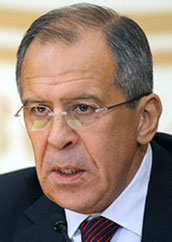 Sergey Lavrov
At the same time, the Russian Foreign Minister Sergei Lavrov noted that in case of expansion of sanctions by the USA or EU, Moscow will not introduce mirror measures. “We are not going to act on the principle of an eye for an eye, a tooth for a tooth, we want to relate to this situation with a sober head,” the minister said. According to him, "to get into hysteria and respond with a blow to the blow of an unworthy of a large country."
At the same time, Lavrov once again noted that the sanctions will not force Russia to change its foreign policy and the country is able to overcome the difficulties that may arise in some sectors of the economy. “Maybe we will become more independent and confident in our abilities,” the Russian minister said.
Judging by the Levada Cocal survey , in Russia, public interest in Western sanctions fell one and a half times. If at the beginning of March, 53% of Russians bothered the sanctions, then by the end of July this indicator decreased and is only 36%. Most respondents (59%) believe that current sanctions really affect only a narrow circle of people responsible for Russian policies against Ukraine.
See also: the US Foreign Minister and US Secretary of State discussed new sanctions against Russia, the European Union agreed on the expanded sanctions list of Europe will introduce sectoral sanctions against Russia by the end of the week the media called possible victims of sanctions against the Russian Federation in the world market Ilya Karpyuk sanctions require political decisions from the economy