
Translated material
Pay on all bills
The European Court of Human Rights (ECHR) ordered Russia to pay € 1.86 billion compensation for the complaints considered back in 2011
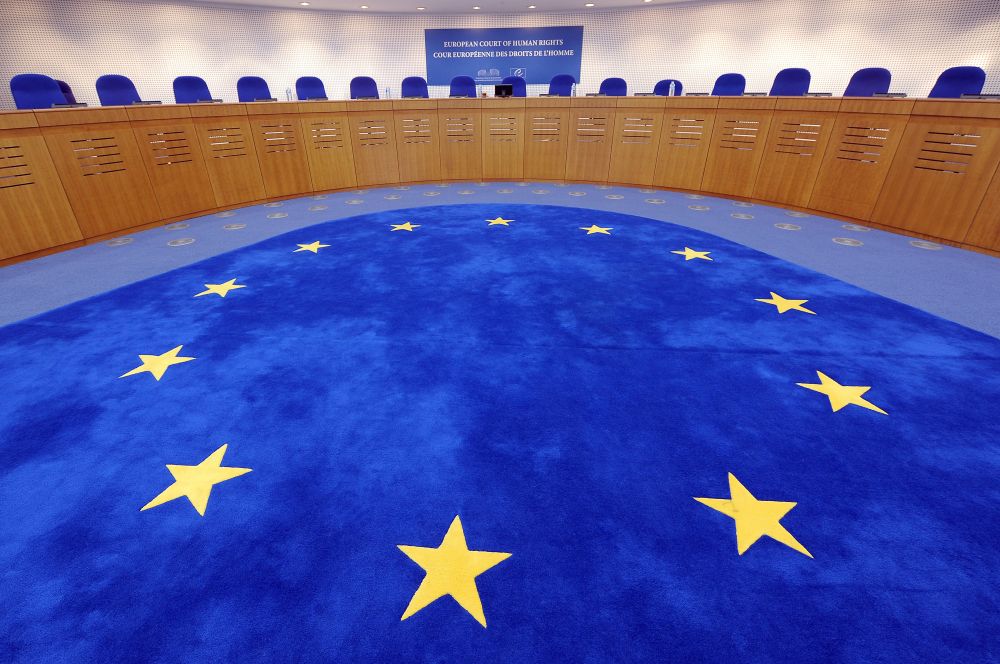
The shareholders of the Yukos themselves demanded € 81 billion. Their interests in Strasbourg were defended by the English lawyer Pierce Gardner - he filed the first complaint on their claim on April 23, 2004. The reason for the demarche was the results of the tax audit in December 2003. The debt for 2000, which Yukos counted, according to the company's estimates, exceeded the total income received by it for the same period. Yukos’s attempts to appeal the decisions of tax authorities in Russian courts did not lead to anything, almost all the assets of the company were seized. Yukos tried with all his might to avoid bankruptcy and retain the main asset - the Yuganskneftegaz company, which produced 60% of all Yukosov oil. But on December 19, 2004, Yuganskneftegaz was sold at the auction of the unknown Baikalfinance group, which subsequently resold his Rosneft. The Gardner pier had to add additions to his complaint. For seven years, the story of the death of the once successful raw material company of Russia has surrounded all new details. On January 24, 2009, the Strasbourg Court recognized the SUKOS complaint acceptable at once by several articles of the European Convention on Human Rights. violation of the right to property, the right to a fair court, the right to persecute only within the framework of the law, and not for political purposes; Punishment is exclusively on the basis of the law.
On September 20, 2011, the ECHR decided that there is no reason to believe that Russia unscrupulously took advantage of the trial as a cover with the aim of destroying Yukos and obtaining its assets. However, the court recognized the company's right to a fair trial in a reasonable time violated.
The court did not allow the issue of compensation in 2011, offering the parties themselves to conclude an agreement on this within three months from the date of the final decision. Since the parties did not conclude the agreement, after three years the court itself determined the amount of compensation: Russia is obliged to pay € 1.86 billion and € 300 thousand legal costs to former shareholders of the Yukos. This decision is not final and can be appealed in the Grand Chamber of the ECHR for one of the parties for three months.
"
The court did not allow the issue of compensation in 2011, offering the parties to conclude an agreement on this within three months from the date of the final decision
"
None of the participants in the process before the announcement of the court decision was commented by the case. The lawyers of Mikhail Khodorkovsky and Platon Lebedev clarified: the lawsuit “Yukos against Russia” has no direct relation to the criminal case of their customers. Neither Khodorkovsky nor Lebedev since 2005 have been shareholders of the oil company and there will be no material benefit in case of successful outcome for Yukos. True, in this case, lawyers clarify, they could refer to the decision of the Strasbourg Court, challenging the verdict of judge Danilkin in the Khodorkovsky -Lebedev case in the Supreme Court.
“None of the representatives of Yukos knew what the decision of Strasbourg would be,” Former company Pavel Ivlev, former lawyer of the company, told The New Times. “We can only assume that Judge Alexander Bushev, who participated in the consideration of the case, shared information with the Kremlin and there, at least in general terms, the content of the document knew.”
"
“Imagine, pay and close the Yukos case in general - the Russian authorities only dream about it”
"
Ivlev draws attention to a series of circumstances. The court decision was prepared in Strasbourg on June 26, 2011. Around the same time, Senator Alexander Torshin unexpectedly introduced an odious bill to the State Duma, in which he proposed to give the Constitutional Court of the Russian Federation the right to block the decisions of Strasbourg. But after 10 days, the consideration of the bill in the ward was unexpectedly postponed. And then they completely forgot about him. In this regard, Ivlev does not exclude that "the idea of Torshin was wrapped in the Kremlin, after they learned about the decision of the Strasbourg Court in the Yukos case not so painful for Russia."
Pavel Ivlev was sure that the Strasbourg judges would be a verdict in favor of Yukos, but at the same time they would not dare to recover from Russia all the Russian cases requested, the lawyer explains, and a third of the cases under consideration in the European Court of Human Rights (ECHR). If Russia is offended by the exorbitant amount of compensation and will leave the Council of Europe in protest, then there will be no one else to ask for protection for its citizens. And Europeans want to avoid such a prospect. You can do this by "gathering" the sum of the claims of Yukos. Sergei Aleksashenko, Director of Macroeconomic Research of the Higher Superior, agrees with Ivlev: “Imagine, pay and close the Yukos business in general - the Russian authorities only dream of this.”
In parallel with the court in Strasbourg, in January 2010, the claim of foreign shareholders of Yukos to Russia in the Arbitration Court in the Hague began. The price of the issue is $ 100 billion. Requirements for investment protection were recorded in article 13 of the contract for the energy charter, which Russia signed in 1994, and withdrew its signature on October 18, 2009. The liquidation of Yukos and the sale of its assets occurred in 2004-2007, that is, before the signature is withdrawn. Russia, together with 143 other states, ratified the New York Convention on the recognition and execution of foreign arbitration decisions. Based on this, foreign shareholders of the Yukos have the right to demand compensation for damage at the expense of the property of the Russian Federation located in these countries.