
Translated material
The northwest of the Moscow Region threatens smoke. The content of pollutants in the Moscow air has already exceeded the norm
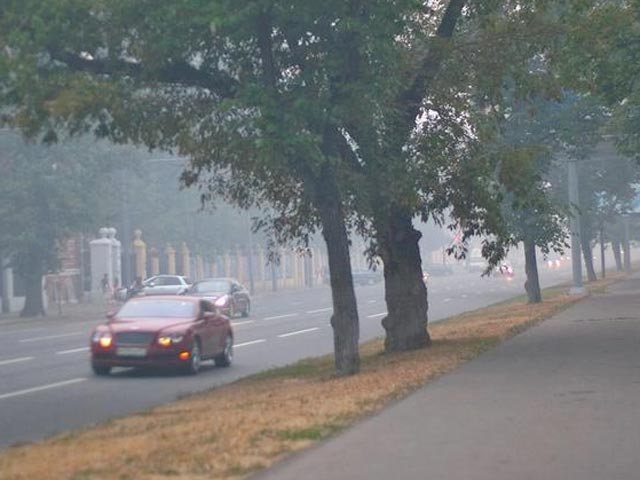
The beginning of August, which pleased with many with hot weather, threatens the problems of the inhabitants of Moscow. Breathing in the capital is becoming harder: the content of pollutants in the Moscow air exceeded the norm, and caustic smoke appeared in the north of the metropolitan region. The first factor is associated with weather conditions, the second - with fires in the Tver region, where an emergency regime has been introduced from July 30.
The company "Mosecomonitoring" reports that the experts recorded "excess of the standard for carbon oxide and nitrogen dioxide by 1.1-1.3 times (near motorways), in nitrogen oxide up to 1.4 times." In addition, the exceeding the content of hydrogen sulfide at most monitoring stations was noted, representatives of Interfax said. They specified that an increase in the level of pollution of the atmosphere occurred "under the influence of weather conditions."
The situation may worsen if smoke from fires that rage in the Tver region come to Moscow. According to ITAR-TASS, the area of fires reached 58 hectares. The largest of them, near the village of Isoplit of the Konakovsky district, "grew up" to 50 hectares (although yesterday at the Ministry of Emergencies it was assumed that the fire was localized to 20 hectares and extinguishing is at the final stage).
According to the Russian branch of the Greenpeace environmental organization, peat fires are also preserved in the Orshin moss swamp massif, reports of the burning of peat under the kimras.
At the same time, environmentalists said that this weekend smoke is unlikely to come to Moscow: according to the forecasts of the weather services, the wind will take the smoke away from the capital. Although, as noted in the press release, some Muscovites have already smelled of smoke.
As ITAR-TASS previously reported with reference to the Forestry Committee of the Moscow Region, the North-Western regions of the Moscow Region in the coming days may be tightened by SUM.
It should be noted that on the eve of the deputy head of the Federal Forestry Agency ( Rosleskhoz ) Andrei Zhilin promised that the situation with peat and forest fires, which developed in 2010 in the Moscow region, would not happen this year.
At the end of July, August and the beginning of September 2010, in Russia, peat fires of the Moscow Region were accompanied by the smell of Gary and strong smoke in Moscow and in many other cities. The concentration of carbon monoxide in the city then exceeded the permissible norm by almost seven times, mortality in the capital increased by 50.7%.
Currently, the Ministry of Emergency Situations plans to send seven aircraft to the Tver region to combat fire-four helicopters, two BE-200CH amphibians and the world's largest IL-76 tanker, Moscow 24 reports. Aviation of the Ministry of Emergencies has already dropped more than thousands of tons of water into fires, entering the forest is still prohibited.