
Translated material
After a pre -trial detention center
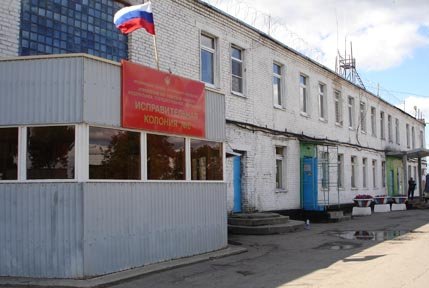
Five convicts in the “Eight case” are already in correctional colonies. Everything is relatively near Moscow.
Those who during the investigation and court were sitting in Butyrka were transferred to the Ryazan region, prisoners of the Vodnik - to Tula.
Andrei Barabanov, Alexei Polikhovich and Artem Savelov ended up in the same colony-IK-6 of the Ryazan region. They were transferred early on the morning of July 19. The colony is located in the village of Stenkino, about 20 kilometers from Ryazan. They have not yet been distributed according to the detachments - they are currently in the so -called quarantine, where the new arrivals are adapted to prison conditions. Defender Barabanov Sergey Sharov-Delon does not exclude that all three will fall into one detachment.
Stepan Zimin and Denis Lutskievich on July 23 were sent to the Tula region. Zimina was distributed to IK-6 in Novomoskovsk, where since April last year the first convicted person in the “swamp case” was serving a sentence-Maxim Luzyanin. Lutskievich was in IK-2, which is located almost in the center of Tula, in the backyard of the local department of the FSIN, opposite the Arsenal stadium.
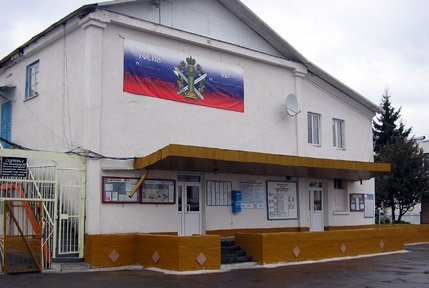
Yaroslav Belousov and Sergey Krivov were also sentenced to real terms for the “case of eight”. They remain in a pre -trial detention center: crooked - in "sailor silence", Belousov - in Butyrka. Krivov, who suffered a myocardial infarction to the pre -trial detention center, was once again transferred to the hospital of "sailor silence." Belousov, which expires in early September, filed a petition for parole (UDO), which is currently transferred to the Preobrazhensky court.
All five sentences sent in the colony have already served half the term, after which they formally have the right to parole. However, Artem Savelov, according to his lawyer Farit Murtazin, decided not to submit a petition for parole. Savelov’s term expires on January 10, 2015, and the lawyer does not exclude that he can be released for good behavior before the New Year, before a series of holidays.
According to lawyer Andrei Barabanov Svetlana Sidorkina, law enforcement practice shows that immediately upon arrival in the colony, it makes no sense to give a petition. The colony administration, having received a petition for parole, must send him to the court along with the characteristic of the prisoner. However, if the prisoner arrived recently, the administration, as Sidorkina says, most likely write that he can’t say anything about him yet, and the court in this case will refuse to provide parole. And the next time the petition can be served only in six months. Therefore, Sidorkina believes that with a petition one should wait at least three months. Together with the petition and characteristic from the colony to the court, you can file documents indicating some mitigating circumstances-for example, that the prisoner has sick relatives. According to Sidorkina, Barabanov does not have such circumstances, but perhaps it will be possible to attach to the petition of guarantee from some organizations.