
Translated material
Grain results
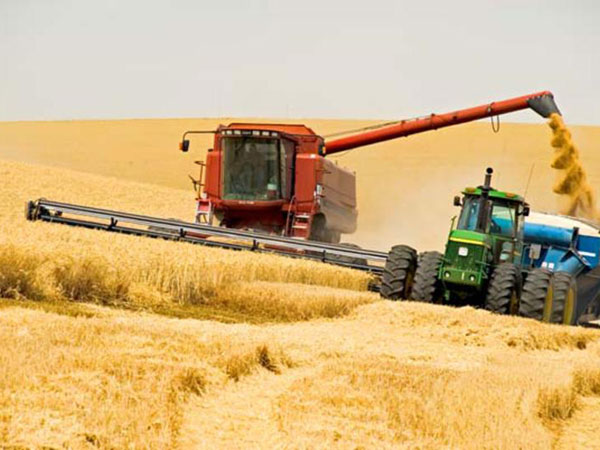
Behind the permanent conversations about good yields and excellent export prospects of Russian grain producers, it has somehow been in the background of understanding that there is another agricultural manufacturer nearby, the export of which is no less than Russian farmers. This manufacturer is Ukraine, in whose territory there are full -scale military operations today.
These fighting did not prevent the export of grain in volumes exceeding Russian export deliveries. In the past 2013/14 marketing year, Ukrainian companies took out grains for 32 million tons, and their Russian colleagues - only 25 million tons.
True, it should be noted that the structure of grain export of the two countries varies quite much. In Russia, most of the supply is wheat (18 million tons - 72%), and in Ukraine - corn (20 million tons - 63%). Therefore, in the world's food market, Russian and Ukrainian companies do not compete much with each other. Moreover, until recently, Russia itself was an importer of corn and only in the last two or three of the last years a breakthrough in its production, which allowed not only to cover internal needs, but even send part of the crop abroad. Ukrainian wheat deliveries (9 million tons) are half the Russian ones.
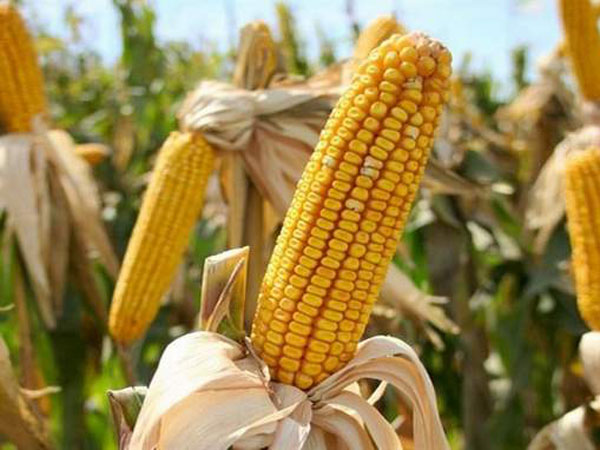
The main reason for the rapid growth of grain exports has become several high -yielding seasons in a row. So, if in 2010 in Ukraine, like Russia, there was a crop failure and collection of grains amounted to 39 million tons, then in 2011 the fee rose to 55 million tons, in 2012 - slightly reduced to 46 million tons (this is a normal crop for Ukraine), and in 2013 a completely giant crop of 61 million tons was harvested. Such a amount of grain in Ukraine has never been collected - neither in the Soviet or in post -Soviet times, and it was these resources (the crop of 2013 and the crossings of the crops of past years) that made it possible to bring exports to a record 32 million tons.
Of course, before Ukraine could export quite decent volumes: in 2008/9 of the marketing year, 25 million tons were taken out, and in 2013/14 - 23 million tons. But, we repeat, she never had such a record export as in the past 2013/14.
At the same time, it should be noted that the size of the agrarian exports of Ukraine (not only grain) is constantly growing. If in 2008 the exports of food raw materials and finished products amounted to $ 10 billion, then in 2012-2013 its volume increased to $ 17 billion and in its specific gravity in the total export of Ukraine (27%) took second place after ferrous metallurgy (33%).
If this trend is preserved, it is likely that food exports will become the main article of Ukrainian exports and the main source of income of agricultural manufacturers.
In Russia, despite the high crops and large volumes of export, the supply of food products for export will not be income. Firstly, the export of oil, oil products and natural gas will still occupy the dominant position in the total volume of Russian exports, since its volumes and price per unit of the product are completely incomparable with similar indicators of agrarian exports. Still, we export 250 million tons of oil, but grain, and in the most successful year-only 25 million tons. Accordingly, the price of a ton of oil is about $ 800 per ton, and the price of a ton of grain (again, with a successful world conjuncture) - $ 250 per ton.
Secondly, it is well clear that Russian grain export is in a sense forced. Good yields themselves do not give anything if the country is poorly developed by the livestock sector, which is the main consumer of crop production. And in Russia it is poorly developed, so it cannot dispose of all the grain produced and has to export it. But if the capacities of livestock and the feed industry increase on the required scale, then grain exports can greatly decrease or even come to nothing.
These are the results of the year ended. As for the prospects of 2014/15 of the marketing year, in Russia and Ukraine they are somewhat different. While the crop views are very good and cleaning everywhere is in full swing, therefore, most likely, last year's record will be repeated. Although, of course, Donbass this year will completely fall out of the agricultural market of Ukraine and this will necessarily reflect on the general indicators of harvesting.
But, here, Ukraine may have problems with the export - the Crimean ports are now closed for it, and the restriction of traffic on railways (which are far from in the best condition) will be transported by agricultural goods to other seaports is quite difficult. In any case, the world grain market takes into account this possibility, and in future prices it lays a bonus for the risk of grain shortcomings.