
Translated material
Black Humor of true love
The most sickening, most honest, most poetic novel of recent years. John Green - Cinema and Book
The most sickening, most honest, most poetic novel of recent years. John Green - Cinema and Book
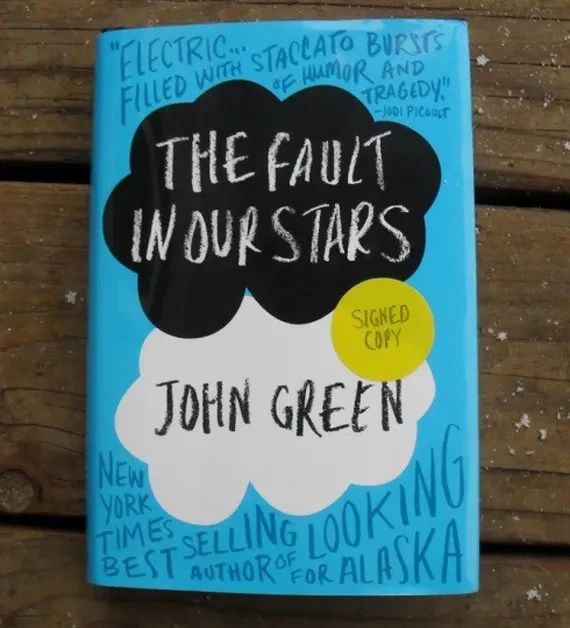
The author's name is John Green. The book is called "Guilty Stars." The grown -up children who are still in our LiveJournal by tags “Children”, “Baby” or “Talking kittens” advise parents to parents, parents, in turn, are “talking kittens”. The film also comes out. I read the book, I watched the film. I will advise the book to the 16-year-old son, no cinema.
The cinema follows the book almost literally - and consistently misses the most important thing. Even that in detail the absolute happiness prescribed by the author (Amsterdam, a canal, boats, knitting, pouring seeds, June snow) ... turns into a banal half of the restaurant with a garland of lights in the dark. Even Google-picture at the request of “Vyza Amsterdam” is much more lively than this movie, where there is no blizzard, no taste of stars, no cynical bitterness, without which this whole love story is unimaginable.
The film adaptation is completely literal and absolutely soulless: she sometimes sees details, but does not see the main one anywhere.
It turned out a girl's melodrama: you are attractive, I am damn attractive, we all die, s. This is not enough for the film adaptation of the most nauseating, honest, most poetic love novel of recent years.
By the standards of love novels, this is impossible: both are doomed from the very beginning, both people with disabilities, she barely breathes (literally, yes, - the oxygen cylinder is carrying behind him), he has prostheses instead of the leg, but both to the last sharply, they are smart, hench and love, and think, and feel with amazing acuteness. This is an extremely honest novel: the heroes, even children, the universe falls on with all its weight: they live, knowing that tomorrow will not be, that Isaek will inevitably blind, that they themselves are grenades that can explode at any moment and cause terrible pain to relatives. They know that friends do not know how to help, cannot cope and retreat. They have to live, knowing the price of the words “hold on” and “you are strong”: “Although now I will give you my strength in exchange for your remission.” They can say to each other: yes, the girl left you, but you acted ugly with her: you took it and blind. “I am not saying that this is your fault, I say that it was not very beautiful.”
This is such a strange love novel that it has not yet happened so far, it is not particularly beautiful at all. I remember Daniel Defoe was horrified, thinking about his lover: “But Stella - Stella urinates?!” And then the Virgin in love - either she is barely alive, and she finds his lover unconscious and grinding, then hewing himself and completely helpless. “According to the laws of the genre, Augustes Waters was supposed to keep a sense of humor to the end, without trembling for a moment, and his spirit should have been an indomitable eagle on the air before he joyfully merged with the world. But the truth was in front of me - a miserable young man who is desperately not wanting to be miserable, screaming, crying, poisoned by an infected gastrust, helping him to remain alive, but not live. ”
Both are sickly, both know this; The bodies are fragile, and the spirit is surprisingly prayed - and love overpowers everything, it overcomes everything - and not only in grief and joy, but also in puddles of absolutely non -meaningful physiological fluids, because when you love and love you, you can not survive all humiliation.
Probably, this is the right and important reading for adolescents, to whom everything seems that nothing can save in the last humiliation. Probably, it is right to understand in time that when you love - all this is completely trifles: physiology is trifles, and future oblivion is trifles. Maybe this is right: to understand in time that the universe is amazingly elegant, that she wants to be noticed; that even the mother and dad of the heroine, in any other novel, they would be pure functionality - there are unexpectedly and interestingly thinking, completely independent people; The very idea of an elegant universe is daddy idea.
The author of the novel is delicate, unobtrusive and does not kick the reader with his feet to think. But there is something to think about; One notices one, the other - the other. Cancer patients are going to Amsterdam to ask the mysterious writer about the fate of the characters of his book after the end of the story. And when the drunken and descended writer Van Huten (yes Van Guten, Comrade Translator, drink cocoa van Guten!) Tells children who expect answers from him to the last questions that the hero of his book, a tulip Dutchman is just a metaphor of God, how many readers will ask himself: is Van Huto a metaphor of God himself, to whom the reader goes to the last questions and does not receive at all the ones The answers that you were counting on?
It completely disappeared in a film, turned into a girl’s love of a la “Twilight” (over whom John Green is quietly mocked in the text, if anyone noticed). Metaphor disappeared. The literal "Story Love" appeared.
I don’t know whether it was possible to realize in the language of the movie at all. Because this book is not about the love of deaths of 17-year-old adolescents. She is not about cancer at all - although she about my friend Nina, who died of cancer at 48, without completing the second year of the second higher education. And about dad, who died in 76, panting from metastasis in the lungs, like Hazel Grace. She about us all - about the fact that sooner or later we will all die - not from cancer or stroke, but from the "habit of the universe to collect and disassemble everything that is possible", this is a quote.
She is about the fact that we are all doomed; that our love, our joy, our happiness is the acute and fleeting happiness of the doomed; About the fact that next, after us, there will also be life, that it is possible, that to a painful question: "What will happen to my mother when I die?" - There is an answer, although this answer is also painful; That happiness, a visas snowstorm, the joy of love and a children's cry on the lawn do not lose meaning in the face of death, but gain it.
Maybe that's why adolescents read this book excitedly that it speaks of the most terrible, most important, the most painful - honestly says, disgusting, cynically, shamelessly - as soon as you can tell the truth, always ugly and always beautiful.
And there is no surprise in the fact that it is impossible to transfer this to a cinema language; What of the honest and unbearably bitter metaphors of human life (and actually what our life is-it is-living love and fragile hope in the constant presence of death, in complete awareness of doom-the book is not about cancer, not about the sick, but about us all, you are somehow terribly felt when loved ones leave one after another)-a sweet girl’s melodrama is obtained from the cinema.
Actually, it is not a question: everyone has their own measure of perception. Who can cope with metaphors, make bitterness, difficulties of translation, who climb into the dictionary for the “hamartius” and the encyclopedia for the “Venno diagram” - that book, yes. And who is the Light option to cry from hopelessness and exhausted from happiness - I don’t see any contradiction, but you can, and this way, after all. Someone must talk about this with our children.
Because love - even so, at least that - is longing, merciful, does not envy, is not exalted, not proud, unreasonable, does not look for its own, does not be annoyed, does not think of evil, does not rejoice in untrue, but is justified, everything covers, believes everything, hopes everything, transfers everything and never ceases.
And children need to learn about it - be sure. This is all life, all this will happen to us, because we are people, and our special happiness is to live and love, realizing that all this is doomed to death and oblivion.
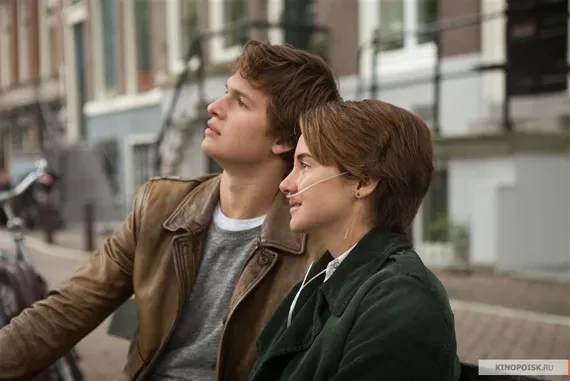
PS I added. I leave the entrance to the 32-degree Moscow heat. A young man stands on the playground from the bench - and his right leg below the plaid shorts - too thin, too brightly glitters in the oblique rays of sunset.
It is metal, yes, it did not seem to me.
He rests on a stick and leaves, wryly warting and leaning on a stick - a young beautiful blond with an iron leg; The hero of someone’s film, someone's unwritten novel, is an unknown trouble, an unread story-life, just life ...