
Translated material
Sentimental journey through Russian history
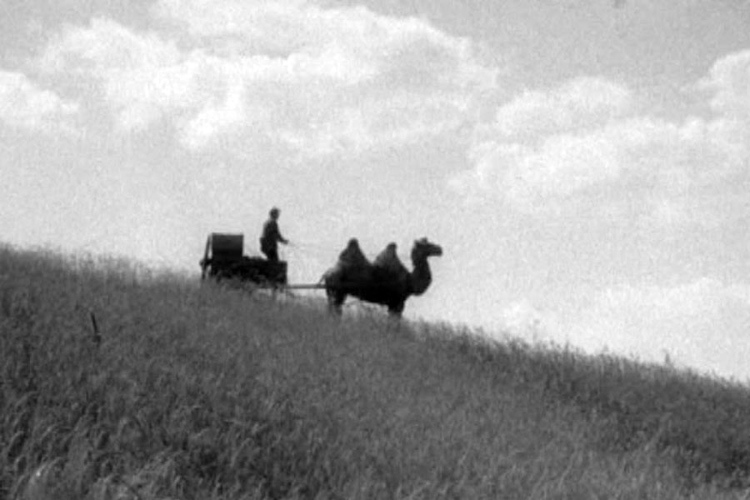
Tomorrow, August 5, the fourth show of the program of silent Soviet cinema and live music will be held in the Moscow Art Park of Arts. The comic Odyssey Nikolai Spikovsky “Ske kind” will be accompanied by the avant-garde works of the conceptual composer Sergei Poll. But is it possible to call the avant -garde the "skin" itself? And yes, and no, Maxim Semenov believes.
There are two of them. One is tall, thin, noble. The other is small, fat and fussy. The first does not really understand what is happening around. The second is trying to get better everywhere - and always turns out to be broken. Together they travel along the endless, sun -filled fields.
The first is a camel, and the second is the former head of Apollo Shmyguev, and they travel not in Spain of the 17th century, but along the Ukrainian civil war. However, when looking at this pair, Don Quixote and Sancho Pansa come to mind too persistently. No wonder Osip Mandelstam, who wrote one of the first reviews of Spikovsky’s “Skeleton”, several times compared Apollo Shmyguev with Tartaren from Taraskon - a hero who was supposed to combine the cunning Idalgo and his servant.
The story told in the Skeleton is amazing and worthy of an adventurous novel: by the will of chance, the layman Apollo Shmyguev becomes a camel drove, with whom he wanders along the fronts of the Civil War, being among the Reds, then in white or bandits. However, it would be wrong to say that Spikovsky’s film is a story about a camel man. The Skeleton is a story about a person and a camel.
A camel is a hero no less than his drove. Like a real knight, he is fulfilled dignity, generous, indifferent to other people's squabbles, but is always ready to rush to the aid of falling into trouble. He spat in the face of a white officer, but could spit in the face of any red commander, because he did not notice ranks and party differences. He is able to take a whole enemy army. Everyone loves camels: white and red, citizens and rustic, because in each he wakes the best.
 © Wufka
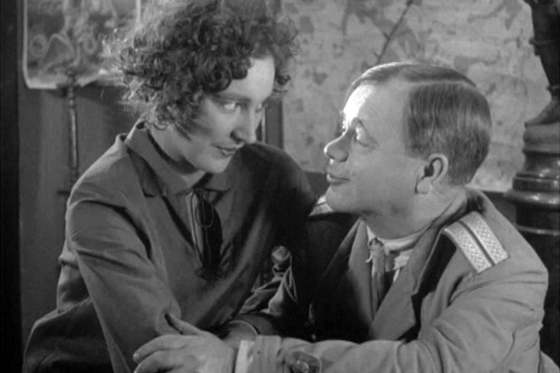
Not that his drove. This one looks around in all eyes, trying to catch his luck by the tail. Sancho Pansa became the governor of the non -existent island, and Shmyguev managed to call the propaganda of the Whites, almost engaged in propaganda at the Reds, made a fortune several times, but all his plans ended in complete collapse. Each time he found himself a bit, fled and lost everything. Shmyguev seeks to get better everywhere, but this is not the goal of his unexpected wanderings. There is no goal. He involuntarily finding himself out of the house, he makes a trip for the sake of traveling. Fate throws Shmyguev like a ball, and he only tries to adapt to the constantly changing rules of the game. However, the rules change too quickly so that he could really win, and if it were not for the help of a camel, Apollochik would have disappeared already in the first adventure. But can Sancho Pansa abuse?
By the will of fate, the Skeleton was enrolled in the category of avant -garde cinema, and even revolutionary. Forbidden Soviet avant -garde film about the Civil War. Intriguing! However, this honorary reputation requires important reservations. If by avant -garde cinema to imply what Mandelstam would call the “All -Union Pudovkin” with his intellectual installation, screaming images and a healthy share of inhumanity, then the “Skeleton” applies to this approximately the same as the Moon to Cancer. But if we assume that the avant -garde cinema is an advanced movie, a movie that is ahead of its time, and therefore always looking new, then the Skeleton is one of the most avant -garde Soviet films.
The spectator who wants to get the impressions similar to the viewing with those that he would receive from the “end of St. Petersburg”, “October” or “Arsenal”, is waiting for the strongest disappointment. Spikovsky is a friendly and cheerful storyteller. He almost never rises to the heights of the “elevated”, preferring to speak with people in the simplest language. Only once or twice it allows itself to be generalizations, rhyming the battle between white and red with a harvest. Award, but bitter and ironic.
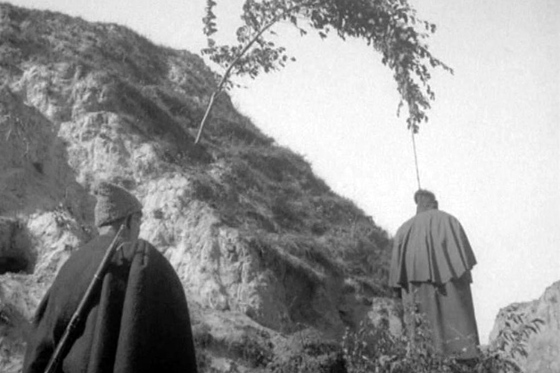
Although the effect of the picture takes place during the civil war, the Skeleton is a movie about the world in the most Tolstoy meaning of the word. Spikovsky does not notice the heroes and giants, leaders and commanders, but the ironic side of reality does not hide from his gaze. Just as Apollo Shmyguev - first of all, Shmyguev and only then Apollo, the Civil War of the Skeleton - this is primarily a cavard, and only then horses, flags and slogans. When shooting at the end of the NEP, Spikovsky manages to notice both stupid, but executive warriors, and hysterical Bolsheviks, at any opportunity, beginners dramatically scorched the ceiling, and endless meetings of the bureaucratic commissions that begin to increase the staff of the commission. In some places it is even funnier than Ilf and Petrov. Finally, the director has enough vigilance to see the simplest guys in the White Guards who are not much different from their opponents from the other side of the barricades.
 © Wufka
Such a manner of narrative - good -natured, simple, devoid of anguish and sraft, very human - is not so often found in world culture. Among the authors, of course, possessing it, one can call the Greek playwright Menander, Stern, Jane Austin, Chekhov and, of course, Cervantes. With the latter, Spikovsky’s offices are not only the images of the heroes, but also by the very way to build a plot. He constantly loses the camel and Shmyguev, is distracted by inserting short stories, tries to give moderately positive characters, but this not only does not interfere with the narrative, but even more so - helps to enrich the world created by the director.
Finally, a special author’s intonation does not allow the “skin” to become what he could well have been - an evil Soviet satire on philistines and inhabitants. The author of people loves too much, he is too condescending to their shortcomings. Yes, and Apollochik, who should be an antihero, in one of the scenes, he unequivocally compares with the Gogol Akaki Akakievich. And anti -heroes from the Akakiev Akakievichs are not obtained.
The revolutionaryness, avant -garde of the “Ske kind” is also reduced to the fact that in our latitudes the state has the ability to assign a story, turning it into an object of a cult, a set of symbols and rituals. It is supposed to look at history respectfully and from the bottom up, and Spikovsky suddenly violates the state monopoly on the past. Yes, his film is a film of peacetime, not without reason at the end he so virtuiously embraced by Eisenstein's guns from the Potemkin finals. But this is also a film that history can have a human face, that a camel may turn out to be the most noble hero of the civilian, and those who are then considered villains are usually a bunch of good stupids.