
Translated material
"Boycot is definitely not a solution"
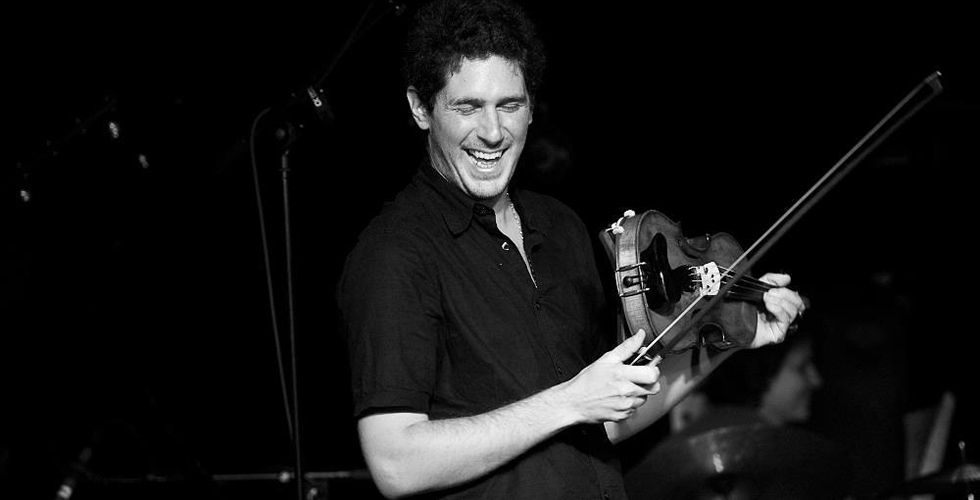
-Your group is called Hot Club de Bern , and this, in my opinion, is irony, because the Purists from the original Hot Club de France , it seems to me that they would never recognize your music with a real jazz. They very harshly separated what seemed to them a pure, authentic jazz, from everything else, for example, from Bop, and in your music there are so many third -party influences.
-Ha ha, yes! Of course, Django Reinhardt (Favorite and Protective Hot Club de France . - Ed. ) Played authentic music because he created it, he was the first to combine traditional music with American jazz in France - for him and for his time it was authentic music. But what does this mean? Play authentic music means playing what you feel. Sometimes I am very interested in why so many people just want to simulate ... No, of course, Django Reinhardt was wonderful, my God, a wonderful musician! But his music is the music of his time, he mixed jazz with what was playing in bars then. Authentic music is music that is natural for the one who plays it. Say, you (as Reinhardt. -Ed. ) Arrived from somewhere where it is customary to play guitars, you love this special guitar sound, but you like swing, so you take and connect them. But maybe you grew up on rock or classical music - then you will have a different phrasing ... Authentic music makes respect for what you love. If you like Django Reinhardt, you can be inspired by him, play your own music, and it will also be authentic.
-And how did it happen that you started playing jazz-manush ? Maybe I just don’t know something and they traditionally play such jazz in Switzerland?
- No, this has nothing to do with Switzerland. The music that I play with Hot Club de Bern is gypsy music from the north of France. How did I start playing this music? Until the age of 18, I played only classical music, and then I heard the album of Stefan Grappelli and fell in love with jazz. This is a strange story, I listened to this disk so many times that in the end I had a dream in which Stefan Grappelli was. We sat somewhere with him and some other young people, and I asked him: “Jazz-is he about feeling? It's all about feeling, right? " He looked at me, got up and went to the stage, I followed him, but he disappeared behind the curtain and disappeared. I woke up and decided that I want to engage only in music.
Learn to play the tool, compose - because when you are busy with this, you slip away from time.
“But you play classical music too, not only jazz?”
- Yes. By the way, just before coming here, I performed opera music in Switzerland. I play a lot in the orchestras, in duets, in the trio - teleman, bang ... In general, I play just a little: Irish music, eastern. I traveled a lot along Lebanon, Egypt, Israel, to cooperate with local musicians, to study with them. In my opinion, the more different music I play, the better I become in each of these areas. For example, oriental music with its quarters is very well developed by hearing. If I play baroque music or something from romanticism, then I find things that I can use in jazz. I have great respect for each style, for me there is no main style that surpasses everyone else. Say, even if you have an excellent classic or jazz school, you still cannot play as a person who has been engaged only in Irish music for forty years.
- This is from another area, but, it seems to me, you will like it. There was such a Russian scientist - Leo Vygotsky, he believed that you did not fully realize your native language, if you do not know any other. Because, only by studying someone else's language, you notice the structure, similarities and differences in the structure of two languages. Is it true for music?
- Yes, you begin to feel in touch. I don’t know if it is necessary to say this, but sometimes you play Mozart’s concert and suddenly notice that some passage reminds you of the Irish melody (laughs) . And you think: "Ha, I can play it and so, why not?" Or, conversely, Irish music can remind Mozart.
I had a dream in which Stefan Grappelli was. I asked him: "Jazz - is he about feeling?" He looked at me, got up and went to the stage.
- How did you become interested in oriental music?
-It was in 2005. I went to Egypt at the invitation of "About Helvetia", we had a small tour with a trumpeter named Mohammed Saua, we played in the Cairo Opera, in the Alexandrian library. And he introduced me to Abu Dacher - this is one of the most famous violinists in Cairo. I was very impressed with how he plays, I was interested, and he studied with me for several hours. We could not speak with him-he does not speak either English or French, I don’t know Arabic, so he showed me something, I tried to repeat after him, and he corrected me. But, as I understand it, he is also engaged in his local students, they almost do not speak in the lessons. In my opinion, this is a great way to teach music.
- Then you already engaged in yourself?
- Yes. That is, I was not engaged in a serious study of Arab classical music, but for a long time after that I tried to use a quarter -ton wherever I could, with this my interest in mercenary music began. I listened a lot to the Umm Kulsum and other Arab musicians, tried to repeat after them. When I returned from Cairo, I collected the Oriak group, in which we combine jazz with eastern music - it was my diploma project at Bern University.
- You went to Palestine with this music?
-Yes, it differs from the fact that they usually listen, but in each of these compositions there is some oriental element. For example, in one play I used a special rhythm that I learned in Egypt, and a very simple, but touching and deep melody - and then people came up and thanked me. It seems to me that I touched them, and if so, I achieved my goal: I used what I learned in Arab music, combined what I know, and, as it were, gave something to these people.
-I saw this video on Facebook (a news plot, probably?)-About your performance at Al-Kuds University, where everything ends in shooting. When you come across something like that, do your hands do not drop? In March, I spoke with one good musician, so he said that what he is doing is sometimes meaningless to him - for example, in the light of what is happening in Ukraine. As if he "plays the violin while Rome is on." Do you have such a feeling?
-No, no, and it seems to me that I was very happy in Palestine. In my opinion, it is also worth playing music because it helps people at least take a short time from this situation, from their everyday problems. In Palestine, I play, in Switzerland or in Russia, anywhere-music outside of time, outside of politics, this is our connection with something that is much more than all our problems. I'm not a politician at all, I am a musician; I was invited, and I was very glad to go because I like Palestine, I like Israel - there I played too, in general I like the oriental countries. In Abu Dis, I played mainly for young people, students, and, in my opinion, they were happy to spend the evening like this. For them, even the road to the university is a problem. Because part of their classes takes place in Abu Dis, but basically they study in Jerusalem, so every day they have to go through the checkpoint, where they are not always missed, where they are sometimes delayed. And I said to them: “Engage, learn to play the instrument, compose - because when you are busy with this, you slip away from time, you can take a break from your problems.”
- What do you think about the practice of cultural boycott? Is there any meaning in this? There are many examples of this recently in Russia. Or here recently Nila Yang was greatly criticized for deciding to give a concert in Tel Aviv.
- No, communication should not break. Communication and transparency - this is what you need. Boycot is the end of the dialogue, and when the dialogue ends, then the fight begins. And I know a lot of people in Israel who disagree with what their government does. I am not a specialist in politics, but, in my opinion, it is impossible, they act too hard. But they could do something very beautiful together, bring the bridge between the two societies, connect the West and the East. This is a very sad and very confusing situation, and there are many fanatics on both sides ... But as a musician, I think that if you are called to play, then you have to go and play, and not engage in politics. Boycot is definitely not a solution.
Eastern music with its quarters is very well developed by hearing.
- You are doing a lot at all, right?
-Yes, I do not like to linger in one place for a long time, but if I go somewhere, then to play. The hotel and the inspection of attractions are not mine. Although sometimes it is necessary to rest. Now I’m going to Maykop, I seem to have had no vacation for four years, so I will not take the violin with me.
- And what makes you return to Russia? You play here almost more often than some local musicians.
- Honestly, this is because I met a girl, Maria. We met in Switzerland, and I decided that I needed to come here to better know the culture of her country. And wherever I go, I play everywhere. It was necessary to work, so we found groups that perform music close to the one I do. What I like in local musicians is their openness, they are not fixated on one style. The people I met can specialize in something, but they know a lot about other music.