
Translated material
The introduction of toilets in India goes with a creak: village residents refuse to use them for religious reasons
Family of a woman named Sunit from the North Indian village of Mukimpur
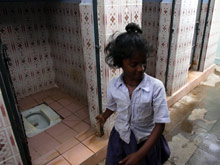
Local officials in February this year built a toilet in the courtyard of the house - as part of a government program to arrange more than a million restrooms to combat the epidemic of diarrhea and rape. However, Sunita cannot remember when someone from her family lasted this toilet, writes Bloomberg .
A 26-year-old single mother with four children, like the remaining 7,000 inhabitants of the village, are used to celebrate the need for the fields and jungle behind the houses. It seems to be convenient and logical: according to local customs, only representatives of the unaccounted caste (Dalits), or residents of cities who simply do not have the opportunity to do this on the street, should go to the toilet in a closed space. “The bowel movements should not be under the same roof with the place where we eat and sleep,” explains Sunita.
In 2008, about 800,000 Indians worked as Assenizers, often transferring baskets with excrement directly on their heads - they did not use honor with the rest of the inhabitants, and this profession is considered untouchable for the religious majority.
`Feces Donomet Belong Under the Same Roof as We Eat 'India's Toilet Race http://t.co/zntehnf1fm @bloombergnews pic.twitter/btreobym6d
- Saleha Mohsin (@salehamohsin) August 4, 2014According to Bloomberg, such archaic beliefs of village residents represent one of the biggest problems for the government of Narendra Modi, which is trying to fight the epidemic of diarrhea, which annually takes 600,000 Indians. In addition, in such "natural restrooms" a high percentage of rape of women is noted.
Modi Prime Minister promised to equip 5.3 million toilets for the first 100 days of his reign - by August 31. However, it seems that without increasing the level of education of the population, these measures to combat unsanitary conditions and street sexual violence may be simply meaningless.
According to the report published in May, the World Health Organization and UNICEF, India accounts for about 60% of the residents of the entire planet (or 50% of the country's population) who do not use the toilet during defecation. For comparison, in Pakistan 23%of residents do not use the toilet, in Bangladesh - 3%, and in China - only 1%.