
Translated material
Mentov series as a mirror of post -Soviet statehood
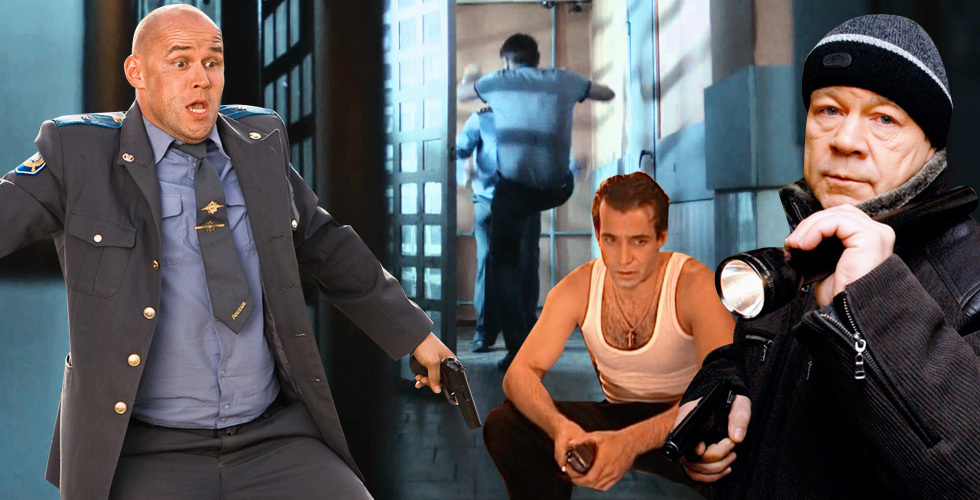
The format is more than captivity
The claiming audience disdains detective series, treats them as a trash “action”, at best as an audiovisual gum. There are grounds for this. They are the low art level for the most part. But, on the other hand, they are implicitly informative. They contain many evidence in terms of deviations from the norm of our state hostel. Not straight, of course, but indirect, but convincing enough to take care of the acute of the problem.
Observing the development path of this genre over the past one and a half decades, you see a methaserial in front of you about developing or not developing relations of the state and society.
To begin with, we admit that if there are manic serial killers in our world, then the serial maniacs of the detective craft cannot but start in it. Those and others are romantics from the high road.
The second thing that is worth understanding: this format is one of the highest rating, regardless of quality. When “gangster Petersburg” or “brigade” went on the air of federal channels, the whole country seemed to be looking at them.
The criminal format over time has become a severe drug for the mass television department with all the ensuing consequences - addiction, addiction, somnambulism, depression. Therefore, it can be stated that drug addicts are located on one side of the screen, and drug dealers on the other. That is, manufacturers of a firing potion and its couriers are TV shows.
To begin with, we admit that if there are manic serial killers in our world, then the serial maniacs of the detective craft cannot but start in it.
In recent years, a severe drug has become an everyday chewing gum: “Turkish transit”, “bad blood”, “wild”, “shaman”, “cop wars”, “sea devils”, “cop in the law”, “teacher in law”, “streets of broken lamps” - either the tenth, or twenty -fifth season ...
Nevertheless, I dare to argue that all this game mental chronicle, packaged by series with different headlines, is an important sociological probe that allows you to guess the mood of the audience and, wider, electoral mass, its expectation, its idea of how the state is really arranged.
We live by concepts
"Gangster Petersburg" appeared on our screens in the late 90s. Then the country was not collapsed - the state itself crumbled. The constitution has become an empty formality, law - unnecessary conventionality. Laws were replaced by concepts. Official institutions played the role of a roof for the criminal world, in which the state itself served on the parcels. The language of interpersonal and intergroup communication is the language of violence, bribery, threats and blackmail. Such a picture of reality then appeared in an unusually popular series. The head of the criminal clan Antibiotic subjugated the police at the local level, enlisted his support in the administration and in parliament, and took several large police officials for the satisfaction.
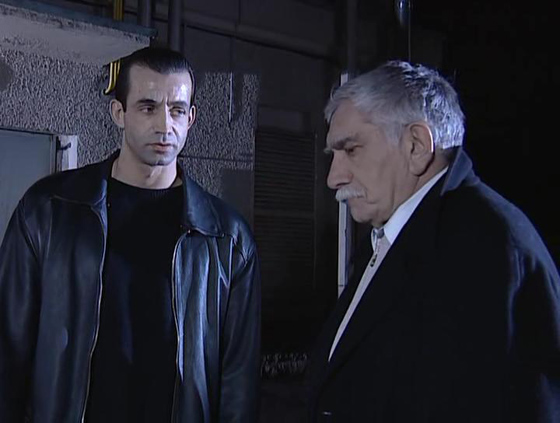 © NTV Hard from the series "Gangster Petersburg"
In this situation, the post -Soviet citizen found himself between the hammer and the gravity, that is, between the corrupt state and organized crime. And if he did not take one or another side, he remained on his own and for himself.
He develops morality for himself and creates the right for himself. Like Danila Bagrov, the hero of the films “Brat-1” and “Brother-2”. Not hoping for anyone - nor for parliament or the prosecutor's office. And if such a hero in such a film caused popular sympathy, it followed that the country recognized itself in it. The feature film has become largely documentary evidence of the incident in public-state relations.
At first, the population eared their fears and mental injuries in Balabanov’s films. Then - in "Gangs of St. Petersburg". Finally - in the "Brigade". But this is also a generational series-manifesto. The general in them is primarily that the detective is not in the center of the story. The attention of the audience is almost completely switched to those who are outlawed.
The criminal format over time has become a severe drug for the mass television department with all the ensuing consequences - addiction, addiction, somnambulism, depression.
Regarding the law -abiding viewer prefers to identify himself with illegal heroes. The problem is that the immediate environment of the authority in the Sasha Bely law is represented on the screen as a more fair and human world than the world of business, politics and special services.
However, the authors can say, this is already a problem of reality, and not its reflection. So millions of people feel and interpret it. Therefore, “television” aroused such an active interest. “Moreover, it is harmful to millions,” said tough opponents of the series. Is it necessary to be offended by the barometer when he promises bad weather? Should a sick person throw a thermometer out of the window that shows a high temperature? There would be no problems with the series “Brigade” if it were not a thermometer, a barometer or other objective device indicating the ill health of the social organism. "Brigade" is no longer just a movie, but a diagnosis.
According to Western
How was the democratic state rebuilt in the United States, if we recall Hollywood mythology? Among the peaceful shepherds and farmers there was a responsible and noble cowboy, which clung to the Sheriff’s star on his chest, gathered a team (one could say “brigade”) of decent cowboys and performed justice.
That cowboy-sheep was a compact model of the state. But from it, according to Hollywood myth -making, democracy grew in a new light.
Those "brigades" were professionalized by protecting the elderly, women and children from bad guys. Thus, the “magnificent seven” was born, they went from magnificent “cops” (in our opinion, “muddy cops”), which, by the way, often entered into the struggle not only with criminal syndicates and drug dealers, but also with corrupt elements in their own environment, in the world of business and politics. And, judging by the success of these cinema, the American mass audience, the image of a state far from perfect, was sitting tightly in the subconscious of the latter. But the thoughts that the state is vicious initially, that it does not give a damn about it and forget about it, American movie musical school did not allow it. Although, over time, in the second half of the twentieth century, films appear that cast doubt on the fundamental postulates of Western ideology. These films were called "revisionist." Their samples can be called the paintings “Exactly at noon” (1952), “Wild gang” (1969), “The Little Big Man” (1970), “Josi Wales is an outside of the law” (1976).
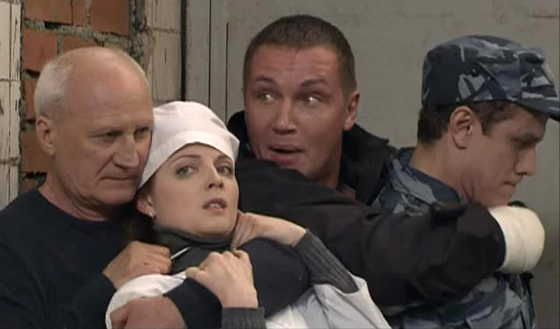 © NTV Hard from the series "Teacher in Law"
Here, however, a reservation is needed: in the American reality, the fork between legality and justice is not so great. Therefore, on the screen, the border between the legal world and the criminal space is not just legal, but moral-ethical. It is extremely dangerous to cross it towards the offense. It is painfully difficult to jump in the opposite direction. There are films that show how circumstances squeeze a normal person into the criminal world. And there are films that explain the difficulties of an offender trying to return to the legal field.
There are such attempts with us. One of them is a “teacher in law”, but it, alas, is inconsistent. The authors quickly turned off the chosen path, and the series rolled along the rails of traditional showdown between the “authorities”.
When menthur has a female face
It is not difficult to notice in the development of the Russian series at a certain stage the tendency of his heroes to more and more cruelty both from criminals and law enforcement agencies. Those and others do not disdain with brutal beatings, torture, threats, blackmail, erasing the legal and moral boundaries between criminals and detectives.
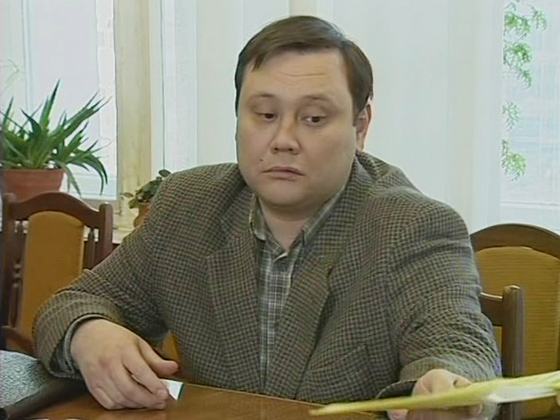 © TV-6 frame from the series "Citizen chief"
They were, however, on the TV screen and quite correct cops. In the series “Citizen Chief”, a provincial investigator of the prosecutor’s office Paphnyev gave master classes of the study of the most confusing crimes, not a yota without retreating from the provisions of the Criminal Code.
An important sign of mental humanization could be considered that she had a female face. And not one, but two, and both are pretty. First - Nastya Kamenskaya (“Kamenskaya”), then - Masha Shvetsova (“Secrets of the investigation”). These series are cozy, psychologically comfortable. No wonder they can be reviewed. And not without reason, television often repeats them.
How could the feminization of detective craft be interpreted? First of all, as his humanization. And not only. Both investigators-both Nastya and Masha-in all detective conflicts shy of those versions of the crime that lie on the surface. They dig deeper, respect the Criminal Code that at the present time the problem is both on one and the other side of the law, do not look for easy ways and always turn out to be right. In their teams, they are leaders in terms of deduction.
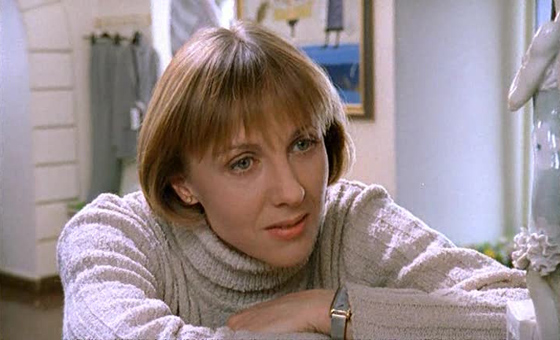 © NTV FRARE from the series "Kamenskaya"
The humanization of the detective case, therefore, went hand in hand with his intellectualization. And there was another attempt to introduce a representative of the weaker sex into law enforcement agencies. Daria Shevchuk, the heroine of the series "Frantic" - the operas in the provincial town are not only smart, interpreted, well -built, charming, but also owned the techniques of martial arts. This version of Russian Nikita.
But, I must admit, the experience of masculinizing women practicing in a detective case did not receive a continuation on the television screen. Dasha worked in the police 16 episodes, and on this her exploits ended.
And to the Earth from the heights of romantic ideas about the fight against criminal evil, the series “Capercaillie” returned us, withstood several seasons on our air.
Sentence
There was no need to see such a cop on the domestic screen before. The character of a person is open, the eyes are cheerful, the mind is agile. And a sense of humor in addition. And drink not a fool. And you can beat for great live. It can harshly dry, can bloom with a simple -minded smile with children's dimples on the cheeks. Transitions from one mood to the opposite of him are instantaneous, like a magician manipulating objects.
Mental-licens-talented, charming, artistically convincing. On such a character, string one police adventure after another and stamp one season of the capercaillie after another. If not immortality, then longevity was provided to the product.
It seemed to me at the same time that the fate of the cop - Robin Hood was not cloudless. Screenwriter Ilya Kulikov, in cooperation with director Guzel Kireeva, could not help but step on the sick corn of the police guarding us - on which the series “The meeting place cannot be changed”. This is when Zheglov and Sharapov argued about legality and justice.
Then the confrontation went into the sand. The parties parted in peace. Then it swelled more than once. The last time is in the "Liquidation", where the Odessa policeman David Gotsman and the capital Marshal George Zhukov collided. A moral victory for a clear advantage could be awarded Odessa.
 © NTV FRARE from the series "CULTICAL"
In the “Glukhara” His Majesty Law loses his insignificance to the lawlessness committed in the name of justice, in all articles.
Conditional citizens from the series can be grateful to the newly -made Zhelov. He punishes the evil with tested methods: in one of the villains he knocked out confessions with his fists and a club, he simply intimidated the third, blackmail the third. But Glukharev himself gradually loses his charm. The law is good or bad, it is not the thing that the hero, called to be on the guard of the law, can constantly change without harming himself.
With the course of the series, you notice that the offense investigated is not the most interesting. Moral and legal conflicts are interesting, which over and over again, Glukharev, and his boss-lover Irina Zimina, and the interior of Kolya, who are almost as naive and ugly as the front-line soldier Sharapov, are piled up. Every time they all get out of them one way or another. But the discord between legality and justice is becoming more and more.
The first season of the Capercaillie ended on a dramatic note: the bosom friends Glukharev and Antoshin quarreled on the coffin of life. Antoshin without trial and investigation condemns the bandit for execution and himself fulfills the verdict. The ends for a while can be hidden in the water. But in the fall they surfaced. They can again hide them, now with the help of a corruption transaction.
In the "Glukhara" His Majesty the Law loses his insignificance of lawlessness.
Corruption lawlessness in the police becomes the main character of the new season of the capercaillie (directors Timur Alpatov, Yuri Popovich, Valery Myznikov). A new hero appears on the screen - Ment Karpov, who, not in the name of justice, but for the sake of betraying the law - he roofs the bandits. Meanwhile, the capercaillie falls into depression and treats it with a drug. He is pulled out by Dan Antoshin's best friend, who, in turn, is in the ears in a corruption quagmire.
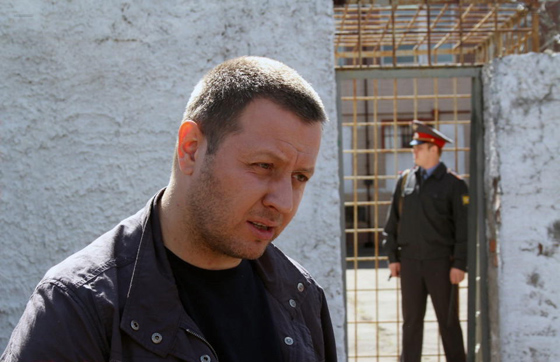
In a fight with crime, Seryoga Glukharev lost to the system. And I could not stay inside the system. He left her so as not to tolerate the same human crash as the real Major Evsyukov. Glukharev left the air, and his antipode, Major Karpov, another victim of a systemic law enforcement chaos, another fictional double of a real Evsyukov, ended up in a psychiatric hospital. He became the hero of the next two seasons.
Having left the psychiatric hospital with an in -handed mental disorder, Stas Karpov is hired by a guard. The position of an outside observer somehow treats. Moreover, so that a healthy instinct of law -abiding law enforcement officer awakens in it. He knocks down a private detective brigade and helps a regular employee to catch and neutralize criminals. But here it is discovered that the full -time cop himself leads the freelance structure of the people's avengers, which, not hoping for justice, specializes in the extrajudicious punishments of criminals. The circle closed. Inside is a self -proclaimed law enforcement system.
 © NTV Frame from the series "Karpov"
In the last series of the second season of Karpov, a regional -level politician joined it - the mayor of the city, who accidentally turned out to be a decent person. And, as we, viewers, had the opportunity to notice, he directly participates in a brutal out -of -court reprisal against the director of the orphanage who sold children to pedophiles. Folk Avengers burn him alive. We part with Karpov and his excitement cops under the wild screams of a burning pedophile.
The circle circle closed and the circle. The series "Karpov" is no longer a diagnosis of a law enforcement system. This is her sentence.
And what is on the television broadcast on the criminal front today? The pressure of criminal soap does not weaken. But what is noteworthy: not a single distinct, memorable figure of an uncompromising knight, a fighter with evil. No, performing the duties of heroes - a pond of a dime. But all of them are erased from memory almost immediately after the end of the serial narrative. At the same time, it should be noted that the artistic level of the series of this variety was somewhat raised somewhat. I judge by the last two projects - the “Department” (Channel One) and “Search for Eidding” (NTV). And the criminal plans of the attackers have become more stubborn, and the characters' characters seem more mysterious, internally contradictory, and acting ensembles leave a good impression.
The most remarkable plot of the current cops is the clarification of relations between “their own”. That is, between numerous special services, all these FSB, SVR, FSO, GUSP, GubipK. Each has its own political and financial interests mixed with career ambitions of bosses and bosses. The ridge of such a state structure is total corruption, the struggle against which, of course, turns into the struggle with the state. And not with the specific, not with that which is already corroded from the inside, but with the state-institute. The vicious circle of mutual demand for the state and society is closed. In the cinema.
So, after all, in life, about the same, according to investigations in the traces of interdepartmental showdowns: the sensational death of General Kolesnikov, the arrest of General Svugrobov, the Master Bank case, the Magin case . This is only what burst out. And what, in the silence of departmental offices, deeds are done is known to God alone. Or the devil.
Therefore, the series with a criminal filling is a lie, and they have a hint. And quite fat.