
Translated material
The state says
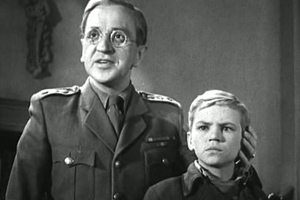
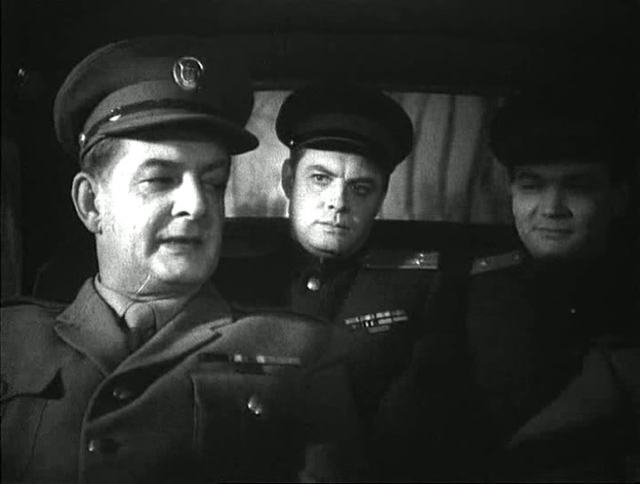 . . .
. . .The first stripes of American newspapers are full of headlines that the Russians want war, the British commission considered it appropriate to give the Russian orphans to foreign adoptives, the fifth column lives on foreign grants and undermines the welfare of the homeland.
This could be like an overview of recent news, but no. The calendar was stuck somewhere between 1946 and 1953, the country is led by the wise comrade Stalin, and Soviet citizens are slowly experiencing the consequences of a recent war. However, the world of the world, but it is necessary to maintain vigilance: the country is still in the enemy environment, the United States is ready to attack at any moment, and Great Britain diverges rumors about the so -called Cold War.
The period of a small -braided, coincided with the struggle against cosmopolitanism and the beginning of the Cold War, occupies a special place in the history of Soviet cinema. Yes, films about spies and enemies of the people were shot before, yes, all Soviet cinema in one way or another carried an ideological charge, but only films of this period turn into a continuous broadcast of a state point of view. The voice that we hear from the screen during the viewing of the “court of honor” or “Russian question” is the voice of the state.
The reasons for this phenomenon are probably worth looking for in the features of the era. Lesser -charte is a time when the state has decided: there is no need to shoot a lot of different things when you can shoot little, but good. And the good is not only high -quality (some paintings of this period directly resemble the revived socialist panels), the good is also the right, which means the same.
In most paintings of this period, there is almost completely no author’s handwriting or author's intonation. Romm here is almost indistinguishable from Room. Heroes, conflicts and dialogues pass from the film to the film practically unchanged, and the paintings themselves are similar to the tragedies of the times of French classicism: the characters should choose between happiness and duty, preference is given to “Moliere characters” (that is, holy holy changes, and scoundrels without changes in the same way), any most passing conversation turns into exchange of ideologically important speech.
It is worth noting that in the USA it is hardly possible to find a large number of analogues of such a movie. Although anti -Soviet cinema was shot in America, almost always these were paintings of category B. However, similar trends were observed in German cinema of the 30s. For example, the “Jew Zyss” Fayt Harlan structurally and sometimes stylistically resembles Soviet cinema from the times of a low -charter. Of course, this does not mean that communism and Nazism are similar. Rather, the fully subordinate ideology can be given out only one result, regardless of what kind of ideology it is subordinate.
Now that for more than 60 years has passed, it is difficult to take a movie seriously, but his messages and intonations have been too familiar recently. The picture of the reality that Late Nestalin cinema inspired its viewers is very reminiscent of the reality that news and reports of news agencies tell us about.