
Translated material
The Ministry of Agriculture discussed the limitation of prices for Russian food producers
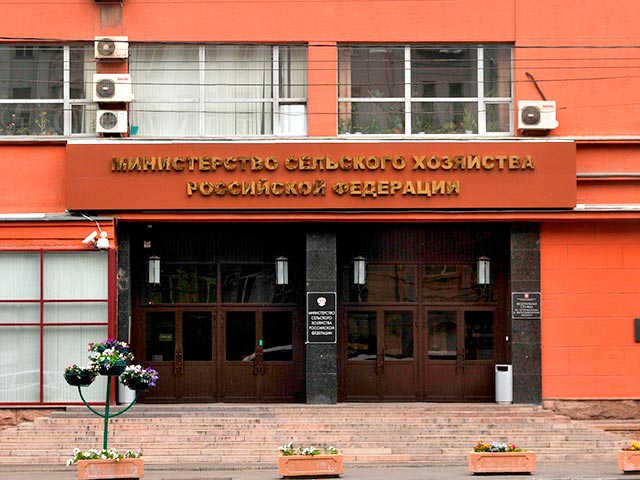
The Ministry of Agriculture at a meeting with representatives of domestic food producers discussed the mechanism of forced prices to restrict their speculative growth. On the eve of the operational reaction to the grocery embargo, the company "Russian Sea", associated with Putin's friend and billionaire Gennady Timchenko, demonstrated the operational reaction: the company doubled the selling price for red fish. The authorities have not yet reacted to reports about this, although earlier the head of government Dmitry Medvedev promised to "rigidly stop" any attempts to "speculatively earn extra money" on the situation. The Federation Council, meanwhile, sounded proposals to strengthen the embargo : you can limit the import of cars, drugs and increase field fees for tourists.
The possible introduction of restrictions on the price of ITAR-TASS reports with reference to the head of the Ministry of Agriculture Nikolai Fedorov. He called the document under discussion "a memorandum of a built pricing policy." He "may provide for the prevention of speculative rising prices for agricultural raw materials and products," the minister said.
The department proposes to create an interdepartmental working group with the Ministry of Industry and Trade of Russia. It should be engaged in the "development of a set of measures for accelerated import substitution", in particular, "prompt monitoring of prices" in agricultural and food markets.
The Ministry of Agriculture also plans to support loans of those agricultural producers, the production of which is aimed at replacing imports. The report of the agency says that Fedorov ordered "to work out the issue of unconditional allocation of credit resources to agricultural producers ... without collateral."
The ban fell meat, sausages, dairy products, vegetables, root crops, fruits, nuts, fish, seafood from countries that participated in sanctions against Russia. In particular, this applies to the United States, the European Union, Canada, Australia and Norway. The import of food from Ukraine was unexpectedly preserved, at least those goods that did not fall under the sanctions of Rospotrebnadzor in July.
In the European Union, food sanctions were seriously treated. According to the EU, the embargo affects about 12 billion euros of agricultural export to Russia in 2013, according to other estimates, this figure is lower, but not less than $ 9 billion according to the statistics of the FCS of Russia. Reuters with reference to the data of the International Trade Center (the joint structure of the UN and the WTO) reports that the products that were exported in the amount of $ 9.7 billion last year, and the whole country mentioned in the sanctions list, were imported to Russia for $ 17.2 billion.