
Translated material
Maxim Russo: Mosquitoes in Cosmos
Maxim Russo 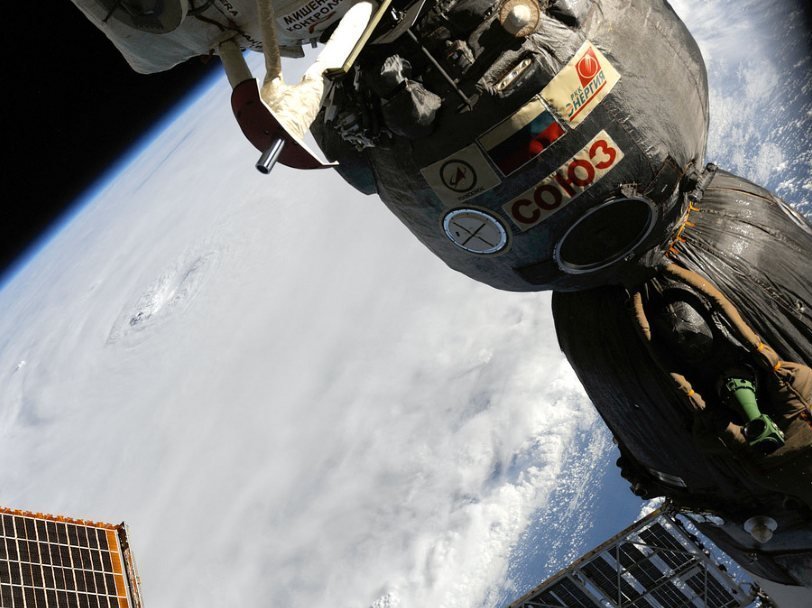 ISS NASA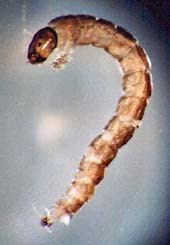
 ISS NASA
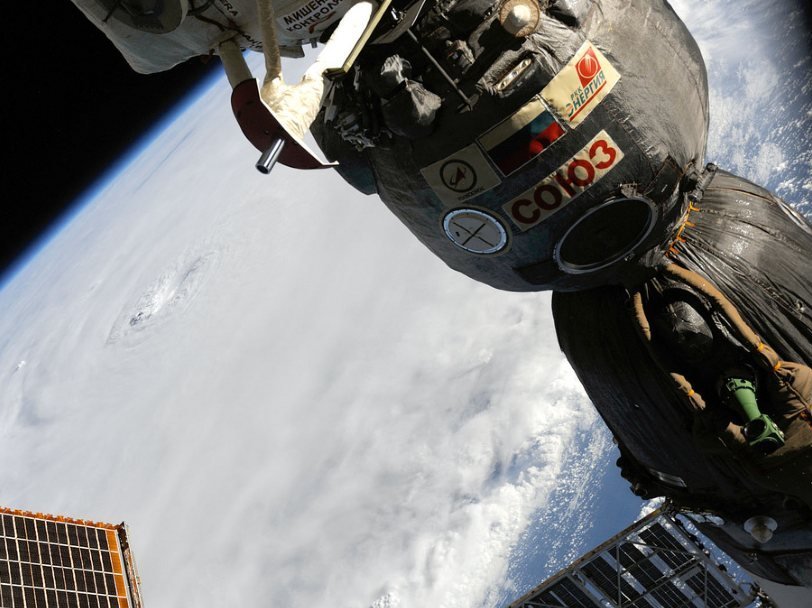
According to Interfax, in the near future, experiments with biological objects with the help of special equipment of the Expose series will be resumed at the International Space Station.
Expose is a special containers in which the examples under study are placed for a long time on the outer surface of the ISS to study how the conditions of space space affect them. They were developed by the European Space Agency. The results obtained contribute to the understanding of the biological processes that occurred in the early period of the history of the Earth, as well as those that may now occur on other planets, the surface of which is less protected from solar radiation atmosphere and magnetic field. They will also allow to evaluate the possibility of the spread of living organisms, beyond the planets on which they arose.
The Panzpermia hypothesis, according to which life was brought to the ground from space, was formulated by the German botanist and physician, professor of the University of Leipzig, German Richter in 1865. In 1834, Swedish chemist Joons Jacob Bertzelius expressed similar ideas in an article on a chemical analysis of a meteorite, which fell near the French city of Ales on March 15, 1806. A serious contribution to the theory of the Panspermia was made by the famous Swedish chemist Svante Arrenius, who devoted a separate work published in 1903 to its justification. If the founders of this theory talked about the transfer of bacterial disputes in the space, then in its modern version is often implies to the Earth from the space of prebiotic molecules.
To verify this hypothesis, experiments in the earth's laboratories are placed. Proscience talked about one of them in March 2013. But it is impossible to fully reproduce the conditions of the open cosmos in the laboratory, so the experiments are also on spacecraft. Even if you do not take into account the possibility of checking the Panzpermia hypothesis, scientists seek to clarify the picture of the influence of cosmic radiation on living objects. Another goal of this work is to create cosmic quarantine methods, which may be needed in the future with interplanetary travels to protect the Earth’s biosphere from a foreign life and to prevent pollution by earthly bacteria of other planets.
For the first time at the ISS, experiments of this series began in 2008. The Expose-E container was delivered on the ISS by the Atlantis spacecraft launched on February 7, 2008, and installed on the surface of the Columbus module. Another container with biological objects EXPOSE-R delivered the ship "Progress" to the ISS, which started from Baikonur on November 26, 2008. It was placed on the outer shell of the ISS Max module. After the expiration of the Expose-E experiment, biological objects from Expose-E were delivered back to Earth in September 2009 by the Discovery ship. The contents of Expose-R were returned in 2011 by the Soyuz spacecraft.
Expose-R consisted of corps and cassettes, where plants were placed, spores of bacteria and mushrooms. For a year and a half, biological objects were subjected to the conditions of the harsh space environment, including the effects of solar ultraviolet radiation, vacuum, sharp fluctuations in temperature. Part of the experiments was carried out under the Rose (Response of Organisms to Space Environment), coordinated by the German Aviation and Cosmonautics Center (DLR) with the participation of scientists from different countries of Europe, the USA and Japan.
Placement of EXPOSE equipment at the International Space Station
EXPOSE-R conducted nine experiments. The Amino experiment studied the effect of solar ultraviolet radiation on amino acids and other complex organic molecules. The Organics experiment was devoted to the study of the development of organic matter in outer space. In the Endo (Rose-1) experiment, the effect of radiation on the endolytic organisms living on Earth inside the stones was considered. Such organisms are of particular interest to astrobiologists, since theoretically they could endure interplanetary travels. In the OSMO (Rose-2) experiment, osmophile bacteria, capable of surviving in an environment with high osmotic pressure, participated. Artificial meteorites in which bacterial spores were posted in the SPORES (Rose-3) experiment. The experiment of Photo (Rose-4) was devoted to the study of the influence of solar radiation on the genetic material in disputes. In the similar experiment, Subtil (Rose-5) assessed mutations caused by the conditions of open cosmos in the dispute between the bacteria of the hay stick ( Bacillus subtilis ). The Pur (Rose-8) experiment studied the effect of space on the Bacteriophage virus T7. Finally, in the IMBP experiment, developed by the scientists of the Institute of Medical and Biological Problems of the Russian Academy of Sciences, the spores of bacteria, fungi, plant seeds, as well as low crustacean eggs and larvae in a state of cryptobiosis were involved.
Other experiments were carried out using objects located in Expose-E. An experiment of Process was devoted to the study of photochemical reactions in organic formations in near -Earth orbit. The Adapt experiment studied the adaptation of microorganisms to conditions similar to those in which they would fall on meteorites. The problem of stability of bacterial disputes to cosmic conditions and their ability to recover after damage was considered as part of the Protect experiment. The LICHHENS and FUNGI Experiment experiment was attended by lichens and mushrooms, and plants of plants in the SEEDS experiment. Dosimeters Dosis, Dobis and R3D were also placed there.
According to the results of these experiments, scientific publications continue to be released now. In particular, it was found that in conditions like Martian, such organic compounds as glycine, serin, fluentic acid and mellite acid will be destroyed within 50 - 150 hours. But it turned out that in artificial meteorites, alanine, valin, glycine and aminois -powered acid showed quite good stability. When studying the effect of ultraviolet radiation on the disputes of the hay stick, it turned out that in the conditions of open space, single samples were able to survive, when protecting from sunlight, survival reached 8%, and in the modeled conditions of the surface of Mars survived a 100% dispute. Two organisms that participated in the Life experiment survived in space, it turned out to be green algae of the genus Stichococcus and the mushroom of the genus Acarospora , which lives in a lichen. It was also found that after a year and a half, some endolytic microorganisms survive in space. After returning to Earth, 23% of Arabidopsis Thaliana and Tabacum ( Nicotiana Tabacum ) gave viable seedlings in space.
Now scientists have prepared materials for new experiments. The Roscosmos press service reports that four types of bacteria (52 sample), eight species of mushrooms (100 samples), six species of plants (64 sample), 1 species of mosquito larvae ( Polypedilum vanderplanki ), one type of cancer (summer-like summer (summer-lane on the summer panel) will be placed. Triops cancriformis ), 4 samples). Mosquito Polypedilum Vanderplanki , which lives on Earth in Equatorial Africa, is famous for its ability to survive in extreme conditions. Since reservoirs where the larvae of this mosquito develop, often dry out, they are saved by the ability to cryptobiosis - the existence of almost all of the water with the body. The experiments also showed that these larvae can carry temperatures from −170 ° C to +106 ° C and an absorbed dose of gamma radiation up to 7,000 grams . Eggs of summer shield ( Triops cancrifyMis ) also remain viability after drying out and high temperatures.
Polypedilum vanderplanki mosquito larva for water loss and recovery. From the article Kikawada, Okuda et al. Identification of Anhydrobiosis-RELEETED GENES FROM An Expressed Sequence Tag Database in the Cryptobiotic Polypedilum Vanderplanki (Diptera; Chironomidae). 2010.
All these organisms were taken aboard the ISS on July 24 by the progress cargo ship. Cosmonauts Alexander Skvortsov and Oleg Artemyev will go into outer space on August 18 and install Expose-R2 on the surface of the Zvezda module. It is planned that the period of the experiment will be up to one and a half years.