
Translated material
Sanctions union
The rate of Russian power on the contradictions between the United States and Europe did not play
After the tragedy with the Malaysian plane in the sky over the Eastern Ukraine, the West acted as a united front: the USA, the European Union, Japan, Australia and Canada, which are not part of the EU Norway and Swatzatyrie, despite the obvious losses, imposed sanctions against the sectors of the Russian economy. What happened behind the scenes - found out The New Times
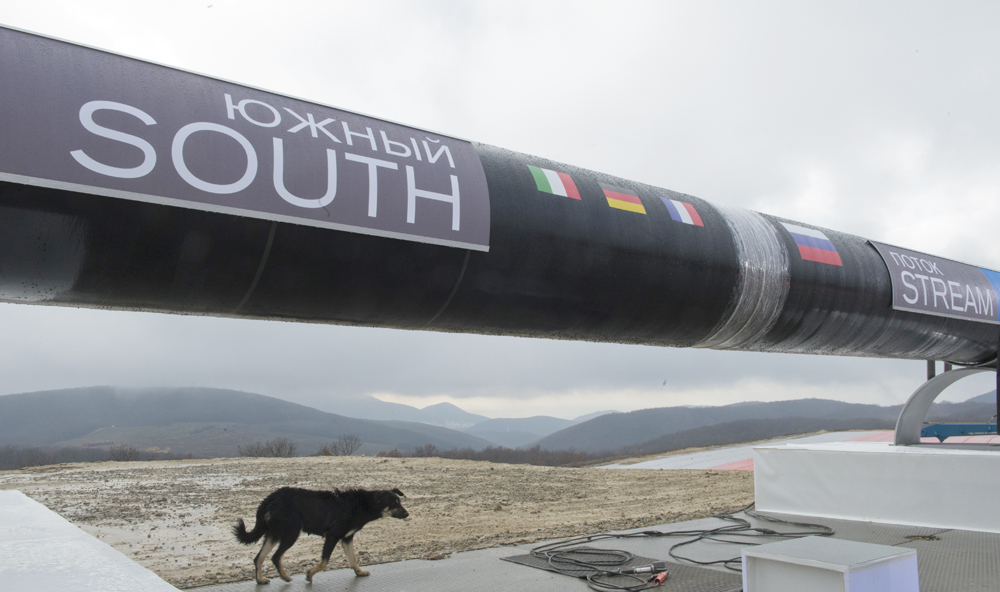
The future of the South Stream gas pipeline is all foggy. Anapa, December 7, 2012 /Photo: Sergey Guneev /RIA Novosti
On the evening of July 29, on the eve of voting in Brussels on a new package of sanctions against Russia, the head of the FRG FRG Frank-Walter Steinmeier tried to contact the Chancellor of Angela Merkel-the call was a new phone, protected from wiretapping by the Americans. But Merkel did not answer. She already decided, and the persuasion of the Minister of the Cabinet and the old opponent (Steinmeier represents in the coalition government of the Germany of the Social Democrats) to not rush with the third package of sanctions against Russia, did not intend to react, and therefore her smartphone remained lying on the table.
| *Now in the federal government 10 ministers of the coalition unit of the CDS-CSS and three representatives of the SDPG |
The Chancellor and the head of the Foreign Ministry conduct “intensive personal consultations”-this was called in the messages of both press services all previous days. In Berlin, they talked about the split of the government coalition*, there were leaks in the media that the chancellor is thinking about resignation, the relationship between Merkel and Steinmeier is heated to the limit. German diplomats in Brussels were engaged in verbal equilibrics: that Merkel considers it necessary to stop Putin, and the German Foreign Ministry was against sharp steps, they were actually well aware.
Angela Merkel was ready for hard measures back in March, immediately after the annexation of Crimea. Journalists from her pool said that a video with “polite people”, shot on the eve of the referendum, caused a rage of rage in a calm Merkel. “Germany is ready for the most stringent reaction,” she said.
However, German business opposed the sanctions. It is understandable: the Federal Republic of Germany is exported, and although Russia is only in 11th place among German trading partners, and exports in 2013 amounted to only € 36.1 billion, about 300 thousand jobs can be under threat: 10 % of German exporters, more than two and a half thousand companies work with Russia, and for many of them, customers from the east provide a quarter of the rescue.
However, as experts note, due to instability in Ukraine, export began to fall even before sanctions, declining by 14.7 % in the first five months of this year. “The sanctions will not turn into disaster for the German economy, perhaps we are talking about 0.2 % of GDP,” the German economist, a member of the expert council for monetary policy under the European parliament of Ansgar Belka, explained to The New Times. - The psychological effect is important. German companies will be afraid to invest in Russia, fearing recession and political risks. ”
The idea that Germany will not suffer much, in every possible way articulated the German Minister of Finance Wolfgang Shoible, the Patriarch of Christian Democrats: “There is more to Russia than to lose than us,” he said.
However, Steinmeier insisted: do not drive Putin in a corner. Merkel continued to persuade the Russian president: it is unlikely that they ever spoke so much on the phone in previous years, as in these summer months. And it was these negotiations that Merkel convinced, which today is the foresaw leader of Europe, to act as a united front with Washington. According to the source from the close circle of the Chancellor, Putin felled Merkel twice, and she realized that he would believe that he would think that he would change his mind that at least a tragedy with a Malaysian plane would force him to stop and stop supplying weapons to separatists in eastern Ukraine is useless.
On Pirelli tires
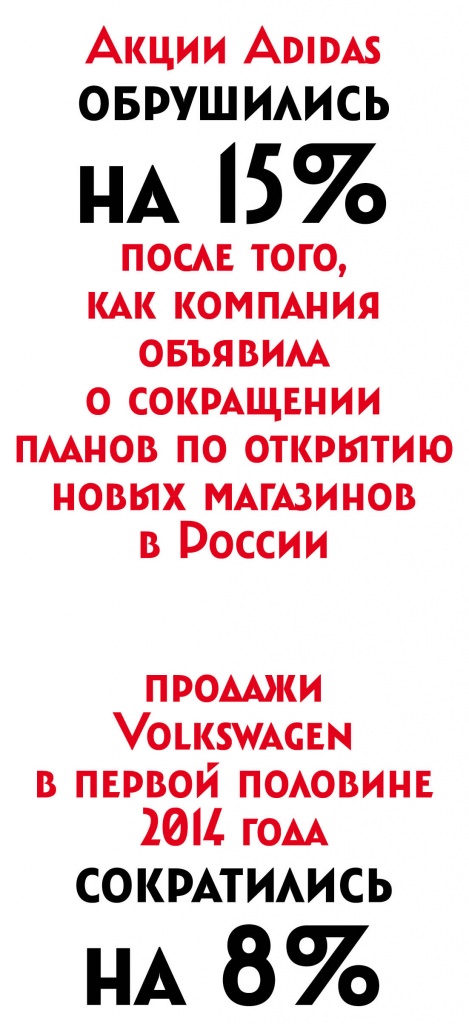
However, the battles for Putin and against Putin were not only in Germany - all over the EU. If the countries of Southern and Central Europe advocated the continuation of diplomatic games with Russia, then the North and East were supporters of a tough dialogue with Moscow. The reasons for the “last chance” were also economic: according to experts, this year, the European GDP will decrease by 0.9 %, and in 2015-by another 0.3 %. The expected production growth of 1.6 % is unlikely to reach half of this figure. According to the President of the Franco-Russian Chamber of Commerce and Industry (CCIFR) Emmanuel Kida, 300 thousand jobs may be under threat in France alone. Western companies began to report on a fall in Russia: so Adidas shares fell 15 % after the company announced a reduction in plans for the opening of new stores; Sales of the largest European car manufacturer Volkswagen in the first half of 2014 decreased by 8 %, Siemens and Metro reported about problems in the Russian market. The London Exchange, meanwhile, banned the IPO of Russian companies, suspending the Bashneft and Children's World IPO (however, Russian companies account for only 1 % of the shares traded in the City).
Russia, meanwhile, was also not sitting in place and behind the scenes was led by Rosneft, owned by the Luxembourg Long-Terments Luxembourg, the Pirelli & C. SPA tire producer Igor Sechin, the involved in the largest Italian producer of tires. The Black List of the United States, entered the board of directors of the company. And on July 13, in the circles of European diplomats, they started talking about the fact that Rome would block the introduction of new sanctions. Matteo Renzi, the prime minister of Italy, immediately refuted these dirty hints, but in Brussels and Washington they did not believe him too much.
"
Rosneft, Luxembourg Long-term Investments Luxembourg, acquired a share in the largest Italian producer of Pirelli tires, and Sechin entered the board of directors of the company. In Brussels, they spoke that Italy would block sanctions
"
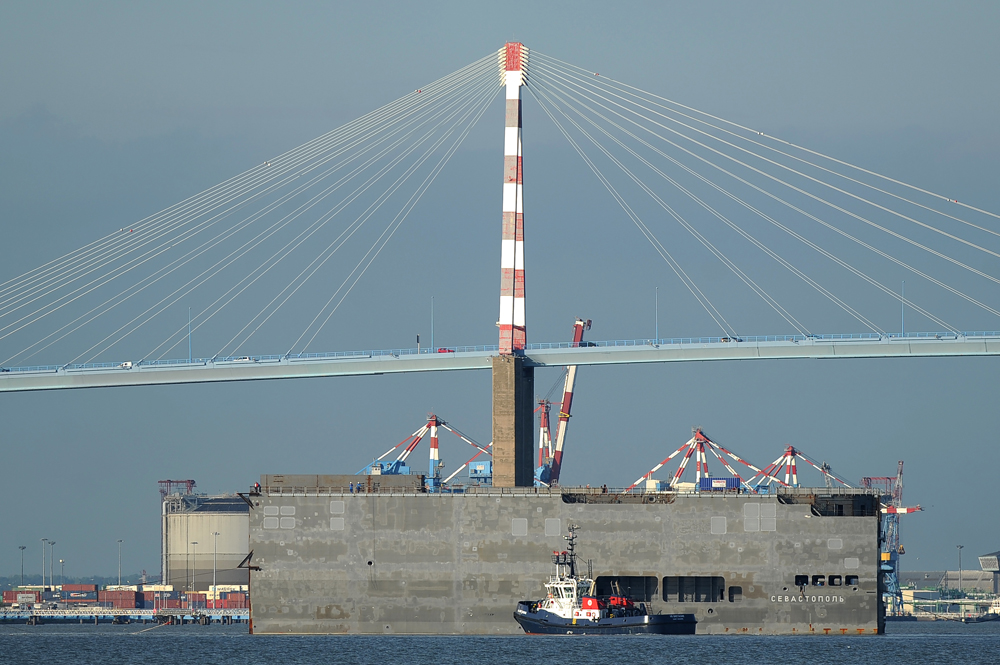
However, much more concern among supporters of sanctions is associated with the French. France President Francois Hollande, proud that he managed to reduce Vladimir Putin and Petro Poroshenko at a meeting in Normandy on June 6, does not get tired of fighting off the attacks on the planned sale of two helicopters “Mistral” with a total cost of € 1.2 billion. At stake, however, not only money, but also the existence of the plant in the Saint-Steel, and these The course of the next four years. Russia has already paid half the amount, penalties when canceling the contract can be up to 20 % of its value.
However, the fears that the ships may not be in the Pacific Ocean, as planned, but in the Black Sea, forced Hollande to say that if the helicopter called “Vladivostok” will be delivered in October according to the schedule, then the sale of the second, “Sevastopol” will depend on the situation in Ukraine.
The English prime minister David Cameron, who declared on June 21, was a particularly sharp critic of the supply of Mistrali, that in England it would be unthinkable to complete such an order. " The answer on the other side of the La Channel was not long in coming: “This is a false discussion unleashed by hypocrites,” France, Jean-Cristofa Kambadelis, told reporters to reporters. “When you see how many Russian oligarchs have received refuge in London, you understand that Cameron must first get in his own yard.”
The French irritation is understandable: the number of citizens of the Russian Federation who received a residence permit in the UK in exchange for investments (investments in English securities should be £ 1, 5 or 10 million), doubled in the first trimester of 2014, and the number of Russian children in private English schools increased by 25 %. The inter -party report of the English parliament added oil into the fire: it turns out that the United Kingdom issued 200 licenses for the supply of weapons (including missile equipment) to Russia for a total of about € 166 million, and these licenses were not stopped. Germany in this sense turned out to be much more consistent: on August 4, the German government withdrew the permission of Rheinmetall to the supply of laser equipment for the training center of combat training of the Russian Armed Forces in Mulino worth € 100 million.
Airplane
Europe is often reproached for slowness: what to say, any decision of Brussels requires the consent of all 28 EU members. However, on July 30, the third package of sanctions against the Russian economy was adopted without long conversations. “Everyone was struck by how the Russian government reacted to the collapse of the Boeing of the Malaysian Boeing on July 17,” the source in European diplomatic circles explained to The New Times. “I have never seen such idiocy.” Why was it impossible to ensure security for international experts and quickly take out the body? Opponents of sanctions simply did not have a moral opportunity to further defend Russia. ”
298 victims of the MN-17 flight pulled out cards from the hands and from the European business. “The Netherlands, for example, the second trading partner of Russia after China, but 174 Dutchman were killed on the plane,” says the diplomat: among the dead there were three employees of the Dutch Royal Dutch Shell.
The American Exxon Mobile, accustomed to working in countries with hard modes (in Nigeria, for example), was called Rosneft's shadow defenders. However, its specialist-54-year-old Karamiyit Sinch, the father of two children, who worked in Nigeria and returning home to Kuala Lumpur, was also on the MH-17 flight.
After that, it became difficult to lobby for the interests of the Russian oil industry to both oil giants, despite the fact that both invested a lot of money in projects with Rosneft. However, the Chairman of the Board of the European Business Association, Philip Pelory, believes that emotions will soon pass: “It’s not even that Russia is the third economic partner for the EU after the United States and China, but that everyone understands: sanctions are counter -productive. They are aimed at ensuring that the Russian oligarchs would begin to lose money and put pressure on power. But there is a completely opposite: they lose money, but are even more consolidated around the authorities. ”
However, according to the diplomatic source of the magazine in Brussels, if there were no aircraft, the sanctions would have accepted the sanctions sooner or later, even if they might not have been so gestured: “Starting from the meeting in Normandy, Putin had several chances to start negotiations, stopping supporting separatists.” But the possibilities provided by the West were missed one after another: in June, the separatists captured the members of the OSCE mission, in June the President Poroshenko’s plan for peaceful settlement failed. “In addition, when the separatists left Slavyansk and occupied the millions of Donetsk, everyone was scared that in the event of a storm of victims among the civilians, there could be much more.”
The version that the tragedy with the Boeing’s Malaysian “Boeing” was not the main reason for the adoption of sanctions was confirmed by the EU Ambassador to Russia Vigaudas Ushaskas in an interview with The New Times: “Our decision is determined by many factors, the main of which: despite promises, the Kremlin has not yet taken effective actions to decal the situation in the eastern of Ukraine.” You should not build illusions about the fact that Brussels sanctions have been introduced only before the end of the year: “This is a standard practice,” another European diplomat explains. - The EU almost always imposes sanctions with a time limit, while the United States is always indefinitely. But if the situation does not change, in December, sanctions will extend in five minutes. ”
They agreed
Brussel’s decision was enthusiastically met in Washington: in the White House, it was insisted that the severity of losses from sanctions against Russia should be divided on equal terms of the American and European business. At the end of June, an advertising campaign paid for the American Commercial Chamber and the American Association of Manufacturers, which called for the government not to impose sanctions unilaterally, was held in the leading American media. “The presidential administration was very offended then, because Washington’s efforts were just aimed at acting in parallel with Brussels,” Freedom House, a former adviser to US Secretary of State David Craimer, told The New Times. “Now American business will no longer have the opportunity to make such statements.”
According to Craimer, if earlier, because of the EU position, the White House was wary of sanctions, today the Congress, the administration, the Republicans, and the Democrats agreed: Russia must be strictly behaved. “There will be no more concessions,” says Craimer.
According to the source of the magazine in the American Congress, immediately after the Boeing catastrophe, lively diplomatic contacts began between Washington and European capitals: “Obama personally spoke with Merkel, Holland, Cameron, and the Italian Prime Minister Renzi. It became clear that the EU was ready to support the States, it only remained to make a list that would not harm Europe too much. ” They informed about the future decision and Moscow: “Colleagues in the Russian Foreign Ministry reacted very nervously to warning about future sanctions, although we never made this secret,” the European diplomat told The New Times. “But instead of thinking about the true causes of our actions, the Russians were only angry west, accusing us of bias and interference in internal Russian affairs.”
Escalation
On August 7, Barack Obama once again stated: new sanctions will be imposed against Russia if it does not change the course against Ukraine. The sources of the magazine on both sides of the ocean confirm: the West has where to move-the sanctions have not yet affected Gazprom, the largest Russian banks have limited financing, but have not been included in black lists, as they did, for example, with the Bank of Russia Yuri Kovalchuk, large Russian business has not been cut off from the global financial system.
However, despite the fact that neither Europe nor the United States are going to abandon the pressure on Moscow, according to various sources of the magazine, politicians began to understand: the sanctions alone cannot be solved in Ukraine. “The West and Russia were in a vicious circle: no one wants to retreat, and everyone is forced to take more and more unfriendly steps,” says the interlocutor of the magazine in Washington. “We are all here in a stupor, no one knows what to expect from Moscow, no one believes that Putin will simply go to negotiations, but no one wants a war with Russia.” According to the same source (and David Craimer confirmed them), the idea of providing military assistance to Ukraine - both weapons and secret information is increasingly popular. This proposal was already announced on August 2, Republican Senator Robert Portman and Democrat Senator Benjamin Cardin, but the White House is still silent.
"
“The Ukrainian army is not only poorly prepared, terribly equipped and insufficiently motivated for the war in the East, but its officers are so permeated by the GRU agents that sabotage its activities that it is almost impossible to work with it”
"
“There are two problems here,” says the source of the magazine in Congress. “Firstly, Putin can perceive this as an invitation to open military operations, and secondly, the Ukrainian army is not only poorly prepared, terribly equipped and not sufficiently motivated for war in the East, but its officers are so permeated by GRU agents that sabotage its activities that it is almost impossible to work with it.”
However, on August 7, the US Navy cruiser Vella Gulf, equipped with a system of anti -thought and missile defense, entered the Black Sea. What will Moscow answer this time?