
Translated material
Perishable savior
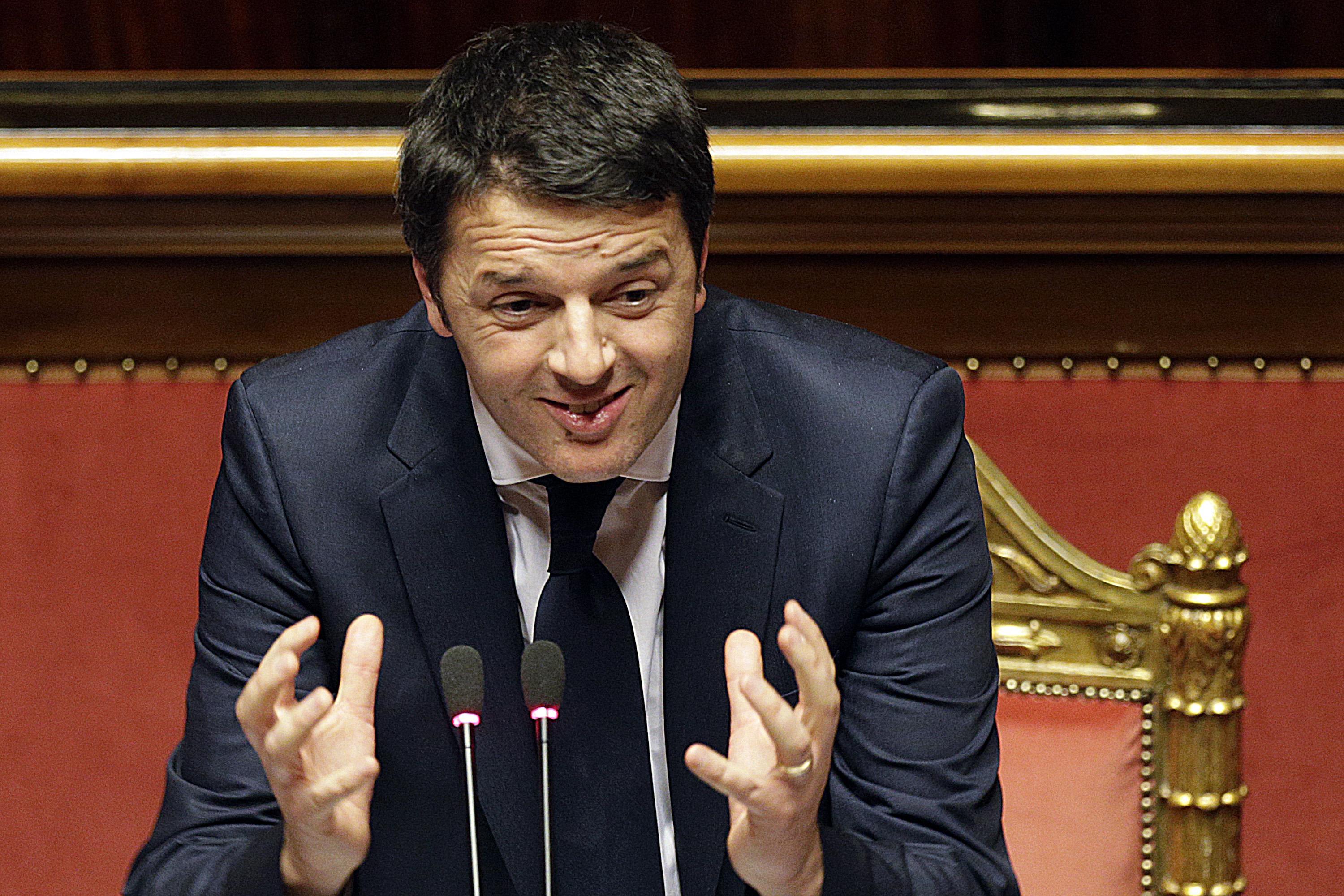
The first clouds appeared on the shining horizon of Italy.
Six months have passed since the 39-year-old Matteo Renzi , actually committing a quiet revolution against his predecessor Enriko Letta, headed the Italian government. Since then, Renzi has been talking all over Europe as the most promising Italian politics in several decades. What is behind the phenomenon of the youngest prime minister in the history of the country?
The Italian economy is again in the recession: its volume is reduced by two quarters in a row. These data, released the other day , are bad news for the government of Matteo Renzi. The point is not only that the cabinet laid out in its plans for this year by economic growth by 0.8%, but also that the "political child prodigy" Renzi urgently needs victories. Its high popularity is based on the ability to give himself to the public and never lose. Until now, Matteo Renzi has succeeded, but recently this superpowed politician seemed to have begun to slip.
At the end of May, the Democratic Party of Italy, the leader of which is Prime Minister Renzi, triumphantly won the European Parliament , gaining more than 40% of the vote. (The last time Christian democrats sought such success in 1958.) Beppe Grillo , the leader of the populist "5 Stars Movement", who was in advance of the victory, was shared: the Renzi party ahead of the "stars" by almost 20%. Shortly before the vote, the Renci government reduced taxes by 80 euros per month for the poorest part of citizens (with an income of up to 26 thousand euros per year). This measure clearly brought the Democrats a lot of votes. In the performance of the prime minister, after the victory, pride and modesty sounded at the same time:
- Technically, this is an outstanding result: in Italy, parties rarely gain more than 40%. Especially considering that we are talking about the Left -Gentric Party, and even more so - at the moment, similar to the current one, when right -wing populists are in Europe on the rise. All these considerations make us not lose a minute. We have a country in need of changes, and Europe, whose mechanisms should earn again. We want this and recognize it - with all the humility and understanding of the situation.
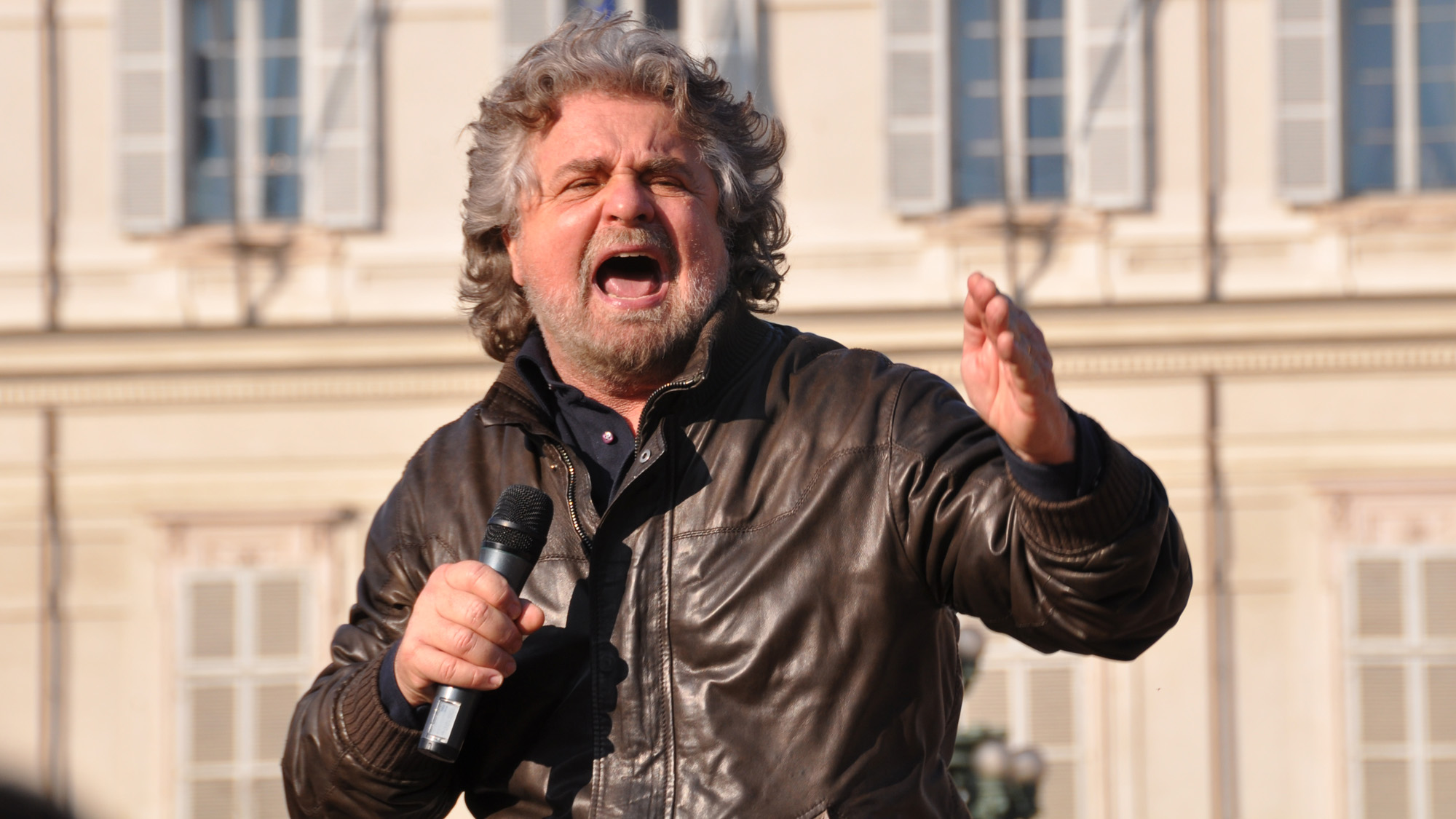
This mixture of self -confidence and modesty (possibly pretense) is the essence of the political style of Matteo Renzi. A lawyer by education, a graduate of the University of Florence, he became interested in politics in his student years. He joined the levocentrists, quickly made his career in the party ranks, became one of the best speakers of his party. In 2004, when he was not even thirty, Matteo Renzi was elected head of Florence Province, and five years later - the mayor of this city, whose native he is. Renzi is popular among fellow countrymen, although, as the member of the city council from the opposition Ornella de Droso notes , many projects and promises given to the townspeople have not fulfilled: “He used the slogan many times:“ It is said! ”In reality, the exact opposite approach is characteristic:“ It is said that it has not been done by the prime minister. ”The popular political blog of Valigia Blu He started a special page on which the pace (not) is demonstrated by the head of the government of the data for their promises.
He used the slogan many times: "It is said - done!" In fact, it is characterized by the exact opposite approach: "It is said - not done"
The premiere, however, is not embarrassing: he himself talks about himself as a person who "brings hope", and so far this is the key to his success. Italy has been in a deep crisis, and the point is not only that for 20 years the country's economy is beating. The Italian political class has long lost the confidence of citizens, and the alternation of the same persons at the state top was tired of them. In addition, these are very elderly faces: Italian politics is known for its tendency to gerontocracy . The President of the Republic Georgio Napolitano is 89 years old, the main political figure of the country, three times Prime Minister Silvio Berlusconi - nearly 78, the chairman of Senate Pietro Grasso - 69, etc., against this background, Matteo Renzi looks just a young man, but a young man with ideas: he repeatedly said that the ruling elite of the country should be completely changed.
Indeed, most of his office is people aged 40 to 50 years, moreover, half of them are women, which is also not characteristic of Italian politics. However, the reproaches that Renzi faces is just reduced to the fact that he prefers the form to the content. And the content remains in many ways the same - backstage transactions that question the reformist rhetoric of the new prime minister. Thus, Matteo Renzi took his current position by shifting half a year ago from the premier post of his party , Enrico Poyko , although a couple of weeks before, in a television interview throughout the country, he said: "Enrico, be calm! Nobody wants to take away your work from you." But after negotiations with President Napolitano Renzi, he went on the offensive, enlisted the support of most members of the leadership of his party and forced the flight to resign on February 14. After that, the phrase "Enrico, be calm!" It became an Internet , and the corresponding hashtag #enricostaisereno has long been one of the most popular on Twitter.
Renzi also reproaches that he went to negotiations with retired and unpopular, but still influential Berlusconi - to enlist the support of his party deputies for political reform. Its essence boils down to a change in the electoral system and cutting the powers of the Senate - while expanding the prerogatives of the government. Losses and small parties will suffer, on which the strength of fragile government coalitions often depend. All this forces the opposition to say that Renzi in conspiracy with Berlusconi seeks to limit Italian democracy. The prime minister himself states that his goal is to make it more transparent, effective and less corrupt.
The latter doubts, for example, the British political scientist Perry Anderson , who, in his essay , dedicated to the current Italian policy, indicates the connection of Renci with large businessmen: “Its main sponsor was a large construction entrepreneur Marco Carraia. When the Renzi was the mayor of Florence Carraia, he was reconstructing urban parking lots and the airport, and Renci himself was settled for free of charge. The apartments belonging to the Carrai are now investigating this, when Renzi was running for the leader of the Democratic Party, one of the main sponsors of his campaign was a large financier of David Serra, living in London. The whole local banking elite was present. "
Matteo Renzi states that, being moderately left, he focuses on the ideological heritage of such politicians as Tony Blair, whose concept New Labour turned British Labor to the classical socialist into a more liberal and modern party. It is another matter that the reputation of Blair himself by the end of his premier was far from brilliant for various reasons. His Italian fan is not yet afraid of this. Like Blair, he is not alien to populist gestures: the first major step in the premiere was the total sale of limousines from the government garage. But the new cabinet had to be reviewed on the cutting out of the treasury expenses: by 2015 they were supposed to be reduced by 17 billion euros, then this bar was reduced to 14 billion. As in a recent interview, Reuters, ex-minister for the state administration of Italy Renato Brunett , noted in a recent interview, "the volume of state expenses in Italy amounts to 820 billion euros. This well, from which they draw the support of politics and party. If this base is blurred, the entire structure of power in the country will change." Judging by the rhetoric of Matteo Renzi, this is what he strives for. But in practice, the prime minister’s actions are not as decisive as his words:
- Italy is stronger than the waves of the crisis that it is opposed. Italy is able to play a decisive role in the processes that are now unfolding in Europe.
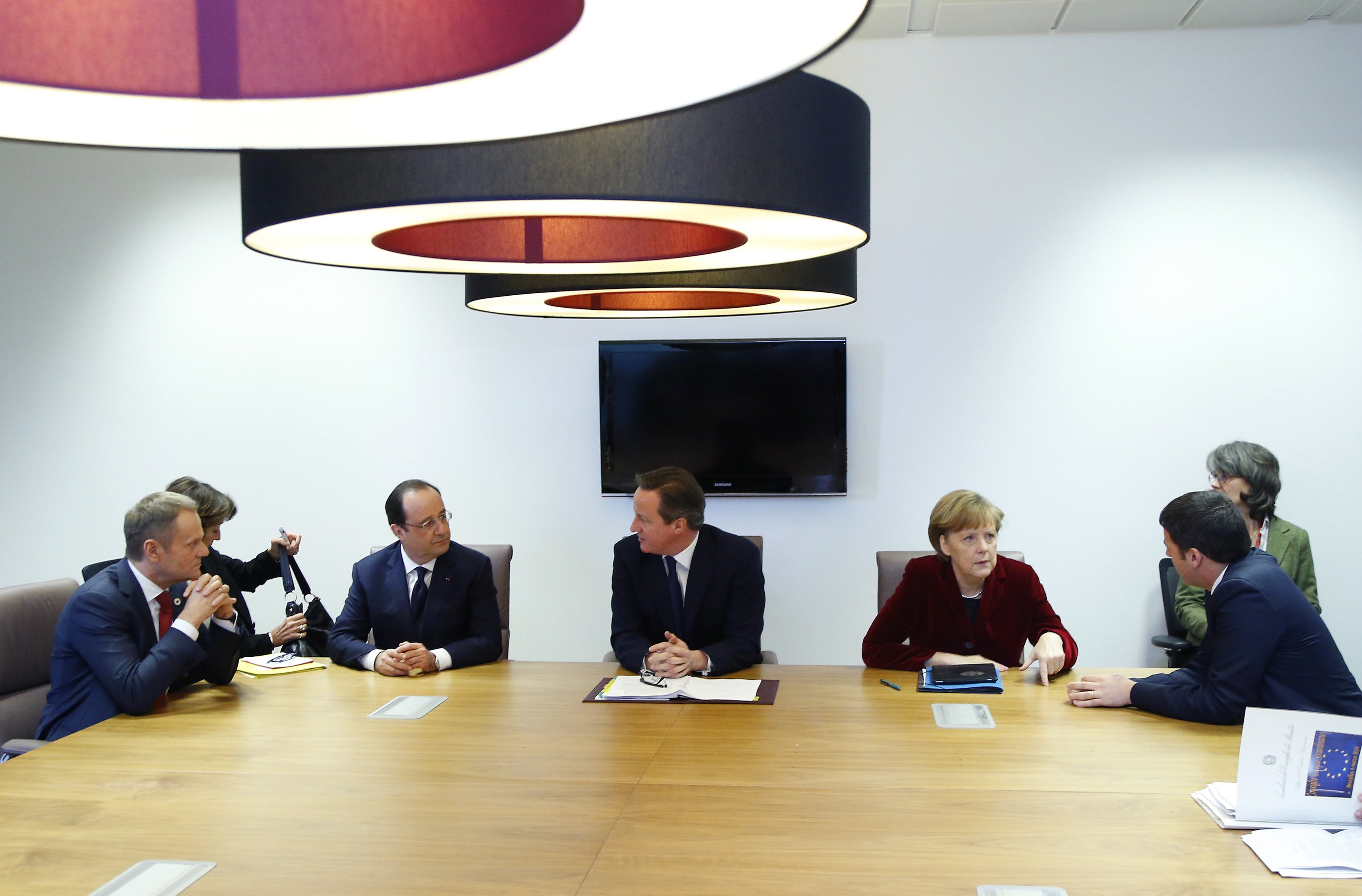
For six months of stay in power, Matteo Renzi created a good reputation abroad. The German Chancellor Angela Merkel and British Prime Minister David Cameron spoke with sympathy. He agreed with the French President Francois Holland on a common position on economic policy issues: Paris and Rome advocate some weakening of fiscal discipline in the name of increasing investment and creating new jobs. Renci rejected the accusations that did not want to support the strict sanctions of the European Union and the USA against Russia:
-If someone doubts the political position of Italy, this means that he doubts the position of other countries, such as France, Germany, Great Britain and the whole "big seven". After all, we worked together on all the documents we have developed.
But still, the Italian prime minister was waiting for trouble. At the July Summit of the European Union, where it was supposed to approve the candidacy of the new head of the EU foreign policy department, Matteo Renzi proposed to appoint Italy Minister Federica Mogherini to this position. This 41-year-old lady has recently been completely unknown in diplomatic circles. In addition, Mogherini's reputations damaged the statements that she made too friendly towards the Kremlin during a recent visit to Moscow. As a result, Poland, Sweden and the Baltic States spoke out that the Italian Foreign Minister would take a high European post. Diplomatic sources reported that Matteo Renzi himself also got: he was remembered by a positive attitude to the South Stream project, in which the Italian concern Eni participates. The prime minister, however, did not agree to replace the candidacy of Mogherini another-it was called, in particular, the name of the very Enrico Letta, to whom Renzi once advised "to be calm." As a result, the question has been postponed so far.
The victory in the European Parliament helped the Prime Minister forcing the Italians to forget the ugly circumstances of his coming to power. Renzi retains popularity and serves as a rather good -natured jokes - it seems to be dumbfounded on how heavily the English language is given to him:
However, with all the humorous terms of Italians to many sins of their politicians, Matteo Renzi has few time. The aura of the Savior, which he possesses in the eyes of many citizens, can disappear very quickly. And Renzi's failure could push Italians to more radical recipes - like those that Beppe Grillo offers. Or remind them of the aphorism of the former Prime Minister Giovanni Jolitty : "It is possible to manage Italy, but completely pointless."