
Translated material
Nowhere, to no one, nor to anything

Elena Kostyuchenko’s book “Conventionally Unnecessary” was written in a very simple language. In fact, I imagine something like that the language of new Russian prose - what it could become, but I have not wanted to yet. The invented Linor Goralik, the name refers the reader to one of the novels of the Danes of Peter Hyoga, whose prose in Russian is translated in Elena Krasnova sounds about as sparingly: the emotions are carefully reflected and largely sponed out of the text. Sometimes this language reaches a state of almost formal: it seems that now-and the author will go to alternating and operators of mathematical logic. However, of course, this is so only for the eye or ear, unusual for the language of the "journalism of fact." Or let's say otherwise: the witness unusual for the speech.
The “conditionally unnecessary” put the reviewer in a rather difficult position. Under the cover, newspaper reports are collected, each of which I already read in the "New". It makes no sense to discuss some things: yes, this is journalism, what it should be. Kostyuchenko is not a front -line correspondent and not a political analyst. She makes a job much more rare in our latitudes. This is the work of penetration into the folds of social space - into its dark corners and white spots. The first she sees the beam of her pocket flashlight. Secondly, on the contrary, squinting, covering his eyes from straight light, tries to distinguish familiar lines and features. The question is here: what new quality these texts acquire, being a book ? What happens to them removed from the course of everyday life?
Unnecessary. Yes, in some way, this book is really about people who no one needs. The book has an essay “War path” - about Sergey Rudakov, who was fighting for him to be paid a legal pension that did not achieve justice and who eventually shot several officials of the Nizhny Tagil Social Insurance Fund. One of the heroines of the essay, the head of the State Pension Fund of Kachkanar, says at the end: “Human life here has long depreciated and does not cost anything. Nobody needs us either. We are scared too. " The investigator, the leading case of Rudakov, echoes her: “Yes, he felt offended, unnecessary. But in this country we are all unnecessary ... ”Another text is“ Kolchugino. Formally speaking, it is a journalistic investigation of a wild story that occurred in Kolchugin (Vladimir Region, 120 km from Moscow): four young people burned (possibly alive) on the eternal fire of a local metallurgical plant, which made them a remark. Two of the suspects are graduates of the Kolchuginsky correctional boarding school, the deputy director for educational work of which speaks of their wards like this: “Here they give them clothes and food and take their time. But you can’t protect them from the world. And the world is not needed. They are mutilated from birth, abandoned by their parents. And when they leave the boarding school, the world spits on them. ”
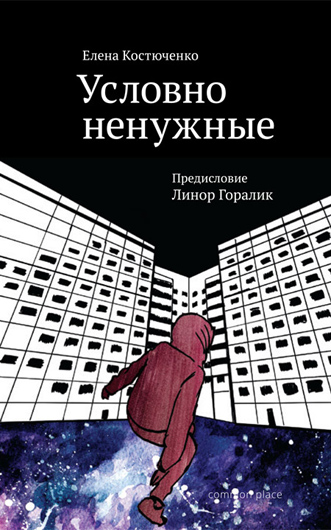 © Common Place
One way or another, almost all the history collected in this book is about unnecessary. But not only. Unnecessiness almost inevitably entails the question: to whom ? Who is unnecessary? There is a simple answer to it: the state. This is what Linor Goraki writes about this in the preface, which proposes in relation to the stories of this book an educated person with Failed stat (“failed state”) the term Baled state - “dumping the state”: “who left its inhabitants to the arbitrariness of fate, <...> returning to the state of at least premododerm, the most severe community, the most severe community. Where in the tiny world (whether it is the world of the village of Bukhalovo or the police department) everything holds on the strictly verified, unbearably tense balance of individual survival and mutual support. ”
In the book review, alas, there is no place for detailed controversy on abstract topics - however, it is impossible not to notice that in relation to the plots of most essays, the state cannot be called “dumped”. On the contrary, it is quite obvious. The desperate, really completely hopeless position of the heroes of the text “Life of the“ Nest ””, - drug addicts who use deomorphine (“crocodile”), of course, would not be so desperate and so hopeless, if it were not for the meaningless “war of drugs”, in the domestic version, criminalizing the programs for reducing harm and even substitution therapy. If the “12th article of the 125th, the main for social insurance, the law” did not prohibit social insurance to increase payments on their own if the already mentioned Sergei Rudakov had not had to go to court-perhaps the essay “The War Trail” would not have been in this book.
What is there: if the “long property dispute between the Federal State Unitary Enterprise“ VPK-Technotes ”and the Moscow Property Department” would not have won the city (i.e. not the state), then you look, and the 2004 tender on the resumption of construction would have won the Medstroyinvest, and some simply developer company-and described in the text of the XZBB ” (Khovrinskaya abandoned hospital) The territory would not be an “autonomous zone” of habitat of adolescents, but with something completely different. Another thing is that yes, of course - the heroes of this essay would not have disappeared.
But when the head of the Kachkanar Pension Fund Tatyana Ivanovna Grosheva says: “Nobody needs us,” she, a civil servant, is talking about? To whom - nobody? Why do police officers from the text “From Dawn to Dawn” watch TV shows about conditional themselves? Yes, because they are also “nobody needs”: “In the love of employees for the series“ About the cops ”there is some kind of unhealthy sublimation-the series convinces that the police really really need people.” Here, the forensic scientist Yegor, who got to the police, to slope from the army, remains in the service, explaining this: “You do not think that I'm afraid. I'm not afraid of guys. But they really, very much they need me. " In other texts, the dichotomy is the need - the uselessness does not speak so directly, but still turns out to be central - both in the long cycle “Life on the side of the“ Sapsan ””, both in the “highway” and in others. At this place there is a temptation of a conversation about the absence of solidarity, about a low level of trust, about the failed political nation - and whatever the dictionary use, this conversation will have some sense. However, the testimonies that make up the “conditionally unnecessary” seem to be a little closely within the framework of common political science hypotheses.
The book written in this language actually represents a long, verified, relatively detailed speech - a witness. There is no prosecution, no defense - and not in court at all, there will be no court.
The quieter - and therefore piercing - the motive of unnecessary sounds in the essay “Olya and Silence”, whose deaf heroine plays death in the play of Slavomir Mrozhek “Widow”. The play, in turn, is rehearsed in the Sinematographer Theater, which the GSIA leadership seemed to have kicked out of the premises of the institute - however, we do not know the details, because the text is not about the theater, but about the girl Ole. She has a very unhappy fate, everything is against her. It would be supposed to write that she really wants to be happy. But this is not so, no. She wants to be needed. Therefore, at first she marries ... honestly, I don’t know what word is here so as not to violate a couple of “laws of the Russian Federation”-well, you understand who she is going for. For a long time M*Daka suffers. Then, having already freed himself from him, by the end of the essay, he goes to “teach flamenko to inaudible pTU and universities” for 13,000 rubles, refusing at the same time from the state manual of 8,000. And when the lady in the list asks her, is she sure that she wants to work - despite the difference only 5,000, Olya says: “Yes.” And then he says, already the author of the book: “You know, if I heard, I would have another profession. Exactly. Would I become happier? "
Who (or what) does not need the heroes of this book? You can, of course, say: to the state. But it will be incorrect - or at least far from complete - the answer. The book of Elena Kostyuchenko is a really important book, because the author wants whether it is whether the current Russia appears in it with something like a Vedenborgian hell , whose inhabitants do not understand that they have died, and most importantly-that no one needs anyone here. In the texts of the “conditionally unnecessary” everything is almost exactly like that of Swedenborg: “In some Adah, you can see the ruins of houses and cities after a fire - hellish perfumes live and hide. In the less cruel Adah, you can see like bad huts, sometimes completely like a city, with streets and squares: hellish perfumes live in these houses, constantly indulging quarrels, straightening, fights and tortures; On the streets and squares, theft and robbery are performed. ”
No, not that it was a world without glimpses of light-but they are short and in the space of the book, they are barely noticeable: well, perhaps the girl Sasha from the KHZB will say something: “And I wanted to open a cure for cancer. From the age of 12, I had such a dream. ” Or a prostitute Nina from the “highway”: she is going to marry the bridegroom Vaska, he is “10 years younger than her, now at a construction site in Moscow” - and writes him tender SMS . Or, finally, the director of the Sinematographer Theater Irina Kucherenko dreams of ensuring that the Moscow Department of Culture, i.e. The current department of S. Kapkov, officially recognized them as a theater, then “could everyone make a small salary stove. If there was her hall ... ”And she does not sit, does not wait until this happens, but“ fights for grants ”; However, the theater did not have its own stage and rehearsal base.
Attempts to become someone needed here do not end with anything: Olya eventually leaves her husband, breaking everything in their common house, which could be broken, including the windows. One of the heroes of the KHZB, Slave, "dies, falling into the elevator of the elevator from the ninth floor." The heroine of the "highway" Nina at the end of the essay "is given to the village at night." And this hopelessness - if you think about it as the property of a book, and not the lives of people who inhabit it - is probably connected with the fact that no speech can contain so much someone else's speech (although the author constantly retreats into the shadow, giving way to his heroes) and as much alien grief as he should - in order to be evidence .
“Life of the“ nest ”” ends like this: “A week later, one of these people will die - at night, in a dream, the heart will stop. Other contrary to everything will pass tests and try to go to detox - escape. ” “Contrary to everything” and “try to escape” - and by themselves it is not that words from the language of hope and faith to the future. However, the very last phrase is really hopeless here: and their names are not important, because you really do not care .
The question is here: to whom - you ? To whom is this book addressed? Not to the state called the Russian Federation. And not to the Lord God - probably not. To us , in the sense, to us all that make up Russian society, whatever it is, yes, but only partly. In some, as they say, the cold highest sense “conditionally unnecessary” as a whole seem to me a book that does not turn anywhere, to anyone or anything. You and I do not contact you than the rest/others - but also not very. We are reset from the accounts in the first text. Because we are actually anyway.
But now, now - when it is no longer necessary to appeal, persuade, convince, explain and generally make us with you and the world is generally better; Now, when there is no more special hope at all - now, at this very moment, the book of Elena Kostyuchenko arises - and the language in which it is written. Such a slightly inhuman, too flat, too accurate Russian: the stingy, calm language of the testimony . And the book written in this language is actually a long, verified, relatively detailed speech - a witness. There is no prosecution, no defense - and not in court at all, there will be no court.
And just like that, just a witness , just testifying. Just because it is necessary.
Elena Kostyuchenko. Conditionally unnecessary. Sat. articles . - M .: Common Place. 274 p.