
Translated material
Ukraine is part of Europe. But
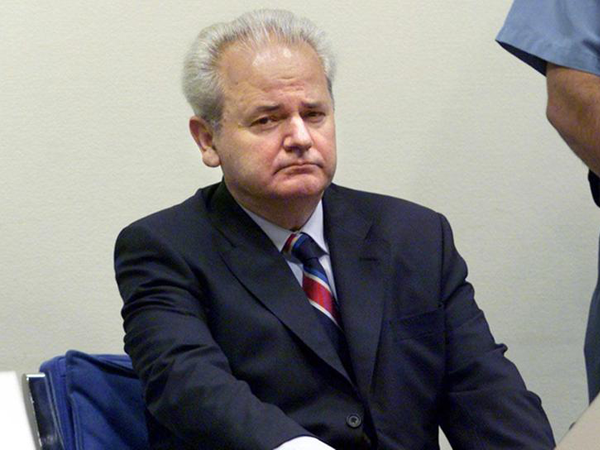
We publish the new text of the writer and journalist Igor Svinaarenko from the Zapamsha cycle. This time this is a conversation for life with a Croatian diplomat and intellectual Bozho Kovachevich. The author and his interlocutor in a leisurely table conversation managed to discuss a lot. Here, for example, Slobodan Miloshevich - can it be compared with the current figures? After all, Miloshevich believed that everything was captured from him, and then - a civil confrontation in the country and war. As Miloshevich finished his path, we know what awaits new figures - we can assume ... But the parallel between today's Ukraine and Yugoslavia of the early 1990s is undoubtedly interesting.
Part One
One beautiful summer evening, I came to the country to God Kovachevich - my old friend. He is a politician, professor, diplomat, was once the ambassador of Croatia in Moscow (2003-2008), and now he took Break and writes, even more precisely, he presents a book about international life after the Cold War. And so we sat on the terrace near his house in the Croatian village, in Estria, first drank Rakia, which friends sent him from Serbia (yes, we are not stupid nationalists, but people advanced, broad views!), After they switched to white under a fried sprat in the early morning in the Adriatic. They drank, they talked about different relevant, of course, about the Donbass and Russia too, and now the thought came to my mind, which I began to incapively express:
- God! ( Poster case in the Croatian is well preserved and is used not only in prayers like ours ). We have already talked about the war in Yugoslavia many times, we discussed a lot of things, and this is all curious. But! Previously, that interest was purely theoretical and cognitive. Well, nothing more than the affairs of past years, which are not related to our present life. And suddenly! Everything has changed. There is a war in the former USSR, on you! Who would have thought. We thought that the Yugoslav script was no longer threatened with us. And now we don't think so. We pull out that of your war from Naftalin and carefully examine ... Tell me, what stage of the Yugoslav war is the current situation in the southeast of Ukraine similar to? Unless, of course, it looks like.
- There is a similarity! We had a similar situation in 1991-1992, when we fought with Serbia, who believed that they should take most of our territory.
-Come on, well. How did the situation develop there? What were the positions and concepts of the parties?
- Our official position was this: it is necessary to recognize Croatia by an independent state. Within the borders of the former socialist Republic of Croatia. And Milosevich’s position was different: these borders are no more than administrative, but in fact Serbia is the whole land where there are Serbian graves. According to this concept, 2/3 of the Croatian territory was supposed to depart Serbia. And by the way, all of Bosnia. This is through the Virovititsa line (north) - Karlovats (40 km from Zagreb).
- This is where your famous brewery ...
- Yes. And Carlobug, on the coast. All that is the east of this line should have been controlled by Serbia. All Dalmatia with Dubrovnik, all eastern Croatia, all Bosnia. Such was their concept. And on Easter 1991, an organized Serbian uprising began against the official Croatian power ...
- Serbian spring?
- Well, you can say so.
- And yet - why did people rebel? Maybe there were some objective reasons?
- Basically, they were affected by the propaganda of the Serbian government, that in Zagreb in the power of Posha, fascists from the time of World War II. But there were repressions against local Serbs. In 1990-1991
- They killed them?
- There were also such examples.
- And how many Serbs lived here, a lot?
- Before the war, they made up 12% of the population, now - 4%.
- And 8% were killed?
- No. The Government of the so -called Republic of Serbian Krain repaid them in an organized manner to leave the territory and move to Serbia. And when the uprising began, the "Serbian spring", then the euphoria was unprecedented there! When Belgrade tanks went to Croatia, the Serbs threw them with flowers. Miloshevich was the most popular politician in Serbia. His highest rating was in the 91st when he began the offensive.
- I suppose Putin- 80% with something.
- I don’t remember those numbers ... And now, it means that Serbia organized the uprising of the Serbian population in Croatia. The rebels occupied a third of Croatian territory. (Half of what claimed.) This is Serbian Krain ...
- Yeah! And how to say correctly - “in Krai” or “on the region”?
- In, in! In Krai.
- Wow. Let us designate for not very familiar with geography - where is it.
- These are three territories. One is around the city of Knin, it is in the south of Croatia, where the majority of the population are Serbs. Another Western Slavonia - approximately 100 km west of Zagreb and Eastern Slavonia - on the border with Serbia. So they were occupied by Serbia.
- by whom, with what forces - the army?
- Serbian rebels helped by the Yugoslav army. And so they established their power in these territories.
- And the rebels - were there any local or they came from Serbia?
- Local! But they were helped by the army and the Paramilitary part. These are the "white eagles" of Vuka Drashkovich. Arkanovtsy ...
- This refers to the people of the famous Arkan, who was singing his friend Limonov from us?
- Yes, the one who married a popular singer.
- The cassette with the holiday was a bestseller and was sold throughout Yugoslavia! Do you have?
- No. In addition to the above, even the local Serbs were helped by the Chertniks of Sheshel.
- Chetniki - such with beards?
- Sheshel does not have a beard, does not grow. Our Chetniki called all nationalists who wanted to expand the borders of Serbia.
- And the Serbs of all your partisans called “Ustash”.
- Yes, right. But not partisans, but militants.
- It is necessary, yes, it is necessary to be more careful with the terms ... Chetniks are more positive, as I understand it, because they fought against the Nazis, and Ostash - often for, right?
- I will say this: Posteri - it was a party army of the regime that was established in the independent state of Croatia, and it was influenced by Hitler. The Chetniks, on the other hand, was the official army of the Kingdom of Yugoslavia. Both the Ustash and the Czechiks collaborated with the Germans in the Second World War. But not together, but separately, each in its own line. And in 1943, both the Ustash and the Chetniks participated in a large attack on the partisans in Bosnia, they wanted to destroy them. The first battle was on the Neretva River, and the second on the Suestyska River in Montenegro. Together they fought against the partisans, who were controlled by the Communists. Different partisans went to the partisans - and the Serbs, and Croats, and Muslims, and Jews.
- As you know, the Communists won under the manual of Tito. And then Miloshevich as the heir to Tito ...
- Miloshevich was not the heir to Tito. He headed the Communist Party of Serbia, not all of Yugoslavia. But he imagined himself to be the reducing agent of Yugoslavia.
- So it is for us there, or something, is there a reconstruction of the Yugoslav war? Yes-ah ... It was not for nothing that Girkin rose like that, he is a well-known reconstructor ...
- As you know, Miloshevich canceled the autonomy of Kosovo and influenced that martial law would be introduced there in 1989.
- Kosovo with what can be compared with the Crimea?
- No. Kosovo is independent.
- How is Chechnya?
- Chechnya has no independence.
- Well, this is clean on paper that you are here in Europe, such formalists.
- And Kosovo is formally, and in fact independently. True, not everyone recognized him ... But nevertheless, Kosovo does not depend on Belgrade.
- And who depends on?
- From the USA.
- Um ... why is it the USA? Because of the military base?
- Yes. And therefore the United States is a guarantor of the independence of Kosovo.
- There was also a story with the trade in bodies. Which Kosovo militants were engaged. Karl del Ponte said about it, but when it was too late. This story somehow stalled.
- The European Union conducted an investigation and confirmed it - yes, it was.
- But no one was arrested.
- They arrested one surgeon from Turkey, who worked in a clinic in Protina.
- And all?
- Well, maybe someone else will be imprisoned ...
- It is sluggish somehow. Miloshevich, by the way, has been holding for a long time. Why?
- Because when Yugoslavia began to fall apart, the States and England began to support him.
- Why? Why is it?
- They thought that he was strong and could keep the situation under control. But when they saw that Milosevich could not cope ...
-Ha ha ha! Miloshevich and Yanukovych. There are some even consonants. From the end.
To be continued