
Translated material
Assigned and guilty
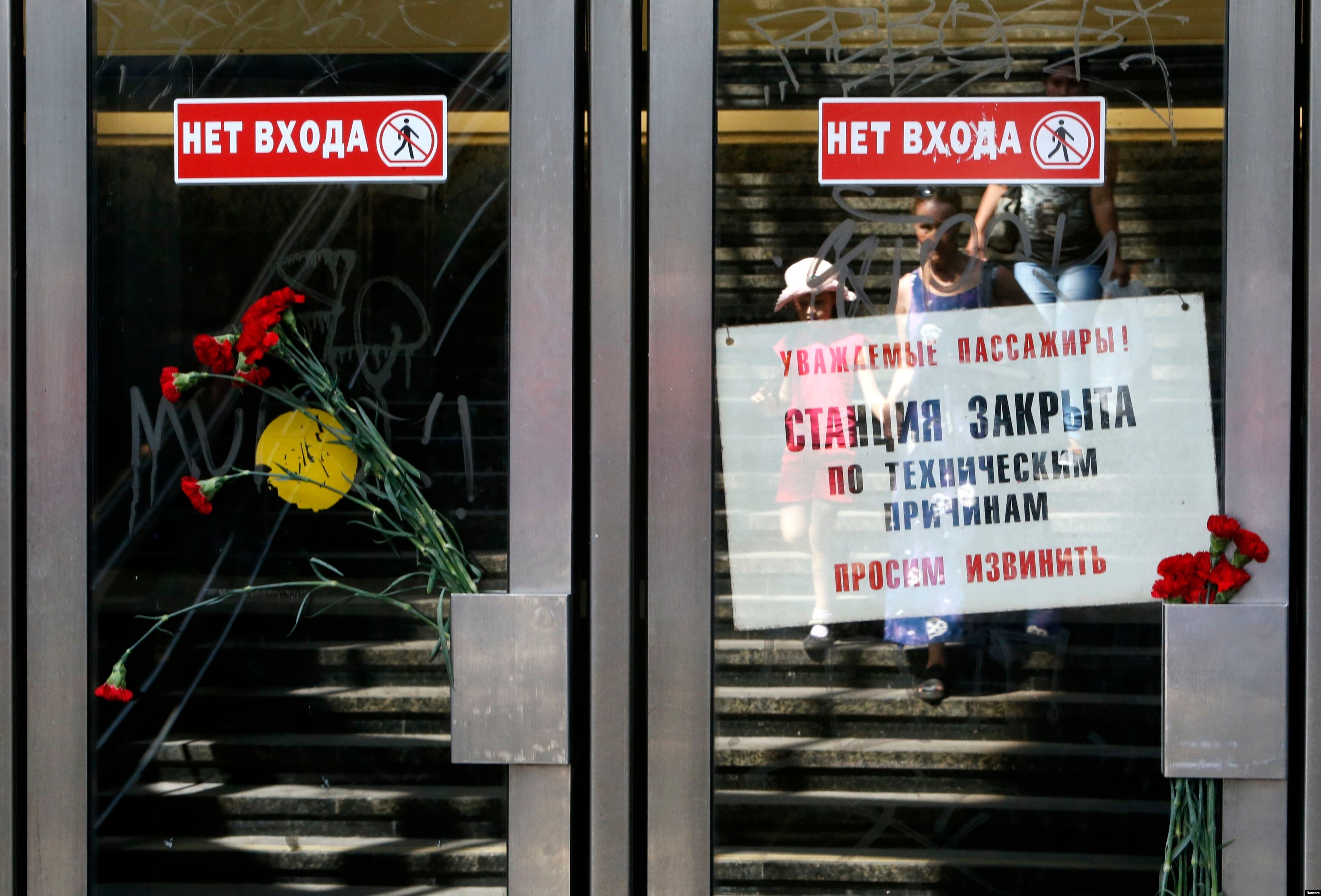
The Moscow City Court, apparently, intends to leave under the arrest of all the accused of an accident in the Moscow metro on July 15
The Moscow City Court on August 11recognized the decision to arrest Valery Bashkatov’s master roads as part of the accident in the Moscow metro on July 15. In the middle of the previous week, the court made a similar decision on the appeal of the assistant to the road master Yuri Gordov.
Two other defendants appealed the arrest: the director of the subcontracting organization of Special Technication LLC Anatoly Kruglov and Deputy Head of the Capital Repair of the Moscow Metropolitan Path Service Alexei Trofimov. The court will consider their complaints in the coming days. All four are accused under the article "Violation of the rules of traffic safety and the operation of the subway, which entailed the death of two or more persons," as the defendants were arrested by the court for up to three months.
As a result of the train crash on the blue branch of the Moscow metro, 23 people were killed, more than one and a half hundred passengers were injured. The investigating authorities quickly called the names of people whose actions led to a disaster - these are ordinary technical workers. The defender of Yuri Gordov became the famous lawyer Vadim Kluvgan .
He accepted the defense of Yuri Gordov in the metro. Metro questions, we need answers so that the metro is safe, but not the extreme, but the perpetrators.
- Vadim Klyuvgant (@klyuvgantvadim) August 6, 2014None of the most high -profile incidents in Russia, including terrorist attacks, have still led to the voluntary resignation of high -ranking officials or their approximate punishment for this. On July 22, Moscow mayor Sergei Sobyanin dismissed the head of the Moscow Metro Ivan Besedin in connection with a major accident on the Arbat-Pokrovskaya line. Dmitry Pegov was the new head of the subway. The head of the city said that the disaster in the subway tunnel "crossed out the huge work that was carried out in the metro in recent years." President of the Panorama information and research center Vladimir Poblovsky found a decision to dismiss Besedin unusual for the upper echelons of modern Putin's bureaucracy:
Besedin's resignation is somewhat unexpected, because everyone expected that the arrows would be limited to
- This resignation is not in the style of the current reign. Putin does not like to dismiss anyone under the pressure of public opinion, due to grave mistakes or unprofessionalism. Most nobles follow this course. Besedin’s resignation is somewhat unexpected, because everyone expected that the arrows would be limited, because Sobyanin follows the traditions of the Supreme Chief. In this case, the "switchman" was appointed in some way the nobleman. This is unconventional for Russia, but in a normal country, of course. It is unlikely that Sobyanin himself will be removed. Liksutov, which the public required for the answer, he is formally not for those cases - not on the repair of the metro.
On the day of the tragedy in the metro on the Arbat-Pokrovskaya line, which claimed the life of 23 people, the deputy mayor of Moscow, Maxim Liksutov, said that the department controlled by him-the Department of Transport of the City-is not an audit and technical security body of the metro, which was interpreted in the media as a refusal for the catastrophe. And before that, large Russian officials relieved their responsibility for terrorist attacks, loss of control over the situation during natural and technogenic disasters. Recall only the statement of the Governor of the Krasnodar Territory Alexander Tkachev before the residents of the city in the summer of 2012 after the flooding of Crimea: "What, everyone had to get around?" In countries with a different attitude to public opinion, after tragedies of such a scale, not only the middle -hand officials are resigned, but even the first persons, as it was, for example, in Latvia at the end of last year, when the roof collapsed in the shopping center in Riga and 54 people died.
Officials use a standard set of excuses and unsubscribing to the fact that the cause of a particular accident, catastrophes lies outside the modern Russian bureaucracy
Is the typical behavior of a Russian official in an emergency prepared or is it a matter of his conscience and intuition? How meaningful is Russian ministers, governors and mayors approaching the press and the public in crisis moments? If their election, festive and reporting speeches prepare imagemakers and speakers, then in the case of an emergency formula there is only one - to minimize the substantive communication with the press, this conclusion is made by the political technologist Stanislav Belkovsky :
- There are no echeloned system for preparing officials for actions in emergency situations on the verge of resignation. Officials use a standard set of excuses and unsubscribing to the fact that the cause of a particular accident, catastrophes lies outside the modern Russian bureaucracy. Therefore, personnel permutations themselves do not give and do not decide anything.
Stanislav Belkovsky believes that every official in such situations communicates with the press in his own way depending on his own understanding of what is happening and the ability to interact with the media. At the same time, general features in the behavior of officials are also observed:
In an accident of such a scale and level as a catastrophe in the subway on the Arbat-Pokrovskaya line, and the president of the country was supposed to arrive at the scene of the accident
- We see that from the point of view of the Ethics Code of the bureaucracy, it is completely not necessarily the arrival of large officials to the places of accidents and disasters. In an accident of such a scale and level as a disaster in the subway on the Arbat-Pokrovskaya line, and the president of the country had to arrive at the scene of the accident. However, he never considers it necessary to do this, because he can always say that this is not his level and not his competence. Here, the behavioral line and ethical position of the official is more important than the rhetorical package with which he goes to the media - you can say anything you want. Question: How do officials act in this situation?
President of the Panorama Information Center Vladimir Poblovsky suggests that the general installation in cases of such tragedy on the metro on the Arbat-Pokrovskaya line on July 15 is to refuse liability and refer to circumstances:
I suspect that there is a certain general recommendation - to put everything on circumstances
-I suspect that there is a certain general recommendation-to bring down everything for circumstances and in no case do not admit your guilt, do not make any statements about the resignation. The resignation is the prerogative of the boss: he decides whether anyone needs to resign, including for incidents. The official himself, apparently, is not recommended to show the initiative: "Here, I myself admit my responsibility for what happened, I admit my guilt and resign."
Stanislav Belkovsky explains the reasons for the neglect of public opinion on the part of large Russian officials by the fact that these people are usually appointed rather than elect. In this case, the official feels responsibility to the authorities to whom he owes the appointment, and the assessment of ordinary citizens for him does not have a decisive value:
- The official does not answer to the voters. He answers, on the one hand, to his immediate superiors, on the other hand, to those clans and corporations that contributed to his appointment to a high post. If obligations to the authorities and sponsors of his appointment are not violated, then, from the point of view of the official, and there are no grounds to bear responsibility.

Stanislav Belkovsky admits that the head of the Moscow Transport Department, Maxim Liksutov, may not at all consider the impact of public opinion on his career prospects: "There are few odious officials in Russia, who have made many management and public mistakes and nevertheless remain in their posts - due to the fact that all their obligations to the authorities and sponsors are fulfilled." The political strategist concludes that the behavior of officials is directly related to the question to whom he is responsible: to the voter or superiors. This determines his public rhetoric and behavior. Now Russian officials do not perceive themselves in the role of political figures that are responsible to society.
In the summer of 2010, the mayor of Moscow Yuri Luzhkov returned from vacation six days after Moscow was supplied from forest fires. The mayor of Omsk Vyacheslav Dvorakovsky in 2013 did not interrupt his vacation due to the clash of the passenger ship and the cargo barge in the Irtysh when six people were killed. The mayor said that he led the liquidation of an emergency on Skype from the Czech Republic. On July 15, 2014, the head of the Moscow Metro Ivan Besedin interrupted the vacation on the day of the accident. But political strategist Stanislav Belkovsky refuses the official of the moral motivation of this act, assuming that he was returned in an orderly order, because otherwise all the cones, according to Belkovsky, would have rained up to the mayor of Moscow Sobyanin and his deputy Liksutov.
In the conditional West, mayors of cities and departments are resigned even in the event of an earthquake
Political scientist Vladimir Pibilovsky sees that the officials adopted the manner of abandoning responsibility for the emergency and not to return from vacation during incidents from Russian President Vladimir Putin, who in 2000 interrupted his vacation only for the sixth day after the incident with the Kursk submarine. Comparing the situation in Russia and Western countries, Vladimir Poblovsky also emphasizes that the behavior of Western officials is due to the fact that they are responsible to citizens:
- There is a general tradition: as "the client is always right," so "the official is always to blame." In the conditional West, mayors of cities and departments are resigned even in the event of an earthquake: well, for example, because they were not prepared for it, they did not take into account the risks. As for PR or GR (Government Relations), it is all very developed there.
According to Vladimir Prelilovsky, Western officials care more about their reputation, the serving in the West reports to the population. The official in Russia needs to convince only the boss of his innocence.
The leading researcher at the Department of Socio-Political Studies of the Analytical Center "Levada-Center" Natalia Zorkaya says that the rating of Russian officials of the level of the city does not much depend on their behavior during emergency situations. At the same time, people are convinced that the authorities will not reveal the true causes of major incidents:
The rating of Moscow city authorities at this moment will decrease slightly
- Such events cause a very large response in our mass public opinion. Usually people believe that this incident will not be investigated and they will not recognize objective, reliable information about what happened, and about the causes of what happened. But, most likely, the rating, for example, of the Moscow city government at that moment will decrease slightly. As a rule, the level of trust does not hesitate to the highest leadership of the city - the wine is written off to officials of a lower rank.
Natalia Zornkaya says that the installation - "truth will not be disclosed" - there are also "yellow" media outlets that are losing scandalous versions. As a result, the shortage of expert assessment in the media about major accidents leads to maintaining fear and a sense of unsafe. Distrust and accusations against the authorities are increasing, but the objects of discontent are still not those authorities that are responsible for various incidents.
The official in Russia needs to convince only the boss of his innocence
The sociologist explains that respondents can recognize the mayor for some responsibility for major incidents in the city, but the level of support of the head of the city is not much connected with this. Natalia Zorkaya draws an analogy with the state of the President Putin rating: during the tragedy with the Kursk submarine and the terrorist attacks in the country. At the time of the acute experience of what happened, the Russians recognized Putin responsible for this, but in the end, his rating was reduced only by some time.
Studies of the “Levada Center” show that during the resignation campaign of the Moscow Mayor Yuri Luzhkov, the extremely critical attitude of Muscovites to his rule and team was recorded. However, Luzhkov was removed, and the highest city officials were not realized from his entourage. Thus, among ordinary citizens, the opinion is stated that large officials will not be punished for mistakes and misconduct.