
Translated material
The first negative fruits of the embargo for imports: retailers informed the government about the increase in prices among suppliers
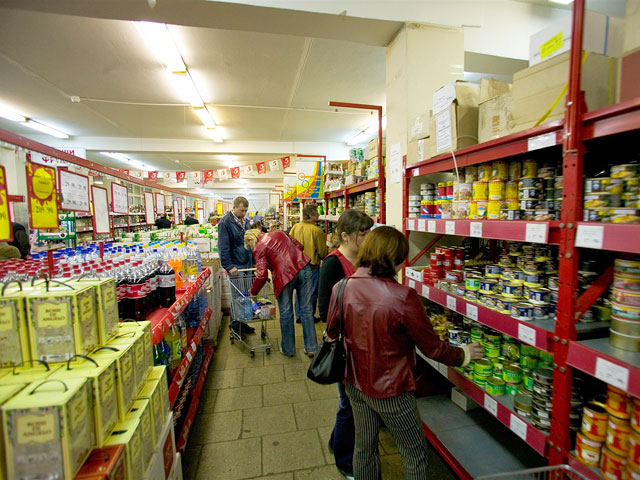
Sad predictions regarding prices in connection with the ban on imports of some types of products from countries that have imposed sanctions on the Russian Federation seem to begin to come true. Retaillers brought to the attention of the authorities that suppliers raised products of food.
As it became known to the Kommersant newspaper, in particular, one of the largest retailers - X5 Retail Group, notified more than 20% of the Ministry of Industry and Red fish for more than 20% of the Ministry of Industry and Red. The Minister of Agriculture Nikolai Fedorov warned that the federal antimonopoly service (FAS) and law enforcement agencies can be engaged in what is happening.
The articles that illuminate an alarming trend, predicted by experts immediately after the announcement of President Vladimir Putin about the embargo, write “headlines” on Wednesday.
A scandal with rising fish prices, the import of which fell under sanctions, broke out the very next day after the list of prohibited products is published. First, a double increase in salmon prices sold by a group of companies "Russian Sea" was reported. Then, in the leadership of the "Russian Sea" they refuted the information, but the FAS still decided to check the resonant episode.
- Russian customs recorded a sharp increase in meat smuggling on passenger trains from Ukraine
- plans to increase food imports from non -European countries raised questions about the fate of domestic manufacturers
Now, according to the X5 Retail Group, which includes the chains of Pyaterochka, Perekrestok and Carousel stores, two suppliers of fish and seafood and a company supplying vegetables and fruits reported about raising prices. In particular, LLC “SI Prod”, which is supplying shrimp, reported that from August 11, prices due to increasing the cost of transporting and storing goods, as well as the transition to a preliminary system for paying raw materials with suppliers, increase by 20-36%. The retailer received the same notification from the red fish supplier - CJSC SK Retail. The adjustment of the volume and cost of products was reported in a letter to its customers and LLC FRUT Service, which supplies fruit and vegetable products.
Information about consultations with the ministry of Kommersant was confirmed by the head of the public relations department of the X5 Retail Group Vladimir Rusanov. The ministry itself noted that so far they have not received official notices from retailers about raising prices by suppliers. In turn, the RITEL SK confirmed that they really notified retailers of raising prices, but not to the remaining supply of Norwegian fish, but to Chilean salmon, the cost of which will be higher due to more expensive logistics. In “SI Prod” the fact of raising prices for shrimp is denied.
At the same time, other major retailers told Kommersant that they did not receive suppliers' notifications of price changes. Andrei Karpov, Executive Director of the Retail Association of Companies, said that the increase in prices is private and so far comes more from local Russian suppliers than from large operators.
Speculators are threatened with prison, and impressors of the embargo are promised to check
Last week, commenting on the made-up list of prohibited products, Prime Minister Dmitry Medvedev warned that the authorities would tightly suppress suppliers' attempts to cash in on situations. Last Tuesday, at a meeting on this issue, the Deputy Prime Minister Arkady Dvorkovich, Minister of Agriculture Nikolai Fedorov, said that at the request of the Ministry of Agriculture, supervisory organizations and investigating authorities check information about the alleged speculation. Interfax quoted Fedorov, who stated that perhaps administrative or even criminal cases would be instituted in fact.
RBC Daily reports that the meeting was attended by representatives of the Ministry of Industry and Trade, the Ministry of Agriculture, the Ministry of Economic Development, the Federal Customs Service, the Meat Union, the Union, the X5 Retail Group, Metro Cash & Carry and Dixy. The Deputy Prime Minister threatened the companies with checks and asked them to restrain food prices.
At the meeting, it became known that in the near future the Ministry of Industry and Trade will approve the standard form for a report on store prices, which will be sent to trading organizations and municipalities. Monitoring data will be transferred weekly to the Ministry of Industry and Trade for reports to the government. To exclude falsifications, incoming information is planned to be selectively checked.
According to Vedomosti , grocery networks have already received a list of products, retail prices for which will be monitored by officials. They may account for up to half the turnover of retail, the newspaper writes.
In the list of goods - 40 categories. The list included wheat flour, rice, buckwheat, pasta, sunflower oil, sugar and salt, tea, water. Of the meat products, officials are interested in boiled, boiled -dumped and rawcoped sausages, pork, pork and chickens from meat. In addition, fish (frozen, smoked and salty) and canned food got into the list. Also in the list of eggs, black and white bread, milk, cottage cheese, kefir, sour cream and hard cheese. Among the vegetables and fruits are potatoes, onions, cabbage, carrots, cucumbers, tomatoes, pepper, apples, bananas, grapes, oranges and tangerines.
In these categories, as well as 13 socially significant food products, the network will have to inform the municipal authorities with minimal and maximum prices. In addition, each municipality will independently monitor prices in five federal networks, five local ones, as well as in food markets.
The metropolitan authorities are also going to organize checks, but for violators of the embargo. In raids on large chain stores, the facts of smuggling of sanctions products will be detected, the head of the capital's department of trade and services Alexei Nemeryuk told Izvestia .
According to the publication, chain stores make lists for the city hall, which indicates how many prohibited goods are left in the warehouse and by what time it is planned to sell them. Information will subsequently serve as a guide for the auditors. Among the alternative suppliers of the network are the countries of Latin America, South Africa, and New Zealand.
According to Nemeryuk, the authorities with networks have yet agreed on a peaceful settlement of the process. If sanctions goods are sold after the deadline, such facts will become the reason for the trial of the capital and federal power structures. Moreover, checks can begin in a month.
The government is determined to take control of the food situation in the Russian market, which has changed in connection with the embargo for imports. The day before, Dmitry Medvedev instructed the government to prepare a new food program aimed at full import substitution in a number of agricultural and livestocks. Manufacturers will not only replace imports, but also provide the population with food in sufficient quantities. The prime minister ordered the government to increase the financing of the state development program for agriculture for 2013-2020. The amount has not yet been announced.
Prices have risen in the regions, and stores are selling prohibited goods
In the meantime, the food market of the Russian Federation remains in a shaky position. According to the "Independent Gazeta" , with the unfavorable development of the situation, the main blow from the introduction of the embargo will be on medium and low-income groups of the population. According to economists, these groups of the population spend more than 40% of the family budget for food. While, according to studies, wealthy segments of the population usually send less than 20% of the family budget for food.
Meanwhile, according to the press, food prices have already risen in the Russian regions. According to the New Gazeta , in the Omsk region, the prices of first necessities grew up to the introduction of sanctions: 11.9% for milk, cheeses and other dairy products, beef and pork sharply went up in June by 15% after the introduction of the technical regiment of the Customs Union, which prohibited the sale of animal meat pounded on rural courtyards. The authorities assure that residents of the Omsk region should not suffer from the ban on the import of food. This was stated by the head of the regional Ministry of Agriculture Vitaly Erlich.
In St. Petersburg, after introducing the embargo for imports, prices for red fish rose - it became 50-70 rubles more expensive. In city markets and stores, pork and beef sharply went up - an average of 25-35 rubles per kilogram - and chicken - 20-30 rubles per kilogram. It is noteworthy that prices jumped both for meat from Europe and for products from Belarus and from the cities of the Russian Federation. With the exception of potatoes (has already risen in price by 5-7 rubles per kg) on fruits and vegetable prices in the northern capital, the prohibitive policy has not yet been reflected, the new newspaper notes.
Food merchants in the Khanty-Mansi Autonomous Okrug suppliers from Moscow notified prices. Moreover, this applies not only to the imported goods they already purchased, but also to Russian -made products.
The retail chains of the Kaliningrad region with the introduction of the embargo, on the contrary, made emergency marketing of prohibited goods at reduced prices. In food stores, according to the publication, a boom of discounts on the Norwegian salmon, Lithuanian sausages, Polish cottage cheese, sausage, tomatoes, Italian grapes, Spanish peaches and nectarines, Danish shrimp, Latvian kvass and sweets.