
Translated material
Plus non -re -minus Domingo
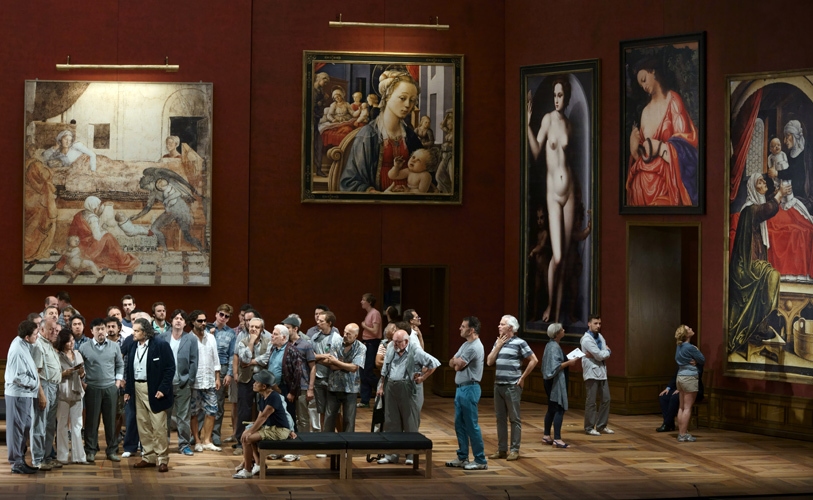
In an interview, Hermanis said that he would like to become an "old -fashioned director of the 21st century." In fact, this has already happened: he was such in his first two of his Salzburg performances. In the "Soldiers" and "Haiveine" the visual row looked perfect, but the staged did not invade the plot, trying to illustrate it rather than radically interpret it.
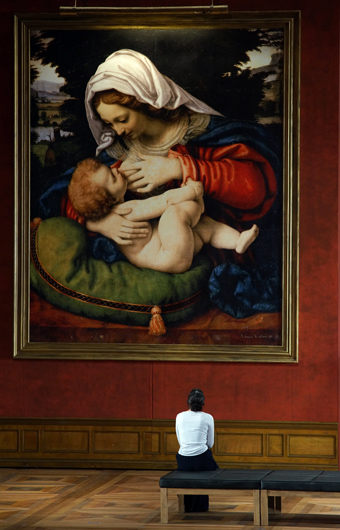
For the "Trubadura", a witty decision was invented. Unable to part with the historical dating of an opera plot, Hermanis transferred the action to the modern museum. In the first scene, where Verdi’s old warrior tells the servants and soldiers about the history of the old witch burned by the child and ghosts, there is an ordinary excursion on the stage: in the halls of the revival of this story, the Ferrando guide (Riccardo Dzhanalatto) comments on exhibited paintings. Leonora (Anna Netrebko) here is a simple caretaker, in love with an old canvas with a handsome hero.
 © Salzburger Festspiele / Forster
Then the paintings come to life, and the main characters appear on the stage already in magnificent historical robes (costume artist - EVA Desecerator). But a beautiful idea does not get an intelligent continuation, a meeting of people of different centuries - however, our contemporaries for the most part remain voyerists, as it should be the victims of television - does not give rise to new meanings.
But the walls with canvases are constantly moving, and this dance of large paintings on the big stage at first makes a good impression. But the decision of the director (as before, he himself is engaged in scenography) to increase portraits to fantastic sizes rather tires the eye. Grunt images look wild on a new scale, Bronzino-still not glazunes, it is not designed for this, especially since the Titian horse portrait of Charles I of the usual size hangs nearby. Of course, this can be survived by regretting that there is no list of reproductions set in the program - this would be a long -standing dream of the organizers of the Salzburg festival and its educational program would be finally realized. But the movements of the paintings at some point seem flickering, the look focuses on them, and not on action under them.
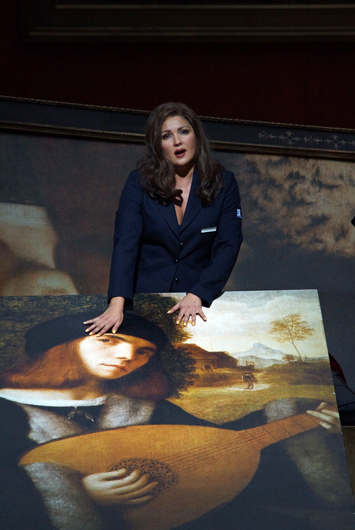 © Salzburger Festspiele / Forster Anna Netrebko
However, there is no special action: carried away as an artist by the visualization of the musical text, the Hermanis-director is limited to scammers reminiscent of the old opera aesthetics-not even the XX century, but the XIX. I do not want to imagine what would remain from the theatrical in the "Trubadur" if his scenery suddenly disappeared, beautiful, but still somewhat monotonous, boring by the end of their greatness. When in the fourth picture the canvas is massively removed from the walls, you begin to hope for the best: maybe they will at least be replaced by Malevich with Kandinsky or, in the worst case, Dali? But a miracle does not happen, death comes to the heroes against the backdrop of empty walls.
 © Salzburger Festspiele / Forster Placido Domingo
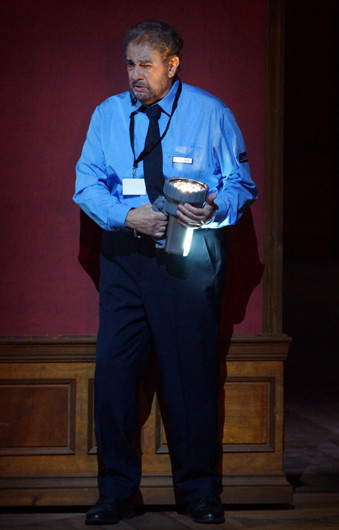
Tickets for Trubadura (the live broadcast of which, by the way, can be seen at the “culture” tomorrow) in Salzburg scattered in a few days. You can, of course, believe that many bought them for the sake of Placido Domingo, singing Count Di Luna: to stay at 73 in the combat system - such determination deserves admiration. It can be imagined that Alvis Hermanis, after the “soldiers” of Zimmerman, who became the most important event of the 2012 festival, and the bright “Gawain” last year, hot fans appeared (although today the singers are pushed back in Salzburg, as under Karayana). The Francesco Meli (his manriko is a model of excellent vocal work), who entered the full voice of the Genoese tenor. You can’t refuse the right to fans and the Canadian contra contralto Marie-Nichol Lemier (Azenzhen), who dignily coping with his party in the company of famous colleagues. But that no one still doubts the main magnet for the public, no one doubts.
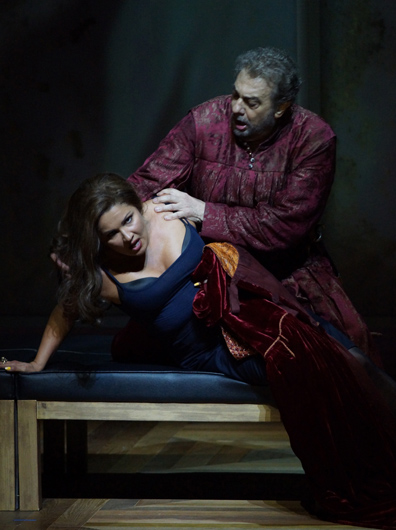 © Salzburger Festspiele / Forster Anna Netrebko and Placido Domingo
Among the spectators of FestSpilhaus there will probably be two or three dozen who listened here in 1962-1963 Leontin Price, the first “Black Diva” of the world opera-the only staging of Trubadur in Salzburg was conducted by Karayan. The new Leonora is also worthy of a long memory, the aria “d'Amor sulli rosee ...” (“Oh, let Zephir bears him ...”) In the Salzburg performance, a non -removal will probably enter the Annals of sound recording.
Despite the year painful from the point of view of personal life, a year (gap with Schrotht, diagnosing autism in a 6-year-old son, the hollow of Internet worshipers about excess weight), the non-renowned professional remained in excellent shape and sings as if there is no happier in the whole world of a person. Some believe that she is already better than Maria Callas (alas, the diagrams and criteria, according to which the votes in the historical perspective are evaluated, does not lead the Zyuddeche Tzaitung), others, like Riccardo Muti, compare it with Renata Tebaldi.
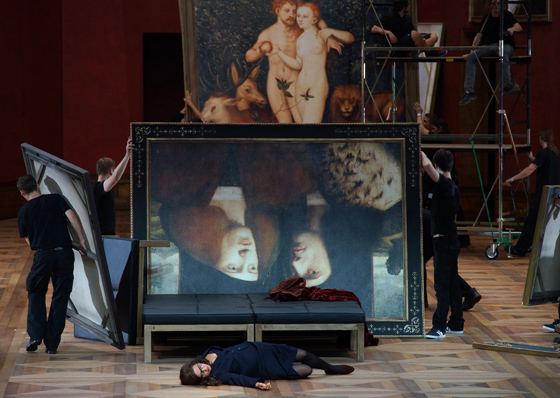 © Salzburger Festspiele / Forster
The success of Netrebko is largely facilitated by the Viennese Philharmonic Orchestra under the direction of Daniel Gatti. As far as last year's "Meisterszingers" sounded to his faceless-catastrophically, so Verdi turned out to be assembled and energetic, albeit deprived of risky interpretations this time. Alas, even the orchestra, who played, when necessary, quietly and conveniently for the singers, failed to help Placido Domingo. Last year, Netrebko, Domingo and Meli sang in Salzburg in the concert performance by Verdievskaya “Jeanne d'Arc” ( Unitel Classica has just made this record on two disks together with Deutsche Grammophon ), Domingo there was still in good shape. Listening to him today, after a change in the voice (Domingo Tenoro has stopped, but so far has not become a normal baritone), you think more about statistics. By 144, the master previously added another parties, to more than 3700 performances, you can also add a single one. There are cases in art when the numbers are eloquent than words.