
Translated material
Runned Russian
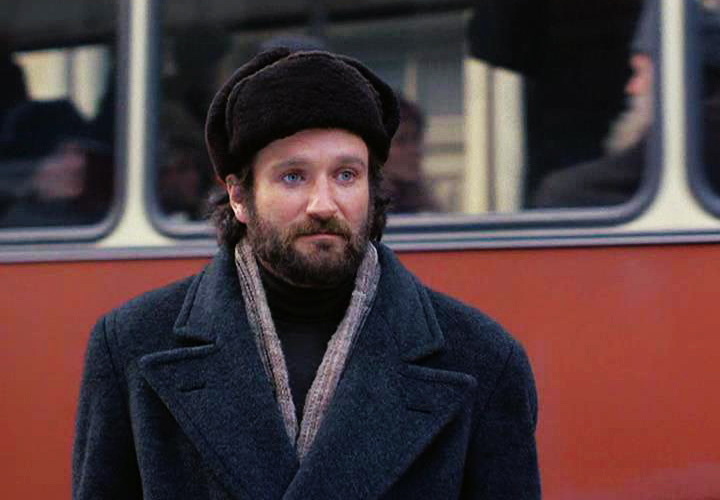
Paul Mazurski, the director who gave Robin Williams one of his most touching roles, passed away a month and a half earlier than the actor - almost no one noticed this loss outside (and within). In a sense, Mazurian was always the shadow of Woody Allen, who did not want to know his place,-stubbornly wrote, shot and played comedies about New York Bohemia, the nervous angedia of intellectuals, the sexual confusion of creative people. For which he was repeatedly beaten by critics and five times unsuccessfully nominated for Oscar, but we love the audience - especially those that in the fight of the favorite and loser are always put on the loser. Mazurian sometimes rested from bohemian tragicomedies, looking at the international panorama. His grandfather was a Jewish emigrant from the Ukrainian regions of the Russian Empire, so Mazursi loved to make films about your and our freedom. In the "Moon above the parador", he exposed the Latin American dictatorship in a comedic manner. And in “Moscow on Hudson”, he decided to deal with the USSR, but he did not take into account the Russian proverb “hits, it means that he loves.”
 © Columbia Pictures
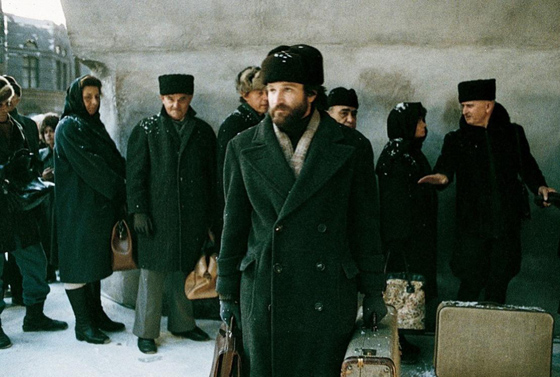
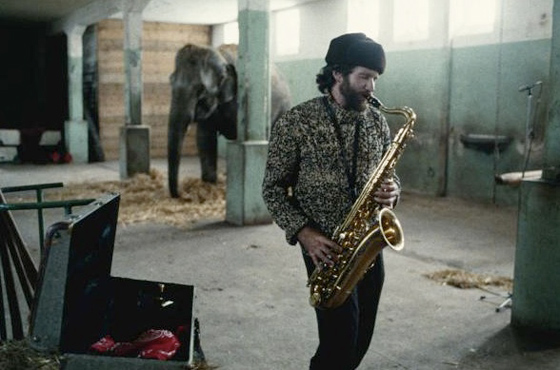
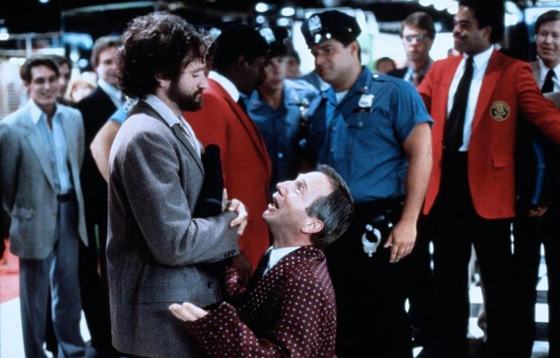
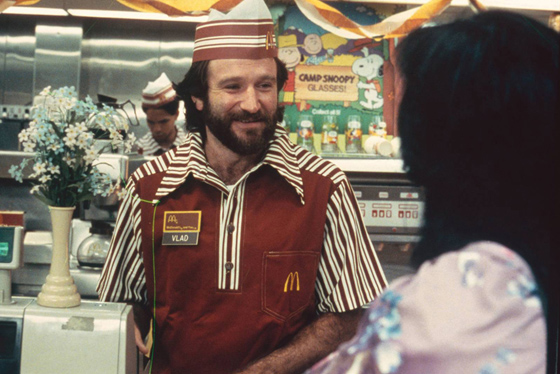
The Moscow-1984 shot in Munich in Mazurski is infinitely far from reality and looks like “Monti Pyton” filmed “1984”. Eternal icy night, overcoats, black "Volga", refuseniks packed in them - and at the same time all -conquering humor. The bearded hero Robin Williams, the circus musician Vladimir Ivanov, wedges into the multi -kilometer queue, asking the neighbor: "What are we standing for?" “Either toilet paper, or chickens - I don’t know,” the brisk woman in a scarf replies cheerfully. It turns out that the paper is still - so now Vladimir has something to give a mistress. That in admiration: "You know what the female heart and the priest need!" But he is a little jealous: after a couple of days, Ivanov, along with the circus, leaves on tour in New York. His comrade Tolya Cherkesov (Ilya Baskin) plans to escape during the trip, but chatting too much, in connection with which he is watched by the KGB officer Boris (Savely Kramarov). But no one oversees the respectable Soviet citizen Vladimir - and he, after a hilarious chase under the BloomingDale ' S supermarket, suddenly becomes a political emigrant for himself. So for him a new life begins-with overnight stays in a poor but friendly black family, a nervous novel with an Italian-salesman and a constant change of work. Vladimir is a taxi driver, then the seller of the hot dogs, then the waiter, then the cashier in McDonald's. It turns out that for a dream to become a jazz musician will have to compete even in New York.
 © Columbia Pictures
A quarter of the film was given to the hero’s Soviet life, and Williams, who specially learned the Russian language, approached this issue much more responsible to the director and had managed to move to the United States Kramarov and Baskin by that time. The native speech in this strange cinema resembles a muddy broth, from which the viewer sometimes catches wild phrases such as "I have never seen the eggs of our leaders." The Moscow part of the picture is glued from jokes that the famous collector of Reagan jokes could tell. "Where is your soul?" ““ Stands in line for groceries. ” "Do you have shoes of the 44th size?" - "No". “Then give two pairs of the 37th.” “Here are three phrases that we will need in the USA. Wrap my lamb leg. Do you read Hemingway? Kiss me, beauty! " On TV, they show a military parade and report about an unprecedented harvest.
 © Columbia Pictures
American values are not inspired by the quiet defector Ivanov not TV, but the streets of New York. In the hotel room, from where the heroes first drag towels and toilet paper, there are paid channels with porn. A gigantic advertising Calvin Klein with a culture model in some, scary to say, is hanging on Times Square. Negroes, which they did not have time to hang, show the onlooks the “moon gait”. President Lincoln advertises headphones. Wherever you look, everywhere Steve Maccuin, Marilyn Monroe, James Dean, Captain Spock and Clark Gable. On the hero of Williams, he does not make all this impressions, and, becoming an American, he - at least in the frame - does not eat any of these benefits. In addition, the USSR and the USA on the screen differ only in interior design. And there and there the hero is surrounded by equally kind and vulnerable people. The speech of the American judge, addressed to new citizens, is an exact copy of the solemn monologues of theunts in the registry office.
 © Columbia Pictures
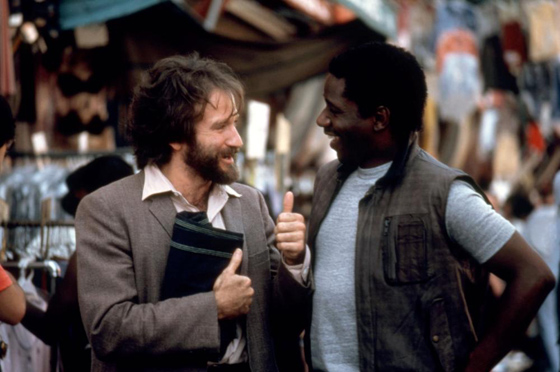
The fact that the viewer does not know what exactly made the hero to stay is the merit of not a straightforward Mazurian, but the bottomless genius of Williams. In the script, everything is just unambiguous: a person wanted freedom. From the praise of the American path, the film recedes only once, when the hero despairs and pronounces a powerful monologue briefly, which will repeat in “Brother-2” in 15 years, and after 30 years in Poddubny. But the anti -American pathos is quickly smoothed to the impossibility of a sweet patriotic scene, in which Italians, Cubans, Vietnamese, Jews and Indians celebrate Independence Day together. And behind it follows a completely tasteless finale: Ivanov reads aloud his letter to relatives remaining in Moscow, and it turns into a public offer for all the inhabitants of the USSR. Come, they say, to us, to freedom.
 © Columbia Pictures
Unlike the doctrinized Mazurian, Williams stubbornly refuses to be one -dimensional even in the film obviously passing for him. His Vladimir Ivanov is either the Shakespearean Hamlet, then the Shukshinsky monster. In a heady fairy tale with a prosperous end, he manages to add insoluble sadness about the fact that happiness is actually impossible nowhere. Judging by the versions of Williams' death, which spread these days, such a worldview was close not only to the hero, but also to the actor.
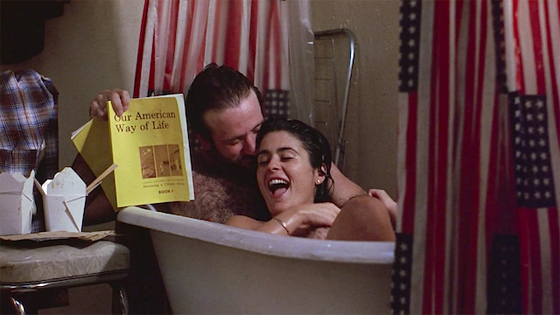
The universal posthumous interest in the great comedian is not the only reason to revise the film thirty years ago. Our viewer, especially with the bare political nerve, has fascinates the irony of fate: 1984 here in some ways similar to 2014, mutual understanding has not been increased over the past decades, “their” and “our” ideas about “there” and “here” are still naive. And the fate of Cherkesov, who talked a lot and eventually remained a clown in the USSR, can be considered a science for a similar way of Russians: silent, hide and create. Do not talk.
 © Columbia Pictures
The Americans also have something to load about. “Moscow on Hudson” is woven from Ostot, unacceptable in today's Hollywood - but it is this laughter that all over everyone fixes the unity of the heroes. The black guard of the supermarket, having caught two roaring Russians in the toilet, laments: "And they have only fagots there." The Italian in a dispute with him about who is smarter, gives out a murderous argument: “While your ancestors ran naked along the savannah, mine have already presented the world Michelangelo and high fashion!” Ivanov runs away along the street from a man in a coat. He nevertheless packs him against the wall: “ Are you fbi? Are you kgb? " - " No, I am gay!" In general, the perfect film is that everything once goes away.