
Translated material
From what Skoltech made

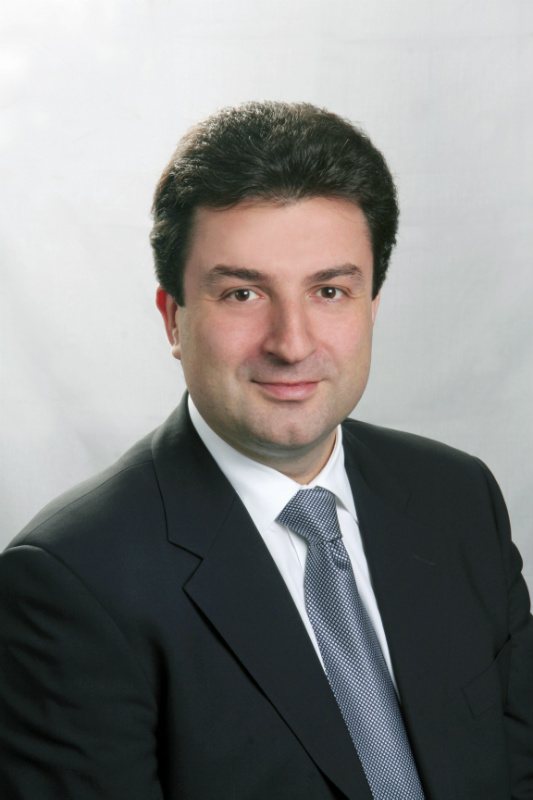 Alexey Sitnikov
This week in Moscow ended the International School Scientific Conference “Lift for the Future”, in which several young biomedic scientists from Skoltekh made experts. About how in three years to create an actively current world-class institution-in an interview with Alexei Sitnikov , Vice President for the Development of the Skolkovo Institute of Science and Technology.
Skolteh - Skolkovo non -state master's Institute of Science and Technology - soon for three years ...
Alexey Sitnikov: Yes. On October 25, 2011, on the October Revolution on the old style, we received documents on the establishment of the institute, and during the 26th, during the presidential modernization commission, in the presence of Dmitry Medvedev, we signed an agreement with MIT (Massachusetts Institute of Technology) on cooperation with the Skolkovo Foundation and Skoltech .
Next to the word "Skolkovo", as a rule, is the word "ambitious." Have you had ambitious goals and objectives when creating a scolt?
The creation of a new institution in any country, in any city, in any industry is always a very highly ambitious enterprise. It is one thing to manage the current institute and somehow develop it, and it is very difficult to create from scratch. When you start, only ideas, concepts are not enough - you need to create a community, hire professors and accept students.
It is very difficult to attract professors and students “in a clean field”, so it is necessary for each group to develop the value sentences that would attract them. And most importantly, you need to do all this in parallel and at the same time. If the life of an ordinary university, I would say, is extremely relaxed and non -bouncers: professors are engaged in science, students study, employees work, then in the case of Skoltha - this is a frantic startup with a very high degree of uncertainty. It persists until the university exit to the design capacity. And the first issue of students becomes a reference point for the next stage.
We will have a large issue next year. The master's program is designed for two years, but the first group of Skoltha spent one pilot year in MIT, so they got three years. In theory, they have already completed the training program, but formally they will receive diplomas next year.
To do everything at the same time is very difficult, and not because you need a lot of money. The money here is not even the most important determining factor, because the professors are not going for money - they go beyond the atmosphere, for conditions, for a good “party” of the same representatives of the scientific community like them. And in order to attract professors, all these conditions must be created.
It turns out the story of eggs and chicken, and, nevertheless, after 2.5 years of active work (given that the first six months we were engaged in organizational questions), we already have 39 professors, 80 masters and several dozen PhD students. By the end of this year, we will have about 250 students (both masters and phd), and we will gradually reach our design capacity: 1,200 masters and graduate students.
Today we have 6 working centers of science, education and innovation. This means they have directors, professors and students. All who work in Skoltekh are researchers, except for the administration and maintenance personnel. By the end of the year, we will have 10 of these centers (from the designed 15). Everything, of course, depends on how these centers develop, but we go according to plan and gradually overcome the period of initial uncertainty, because as soon as living people appear at the university, in addition to officials and administrators, he begins to “look, sound and smell” as a university. This means that normal work is going on.
Today, the so -called Innovation Workshop workshop has ended, which has passed since July 23. This is the real technique with which we approach students' training. When asked whether it is possible to teach entrepreneurship, we say: "Yes, you can." The practice of the project approach, which today is implemented in Innovation Workshop, we adopted from MIT. For two years this workshop took place with them, for the third time we with their help realized it here. Now all the work on the preparation and conduct of this event goes to Skolkovo.
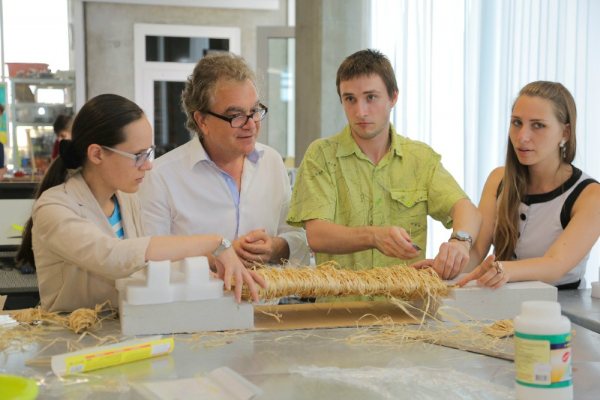 Prof. ZAFAFALDAL, Director of the Center for Prospective Designs, projects a bridge from high -strength pasta
Many people ask: "How do you learn from MIT?" So we learn. The shipment of the first educational courses under the contract with MIT began. These are large packages, including many materials that are developed jointly by them and our professors. Courses will be taught once first, respectively, a professor MIT, and then our professor.
Teaching is in English?
Everything is in English. We create an institution that will meet the same quality requirements that are presented to MIT or to any other leading university of world -class. This is the practice that we realize.
What was not in Russian universities, why did Skoltech need?
There were not a lot of things, and a lot of things are not. First of all, in our university, an approach to combining education and innovations was fully implemented. Our universities were mainly engaged in teaching, and institutions and academy were studied. And in order to have the best product at the exit, there must be a bow between research and education. This is a European tradition. Now our research universities, which are involved in the 5 B100 program for going to the rating of the best world universities, are engaged in the unification of education and research. Skoltech goes a little further and is still pulling innovations and entrepreneurship to this.
This means that in our educational process, the simultaneous study of both specialized, subject disciplines, and methods of commercialization, methods of creating a product, is laid down. This is originally sewn in the model. And in this sense we are different.
The second is an extremely high degree of internationalization and inclusion from the very beginning of Skoltha in the world scientific chain. Our tsnio - centers of science, innovation and education - are originally created by partnerships between Skoltch, international and Russian partners. No university has such a degree of integration of scientific programs with foreign scientific centers. There are separate foci, but so that this is the basis of the whole institute, this is not the case.
This immediately implies interdisciplinary research, which is conducted within the framework of centers - today it is impossible to separate biomedical studies from information technology. The same with IT and energy, with IT and space. Within the framework of these centers, we implement a polydisciplinary and interdisciplinary approaches when organizing applied scientific research. And here the emphasis on the word "applied", because we do not deal with the fundamental science, there is no such task. There is a task to make a breakthrough precisely in the field of applied research, and even more narrow - the commercialization of the results of applied research at all levels.
Our two students participated in July in a large conference - Esri User Conference in San Diego and presented their startup. Skoltha had his own stand there. This is already a project that was born with our students under the guidance of our professors, and he is now entering the market, will look for funding and continue to develop as a company. This is the ideal way of the birth of innovative projects.
Often you can hear claims to universities, to the Academy of Sciences that people are engaged in something necessary, but cannot tell about it. How is the popularization inscribed in the educational process?
Due to the existing opportunities, we talk about the projects of our students. In early June, at the Startup Village conference, organized by the Skolkovo Foundation, with which we are working closely, Skoltha had its own stand. One of the developments - the quadrocopter printed on the 3D printer - our engineering club presented Dmitry Medvedev, who promised to launch it at home.
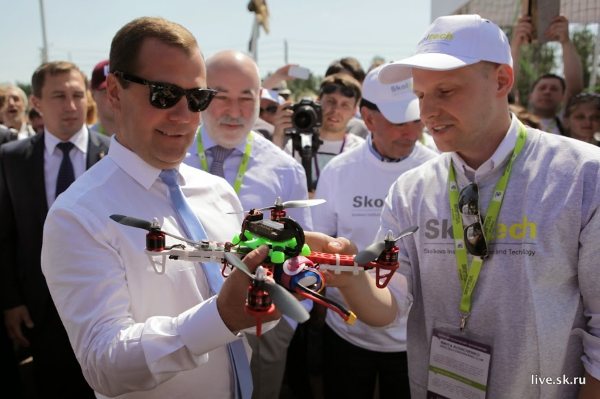
This is not just a toy, this is an original design that was the result of the inclusion of a special course of engineering education in the educational process. In this particular case, this design can take off as a quadrocopter, and then turn the screws perpendicular to the ground and fly like a plane, due to this, developing a much greater speed than a regular quadrocopter. This is actually a drone with the widest range of application in the national economy, in reconnaissance, in observations of the terrain, etc. This project was born from an idea in one of the courses, which is taught in Skoltekh for masters.
There are still a number of such existing useful projects, absolutely applied projects that attract financing. Some of them are exhibited in our hyperkub. In addition, in the framework of Startup Tour in 27 cities of Russia (an event that preceded by Startup Village), we actively popularized our approach and our plans.
We also work very actively with universities to implement the program of a new approach to the engineering education of CDIO (deciphered as Conceive, Design, Implement, Operate - think, design, implement and control). This is a completely new approach, this is a world movement. A number of Russian universities entered it, and Skoltech is the operator of the CDIO program in Russia. We launch the program, and then universities already implement it on their own.
We are also actively promoting and in the fall we will begin the implementation of the distance learning program in special engineering courses using the resources of RASH and other leading world content providers. We will adapt this program: to translate into Russian and offer this content as courses for students individually, partner universities, including Fizteh, HSE, Tomsk Polytechnic and other leading engineering universities. Then the members of this consortium themselves will become providers and creators of content, courses.
Thus, we are not implementing the Mooc model (Massive Open Online Course) - a mass online course, but the SPOC (Small Private Online Course) - specialized online course. Each university has its own, a local teacher will lead this group. Thus, we connect resources and give here the best of the best.
Does Skoltech focus on real industries?
In the Skoltha development project in the framework of the subprogram “Innovation and Economic Development and Innovation Economics”, which partially finances our project, there are special indicators for interaction with industry and the best innovative practices. This is also the aspect of learning that is not actively implemented by our universities.
We turn to face industry and say that we are ready to include the preferences and wishes of industry in the structure of the development of our centers. Of the six centers that we already work, three are made in very close cooperation with the industry. This is the center for composite structures and materials (in cooperation with the United Aircraft Corporation), the Center for Oil and Gas (in cooperation with Gazpromneft and a number of other oil companies) and the Center for Energy Systems (in cooperation with EN+and Korean KEPCO). We do not just say that you are participating in our processes - we directly include this project, which we carry out as part of the development of the center, for the industry. But this is not a work on order, the university is not a custom -made laboratory.
Throughout the world, now the model of open innovations is much more popular than the model of internal, own, corporate research laboratories. We completely follow this model and include the preferences of the industry in our program. There are tasks, and we formulate ways to solve them and offer in the course of this also obtaining a research result, which will not only be synergetic to the original preferences of industry, but will also benefit both us and it.
Maybe it sounds a little pathetic, but if we can create something in Skoltekh, which will help people live healthier, longer and richer, then we will be very pleased, because it will mean the achievement of our real target indicators. And the same mission, by the way, is at the rest of Skolkovo: startups who work in Skolkovo work exactly for this.
You asked how we are different from universities. This also distinguishes us, and others will also come to this. Reforming current universities is much more difficult than creating them from scratch.
But also more expensive, probably.
More expensive in the sense of labor costs and resistance. Universities live for centuries. That is why they live for centuries that they are very conservative and not subject to changes that destroy the subtle organization of scientific work or bring chaos into a calm life of the faculty. When you do something from scratch, everything lends itself to design. Let us make mistakes every day and try to fix them, but we can afford more freedom and experiments without causing any damage to academic freedom or the peace of professors.
You said that Skoltech is, in a sense, a landfill. I know that you studied at Stanford, worked in RES and developed a concept with MIT. What factors do you consider to be fundamental that determine the success of the university?
The most important resource of any university is students. What Stanford does is what Rash does is what Skoltech does is initially an extremely client -oriented attitude towards students, and not because it is the product that we produce and then sell in the market, we arrange for work, although this is the same.
We are talking about the long term, but this is being laid now. If there are no students who, recalling two or three years spent at the institute, will do this with pleasure, and if there are no graduates who, as a result, can either find a successful work, or create their own company, or in some other way to succeed, the organization dies. These people make reputation, prestige, attractiveness and success of any educational and scientific institutions, all the more unusual as ours. These general principles are implemented in all successful institutions, to which I definitely include MIT, Stanford, and Resh. And in Skoltekh we do everything so that these principles are implemented.
The next cornerstone of any university is a professor. Without good professors, there will be no success of students. We try to adhere to the principle that at the university the main people are professors and students, not an administration or some other body. This is what, again, determines the success of all leading world universities. This unequivocally succeeded in rash, which attracted the best graduates, young economists from around the world.
The third extremely important principle is culture. I understand by this ethical principles, principles of relations within, attitude towards each other, attitude to external partners, etc. This is what distinguishes all leading universities, the dignity with which organizations behave both inside and outside.
The last of the important I would determine the management structure and what is called the loud word Governance or corporate governance, although we are not a corporation. The value of the Board of Trustees for the university is extremely large simply because in comparison with the commercial enterprise the university does not have a specific mission to profit. In commerce, everything is simple - the company works, the profit is extracted, the council distributes it, determines the dividends, and the manager receives or does not receive a depending on the amount of profit. Everything is extremely simple.
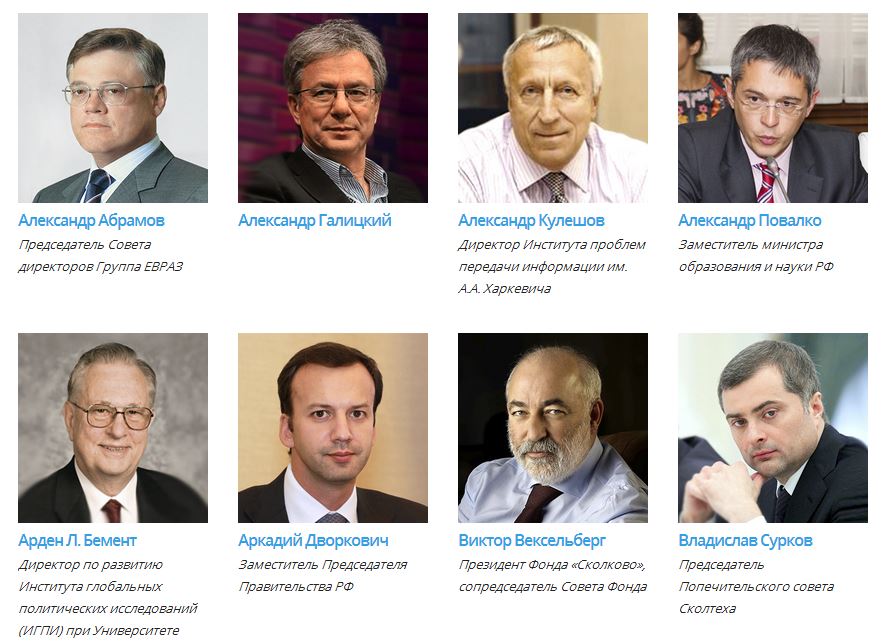
In our case (and in the case of any university), it is very difficult to determine what profit is, and therefore it is difficult to determine the mission, protect this mission and send. This is done by the Board of Trustees, each member of which is independent. He is not of someone's interests, as in the case of the shareholders of the company, namely himself as the trustee of this educational institution. Everyone contributes by virtue of their experience, and people are extremely rich, extremely busy, extremely respected work on a very active basis so that what they are baking about, it would be successful. This is such a collective mind, and it is difficult to overestimate the role. Since I was the responsible Secretary of the Council in Rash and here, I see a lot of similarities in the role of tips.
Moreover, the council is very important for the university interface with industry, with donors, with any external partners who know and understand the value of corporate governance. If they see similar features in a partner, then they treat him with a much higher degree of trust. This factor is not yet in many Russian universities. No, because it comes with time and requires constant support from the entire community of a particular university so that it is not a facade event, but was a really working body. The Council in RASH and in Skoltekh actually works as a board of directors, and this is a very important innovation for us, for Russian practice, which we find very useful.
I identified the fundamental factors that determine the stability, success of the development of a particular university, all the rest, and there are still a huge number of them are secondary.
Is there something in Skoltha that is not in MIT?
An interesting question. It's hard to answer. Firstly, there are no wonderful students that we have. We have very good students, working very good teachers. MIT, which helps us in the search for professors, notes that they could get an offer from MIT, but since we are doing this, they come to us.
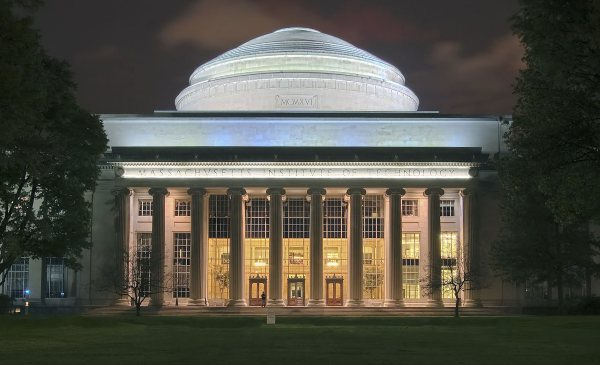 One of the buildings of the MIT campus
We have other things that differ from those that are in MIT. I would say that we have more opportunities to disclose the potential of interdisciplinary and cognitive research. Because MIT, with all its splendor, is a more or less traditional, held 150 -year -old university. Funding at the faculties, as it were, determines the framework and strict boundaries. We have not at the faculties, so we have much more free communication between different professors, which allows them to be more interdisciplinary. For example, in MIT, all interdisciplinary directions in some way are made beyond the structure of the MIT itself. There are a number of specially created interdisciplinary institutions - the Institute for the Study of Cancer. Kokha and others. We initially do this inside, that is, we do not build borders, which then will need to be destroyed for the sake of success. Skolkovo is not MIT.
If we take our territory, then it is very attractive and interesting precisely from the point of view of the urban planning process, the organization and coexistence of the community. MIT is located in the city, there is a very great crowding and density, which, in general, is not bad, because everything is close, convenient, but everything has been built for a long time. We are building a new one, so I believe that our conditions for life, work and study will be better than in MIT.
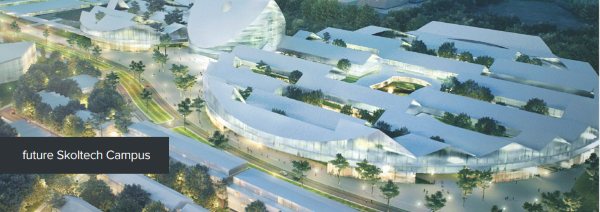 The future Campus Skoltha
What you talk about relations with MIT is, rather, cooperation, and not a teacher-teacher?
We went through the phase of a teacher-teacher, which was completely justified. In the literal sense of the word, we missed almost the entire managerial composition of Skoltha through MIT under a special retraining program. We like MIT culture in a broad sense, its spirit, and the spirit travels only with people, it is impossible to put, close it in a jar, and then open it.
We have completed the process of building the foundation: now we are working with MIT through the professor-professional, a student, a student under three centers (out of six), working with MIT, engage in joint research, developing academic courses, our students are taking short internships there, MIT students come here, some come here and teach here together with ours. There is a normal cooperation of two universities.
Have you reached this level in three years?
Yes, but this is laid down by the project: initially the contract with MIT was for three years. We extended it for a year, and, depending on the results that we get, may still be extended. But we completed the tasks of creating and directly organizing the institute, but now we need to fill the structure with the content.
What is your faculty? Mostly Russian teachers?
Different. There are foreigners, there are Russians. We do not make differences, for us the main thing is quality and balance, I would say. There are young professors, there are already held, well -known ones - these are the directors of the centers. But they are all united by the fact that they decided for themselves, that work in such a new institute as Skoltech is interesting and attractive to them in the sense of both scientific and public interests.
On what conditions do you work with them?
Conventional employment, they work at full rate. Contracts are very different. We implement the principle of a life -long contract, what is called Tenure in America. But while we are young, so all young teachers go to TenureTrack, that is, on the way to Tenure, and those who are older, they are already accepted from Tenure. We also work together with the Ministry of Education and Science to be able to provide Tenure - this should be an option for the professor in the long term. In full use with the requirements of our legislation, we take teachers for a three -year contract. For foreigners -non -citizens of Russia, this is a three -year contract and work permit. But this is not a problem, if necessary, we extend them.
All teachers work for our Full-Time. We do not believe that you can build a university on desktime, this is impossible. This is what kills culture.
What difficulties had to face in the process of implementing the idea of the Skolkovo Institute of Science and Technology?
The most difficult thing - and we have not yet achieved this - it is to create the right culture. Our main concern is to fall into the culture of state universities, corporations or state corporations, and the bureaucratic organization of the process. It is important for us that the professor, returning from a business trip and making an advance report that has not been drawn up in the same form, does not receive in response from the accounting department “Go and find”, but get the question “How can we help solve your problem?”. Another attitude kills in the root the whole idea to create a high -quality International University.
In the human mind, it is very important to switch this toggle switch with “you cannot” to “what can be done to get”. This is another culture, an open culture, if you want, willingness to meet, help find a solution. It is extremely difficult to organize with us, because people come with the luggage of certain experience. And everything else - planning, financing, KPI - this is all nonsense, this is all secondary.
We are now trying to automate these processes as much as we can. We have electronic document management. We want all the documents to be in order, but so that the professor does not notice how it turns out, so we are trying in different ways to protect professors from the bureaucracy.
A professor is a subtle structure. I have been working in the system of service personnel of the institute for a long time, and I understand this picture. And on all other things being equal, to find a good accountant on the market is much easier than finding a good professor on the market. I am not a cynic, but it is. In business, if you take key people - CFO, CEO, COO - this is what is a professor for us, that is, the loss of whom it will be expensive for us.