
Translated material
New Age
The great wizard Tim Burton congratulated humanity on the last change of centuries either with a fabulous postcard or a gentle curse. In the “Sleepy hollow” published in November 1999, there is a suspicion, there is no happy ending. Having defeated the horseman without a head, Ikabod Crane, along with his new family, returns from the village to New York, where he meets the Christmas of the new century. The inscription “Year of 1800” appears on the screen, and the viewer understands that he became a witness to the story not about the fight against evil, but about the loss of innocence. Ahead is the era of progress, large cities, world wars and monsters collected from metal. The defeated forest spirit in comparison with this future is not such an evil. In a sense, he is even good - part of the uprooted peasant soul, an echo of the mystical perception of the world. The fact that this horseman had no head, not an accident - he preferred the rationality. Today, after more than two hundred years, prosperous townspeople want to regain a piece of that Gothic. This is evidenced by the topics of book bestsellers, blockbuster films and popular television shows-including a dashing, but naive adaptation of the same “sleepy hollow”.
 © Cinemax
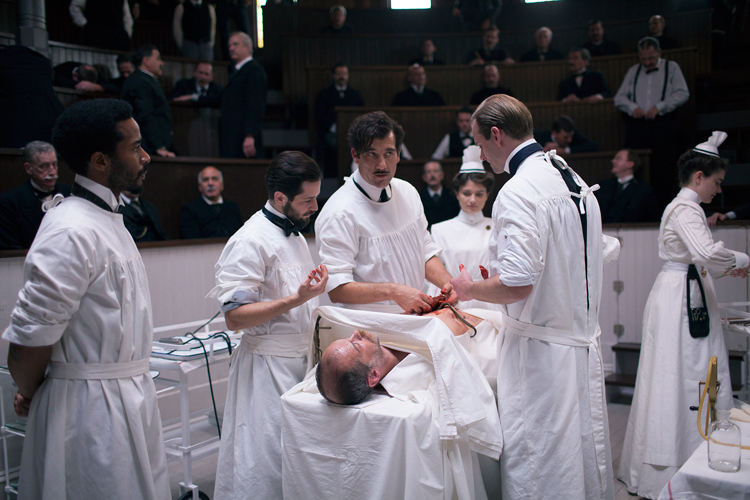
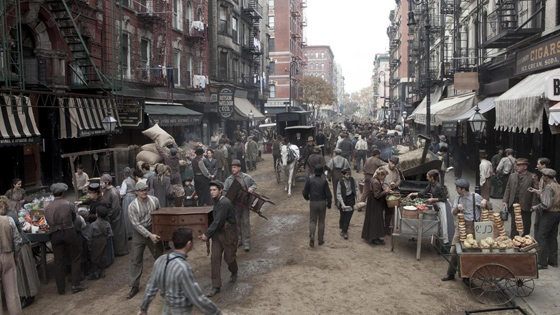
This strange comparison with Berton’s fairy tale comes to mind when watching the TV series “Nicker-Booker Hospital” (in Russia it can be legally seen in “Amediates”), because it also begins with the designation of the year of action-this time 1900. The era in which life threw the heroes of the "Sleepy Poster" is in full swing. Two million people are already living on the evil streets of New York, and half of them are immigrants. Antisanitaria daily takes the lives of hundreds, if not thousands. Officials instead of fighting her, pockets are stuffing. The ambulances with customs and bats fight for the right to deliver to the hospital a consumptive banker. Patients lie on the operating table, realizing that the death is the norm. In the center of this chaos, two doctors-perfectionist of the Nickerbox hospital. Both work around the clock - on a bare enthusiasm and accessible cocaine. After the next lethal cesarean section, the senior doctor gets scores with life. The youngest, John Tekieri (Clive Owen), is left one on one with a sick city, his own dependence, obstinate investors, illiterate staff and all the challenges of the new century.
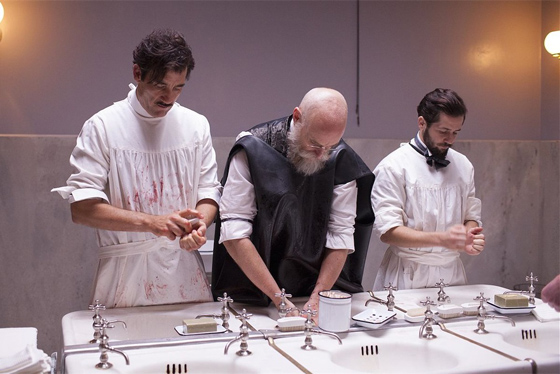
Enthusiastic viewers call the “nicker -boxer hospital” “Dr. House” a hundred years ago. The main characters of both series are passionate sociopaths, their teams coincide up to the color of the skin of the first assistant, and the medical history of patients are, if not detective, then certainly an adventurous character. Tekieri Borodat, House Nebrit, and both inventive: the first makes a medical equipment of the future in Nickerboker’s basement, turns cocaine into anesthetic and comes up with rubber gloves. At the same time, the hero was written off from the real doctor of William Stuart Holsted, so that the storyline of the series, in principle, can already be found in the same wiki.
 © Cinemax
But Stephen Soderberg, the author of large biographies (“Kafka”, “Erin Brochovich”), the chronicler of exciting professions (“Call Girl”, “Super-Mike”) and a researcher of serious diseases (“infection”, “side effect”), clearly sets himself more large-scale tasks than to take the niche of “Doctor of House”. The youngest triumph of the Cannes Film Festival finally abandoned films in favor of TV, performed on the project not only the producer, but also the director and the operator, and in the second season he signed before the prime minister of the first. What he conceived is unlikely to be another story about the superman like Gregory House or the new Sherlock Holmes, whose powerful intelligence the viewer wants to trust and obey himself quietly. John Tekieri already in the first series appears to be a broken hero who has to fight not only for the life of patients. If you compare it, then with the hero of the strange British adaptation of the Bulgakov “Notes of the Young Doctor”. This is the type of distressing character with ideals, which, self -destructing, distinguishes the energy of change. In other words, he is ready to share his strength with the viewer.
Both heroes find salvation in drugs: Tekieri is more accessible to cocaine, Bomgard - morphine. Both are looking for support from ghosts. Tekeri-at least in the first two episodes-turns to the mentor-self-servica, Bomgard-to himself through the diary (brilliant, by the way, duet of Daniel Radcliffe and John Hamm). Both get into history and history: Tekieri witnesses the take -off of global America, Bomgard - the fall of tsarist Russia. But if the “Notes of the Young Doctor” is the fruit of a cheerful British passion for Russian literature, then the series of Sodaberg seems to seek contact with the modern world, still chronically ill. The main problems with which the “nicker -boxing hospital” deal with - inequality, double standards, the catastrophically low value of human life are not resolved in the century, and it is hardly generally permitted.
 © Cinemax
The connection of Sodaberg eras helps to establish the composer Cliff Martinez, who wrote a very similar alarming electronic music for the futuristic “infection” a couple of years ago. And the historical details that are so famous for HBO series (and Cinemax channel -His daughter), the scriptwriters are served carelessly, as if this machine is in a hurry somewhere. But with amazing humor. For example, a certificate that in 1900 the first “codaks” appeared in the United States for the dollar is submitted as follows: the wife comes to the surgeon to work with the camera, he is embarrassed, and in the end he sticks out his tongue, just like Einstein half a century later. And the scene from the second series, in which the heroes mourn the shot chief doctor, almost literally reproduces the conversation between Mrs. Hudson and Dr. Watson after the “death” of Sherlock Holmes. Even the interiors are similar. As a result, I would like to watch the “Hospital Nicker -Booker” in order to find out how much Soderberg, the author of the American “Solaris”, is familiar with the Soviet screen.
As a costume drama "Hospital of Nickerbox", by the way, is located approximately in the middle between the outstanding "cop" BBC America and a long -established HBO "underground empire". The first talks about New York from the Civil War, the second-about the roaring of the 20s. A few more of the same excellent TV shows, and it will be possible to pack them all a century.