
Translated material
Alexey Sitnikov: Your diploma lives two weeks
Alexey Sitnikov 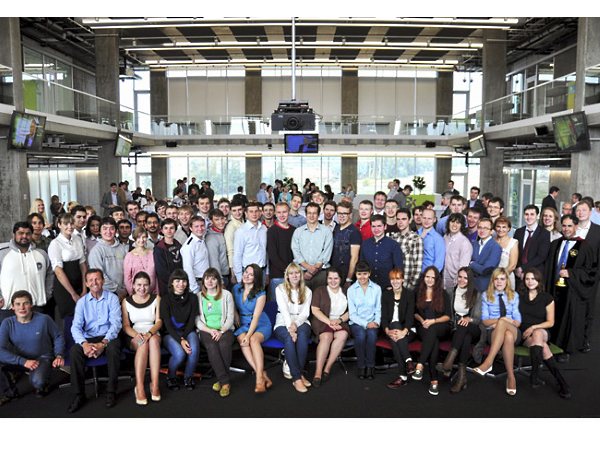 Students of Skoltech Skoltech.ru
 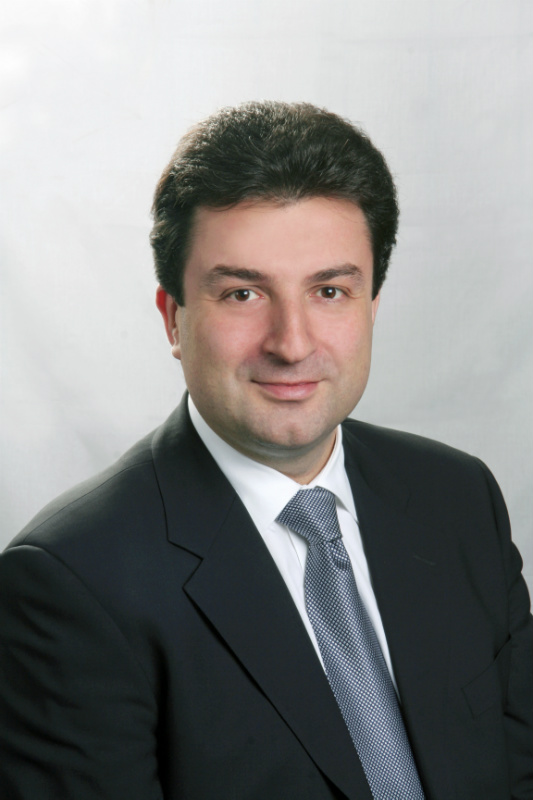 Alexey Sitnikov
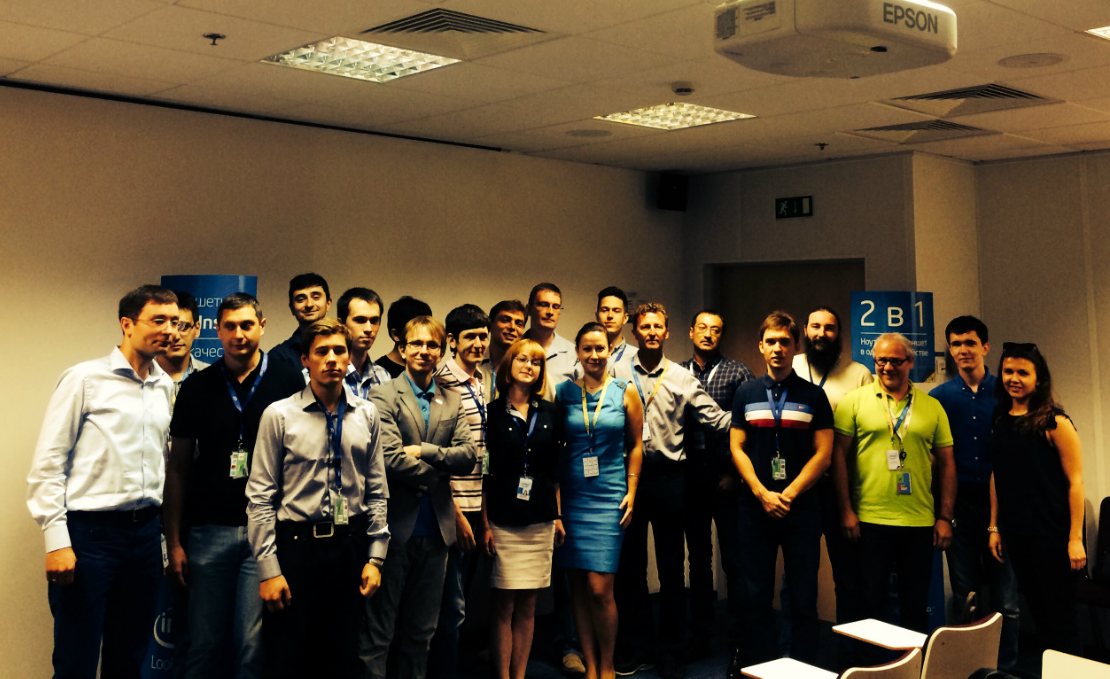 Students of the Pilot program "Immersion in the Industry" Skoltha and Intel
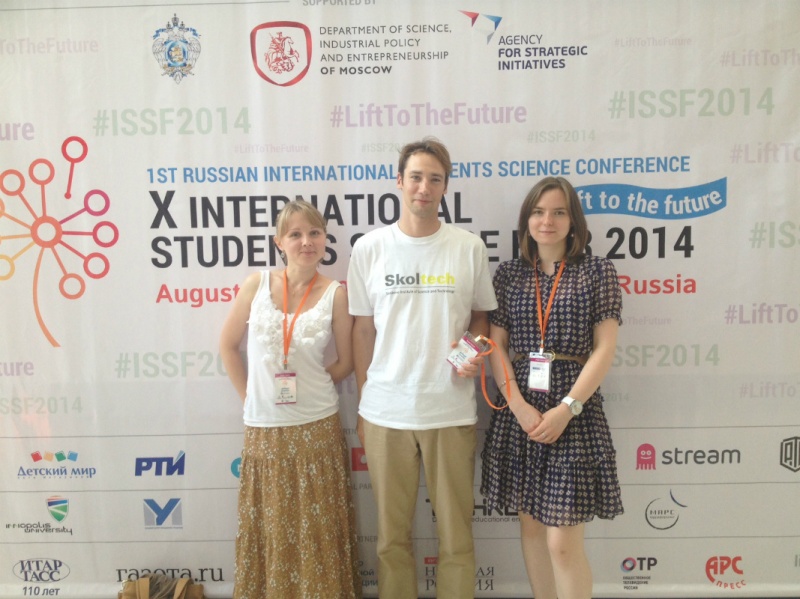 Julia Rybakova, Dmitry Gilyarov and Olga Musharova - young scientists Skoltekh and ecpertors to the conference "Elevator to the future"
Interview Preparation: Natalya Kharlamova also see: Alexey Sitnikov made of Skoltech Andrey Egorov about “career tracks” in Skolkovo Anastasia Novak Bomedtekh opened vacancies
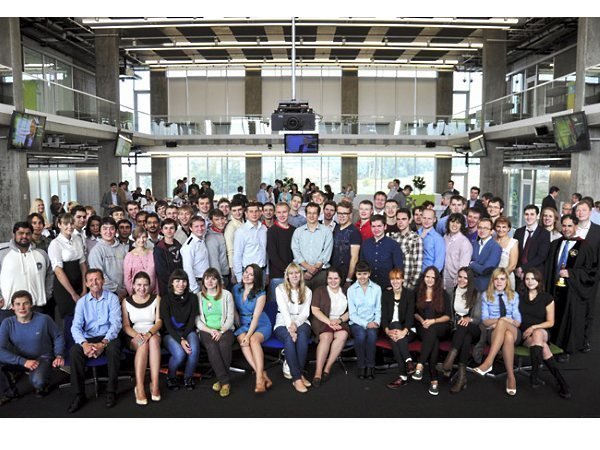 Students of Skoltech Skoltech.ru Alexey Sitnikov
The second part of the interview with Alexei Sitnikov , Vice President for the Development of the Skolkovo Institute of Science and Technology, on the learning process in Skoltekh, industrial practice and the tasks of real life.
There are five common directions (clusters) in Skoltha and there are no faculties. How does your learning process work?
We have programs - a two -year master's program, the n -gail PhD program. On average, it takes place in 3-4 years.
Masters' training lasts two years according to the modular system - every two months a new module. It turns out not a long semester, but short. This is partly defined, as in the RESH, by the fact that the Visiting teacher, for example, from Mit cannot come to the semester to read the course, but can come for 1-2 months. And the same thing with our teachers who work in their laboratories - they come to teach for 1-2 months. The MIT has a large number of professors - about 1000, and we still have 39. To offer students a choice, we invite temporary teachers before filling out the Full -Time Professor.
The modular system is very good in that at the end of each module we have the so -called applied period. This is a week when students make a specific product based on the course. For example, we had a course on energy systems, at the end of which students modeling the solution to the problem of the China energy system, which is extremely important in the applied sense, which largely determines our relations with the PRC. They work details on the materials of the course, but the point is that they understand the meaning between theory and practice, understand how to simulate, design, bring to the conditional prototype some product and continue to go to marketing, sales, etc. This directly applies to all courses, but at the end of each there is such an Application Period, also our know-how, which is very popular among students.
Our two -year program is being implemented today in three directions - this is IT (information technology), energy and biomedical. Bio is more focused on candidate, PhD programs than master's.
The space program is the fourth, and the nuclear is the fifth. For the fourth program today, a center for space communication technologies is being created, where we look more at the filling, how we can use space technologies for the needs of other areas, whether it is observation or information technology “imprisoned” for the space industry. This is what will be the central area of study both within the framework of the master's program and in research within the center.
Nuclear research is also one of the priority areas for Skolkovo, and for Skoltech, and for the Russian economy as a whole, but we must approach with very great caution to creating anything in this area. Much has already been done, and Rostec for us a traditional competitor both in space and in nuclear research. We plan to create a center for nuclear technologies, but so far we have not come directly to its development.
As for the Center for Information Technology, Bigdata, etc., it is already under development and will be created until the end of the year. As well as the center for quantum technologies.
What centers are already working?
Six centers: Center for infectious diseases and functional genomics, center for stem cell research, center for energy systems, center for hydrocarbons, center for electrochemical storage of energy, center of promising structures, technological processes and materials.
Are they working on the territory of Skolkovo?
Differently. Some of them are in the Moscow School of Management Skolkovo, part in the Urals, part in the hyperkub, and partners - where they are sitting. This is Moscow State University (partner for three centers), the Institute of General Genetics of the Russian Academy of Sciences named after N.I. Vavilova (partner for one of the centers); A partner for energy systems is the Moscow Energy Institute (MPEI), and external partners are MIT, the University of Gruningen (the Netherlands), a number of universities in America; Partners in the energy direction are located in Texas and California.
We planned for each center one external and internal partner (one Russian, one non -Russian, another - precisely Skoltech). But practice shows that the level of concretization and detailing is so high that it is impossible to find one partner who would provide all your needs, so the number of both Russian and foreign partners for each of the centers increases, and the centers become more complicated. This enriches the subject of research and their content, but makes the work of work for directors of centers.
Every scientist is money. Skoltech is unique that we, under the idea, ask scientists to create such research programs that at the exit would give not just an abstract history, but a specific result. If we read our research agreements, then the part that indicates the potential influence on the Russian economy, the impact on the development of Scoltech, and the impact on the development of educational activities is proportionate to the research program itself. We do not conduct fundamental research, this is done by other organizations - all kinds of funds, the Ministry of Education and Science. We want to purposefully come to obtain a specific result for Skoltha, and for the country, and for science. And the inventions and the products that we receive are based on scientific research.
How do students work in centers?
Initially, each student is attributed to one of the centers. We have masters, these are not young bachelors, these are people with higher education. They are all researchers. In the summer, they are practiced in companies, including in biomedical, energy and ITSHY: on Intel, in Siemens, in Russian companies, and Kolkovo key partners.
While the centers are at the stage of formation, the students' postscript for them is more formal, but as soon as we come to our first laboratories that will be located in Skolkovo this fall, students will immediately go through the practical part of training in them.
Another of our know -how is the introduction of Industry Immersion Program, that is, the student at the end of study goes to the enterprise. This is not a practice for a checkmark, this is a real job so that a person understands how industry is arranged in the real world.
Students of the Pilot program "Immersion in the Industry" Skoltha and IntelIf I want to study in Skoltekh, do I need to be a bachelor of a technical university?
Not necessarily. We also have economists.
How does students take the selection of?
We have a combined system. We work both according to, conditionally, the American system, when the selection begins in the fall, continues in the winter and in the spring there is an enrollment, and according to the Russian system, when the selection begins and ends in the summer. The combination gives us two cycles: for foreign students (we have about 20%), accustomed to the selection from the fall, and for ours - in the summer.
There are no exams as such. We need a diploma of higher education, an essay on why they decided to act, a standard set of documents , as it is accepted around the world. And the student must also pass the English test, TOEFL, because training is in English.
We still do not use specialized tests, as American universities do, but, in fact, we will come to this. The selection should be more pointed, therefore we carry out the so -called Admission Weekends - receiving days. Candidates, who are replaced by formal signs, come to Skoltech and within two days go through an intensive selection system, which includes the implementation of individual tasks, an interview with the faculty, a creative task, and the testing opportunities for the implementation of engineering thought etc. And according to the results of this comprehensive event, we then make proposals to students.
How many Weekends have you already had ?
There were four this year. We have completed the selection, now classes will be formed for the next year.
How many people are trained in groups?
We started with 20, now we have 80 in four programs, but in the future there will be 1200 - about 240 students on each program. IT has a little more, in the energy sector is slightly less due to the larger offer for ITSHNIKS in the market and those who wish. Bio is a somewhat special story, there the set is slightly smaller. Maybe in the end they are leveled, but so far we do not set such goals - we are testing demand.
How is the received student determined with the choice of classes?
The training system is so arranged that there are mandatory courses and courses to choose from. The choice is determined by what a person wants to do after graduating from the institute. Someone wants to make their own business - and in the framework of the course “From the idea to the market”, he finds his idea and further realizes it. This is their landmark. There are guys who want to continue training on PhD - this is also an option. Industrial practice, the direction of students in certain firms - in the interests of those who want to go to work in large companies later. We also work very actively with Skolkovo startups. We already have several Skolkovo residents created by our students, and this is also an option of how a graduate can be implemented.
According to the experience of Rash, when I worked there, many students got involved in, because after the first year of study they made a stunning proposal for work, and they left. The Rash diploma is very appreciated: in one year there students receive the equivalent of several years not to Rash. For the employer, such students are very interesting and important. And a young man is difficult to keep if he is offered a lot of money, for example, for working in a bank. Some, however, returned to finish. Over time, we were able to resolve this market a little, and the companies reacted normally to the offer “let them learn, they will be even more valuable for you.” Now the percentage of such zero, but there is a drop-outs.
We, too, may have a drop-outs. All the great companies in the world are made by people who did not work in college. We all the guys already have a higher education, but someone, I am sure, will be seduced or will find an idea for the sake of the implementation of which the institute will leave. This is not a minus for us, because the ultimate goal is achieved. Of course, I would like people to invest in education, but if they become millionaires without education, this will be a normal contribution to the economy.
How is training?
Lectures, seminars, practical classes. Unless the lecture is characteristic of us to a lesser extent, because our work is more in small groups and there are no streaming lectures.
Small groups are for how many people?
They are all small. Different. There may be a course of three people. We still do not have such, because we do not have so many professors to provide it. Over time, we will have a ratio of 200 professors and 1,200 students. 1: 6 is a very good ratio for a research university. Then we will be able to support small courses, because the teaching load is another important distinguishing factor - in Skoltekh it is much lower than in a large university and undergraduate. The professor can give two courses a year, and at the same time meet all the requirements and criteria. We initially believe that it is right to give the professor a space for work, because he is equally valuable to us as a researcher and as a teacher.
Do you provide training grants?
Yes, we provide grants to students. It is useless to take money for training in our case, because it is early. For example, about 10 years have passed, even 11 from the moment of the creation of a rash until the introduction of the first payment for education, and then approximately half of the students there has grants there, to one degree or another covering training. In engineering magistrates, they sometimes take money. I do not see anything reprehensible in this and I think that we will do it, but still this is not a business.
How is Skoltech financed?
We are funded from three sources. The first is the grant of the Skolkovo Foundation, which was obtained as part of the subsidies of the federal budget and within the framework of the subprogram of the state development and innovative economy. In it, until 2020, the line at Skolkovo and the line at Skoltech. This line allows us to receive about 60% of the financing we need.
Next, we have sponsorship capital (today it amounts to 4.2 billion rubles), the income from which also goes to the needs of Skoltha. And we have the third element - industrial contracts. It is still low, but will become more noticeable with the advent of its own laboratories.
That is, state financing, the enduum, industrial contracts and work on order, which we are already doing and we will do. An extremely simple structure. We hope that we can still increase the enduum that with the advent of more professors, we will create personalized professors, as Rash and HSE do. When there will be graduates, we will ask them to help the institute in gratitude for a great time.
Are there any things that you would like to try in Skoltha and continue to scale to other universities?
Everything that we do in Skoltekh can be scale. So, we work not only with a conductor, but also apply the concept of engineering education .
Scaling involves the desire for scalable. We are actively participating in the 5 in 100 program. In particular, we participate in the development of a system of analysis of the quality of scientific works - that which is one of the main indicators for universities, because we have access to the international network of reins that evaluate our centers, our professors. We will help to apply this practice in other universities if they are ready and open to this.
In particular, we deduct for cheating. In RESh, they are expelled for cheating, in Stanford is expelled for cheating. In addition, taking money for exams, thus maintaining corruption is to steal the future with these people. The fiction of education does not work and is not in demand by the market. I say to students all the time: "Your diploma has been working for two weeks, and then you must work yourself." Unfortunately, the market is still not fully aware of the difference in diplomas, although the movement is going on. I am sure that he will come to this awareness, and we are trying, as we can, to contribute to this.
In addition to changing the structure of financing, laboratories and tsnio, which is included in the development plans of Scoltkh?
Campus is already being built. Students and teachers will be able to live in Skolkovo from the beginning of next year. The research complex will be implemented this fall on the territory of the Skolkovo technopark. In the spring of next year, Lenovo Labs will be released on -line - this is a specialized laboratory complex, where we will also have laboratories. At the end of 2015 - early 2016, if there is no force majeure, the Skoltha building itself will be completed - our handsome, who has now come out of the ground. Construction is on schedule, there is money.
In late autumn, I think, in November, we are moving from the Moscow School of Management Skolkovo in the neighborhood - to the technopark. But we will continue to cooperate with the Moscow Region. Rash, by the way, moves to the territory of MSU in August. We are conducting the most active negotiations on joint activities and cooperation. If you look at three of our institutions - the Skolkovo School of Management, Skoltech and Resh, you will see that the analogue of this structure is exactly the Massachusetts Institute, where there is the best faculty of economics in the country - in our case this is a rash, there is one of the best business schools in the country, and our mens in many programs is the best offer in the market, and Skoltech is trying to become a solid engineer university.
Together with MSU, we implement programs at once in several areas, including “5 in 100”, a project to analyze the quality of scientific works (MSU acts as an operator). We are also working on a joint program with MSU and MIT, which is called the Global Forsyth of Education. This is a separate topic. This program will change the ideas about how educational processes should be organized in the future, where demand, what kind it is, what will happen to educational startups, etc.
Already now, our students are conducting an intensive in English in RASH will send a very good level of preparation. Here in the gym there was a tournament between the students of Rash, Skoltha and MSU. I think that in a few years we will be able to see the new education of AL Skolkovo - the Skolkovo Institute of Management, Economics and New Technologies.
Julia Rybakova, Dmitry Gilyarov and Olga Musharova - young scientists Skoltekh and ecpertors to the conference "Elevator to the future"Interview Preparation: Natalya Kharlamova also see: Alexey Sitnikov made of Skoltech Andrey Egorov about “career tracks” in Skolkovo Anastasia Novak Bomedtekh opened vacancies