
Translated material
Europe and Russia: a look from the USA
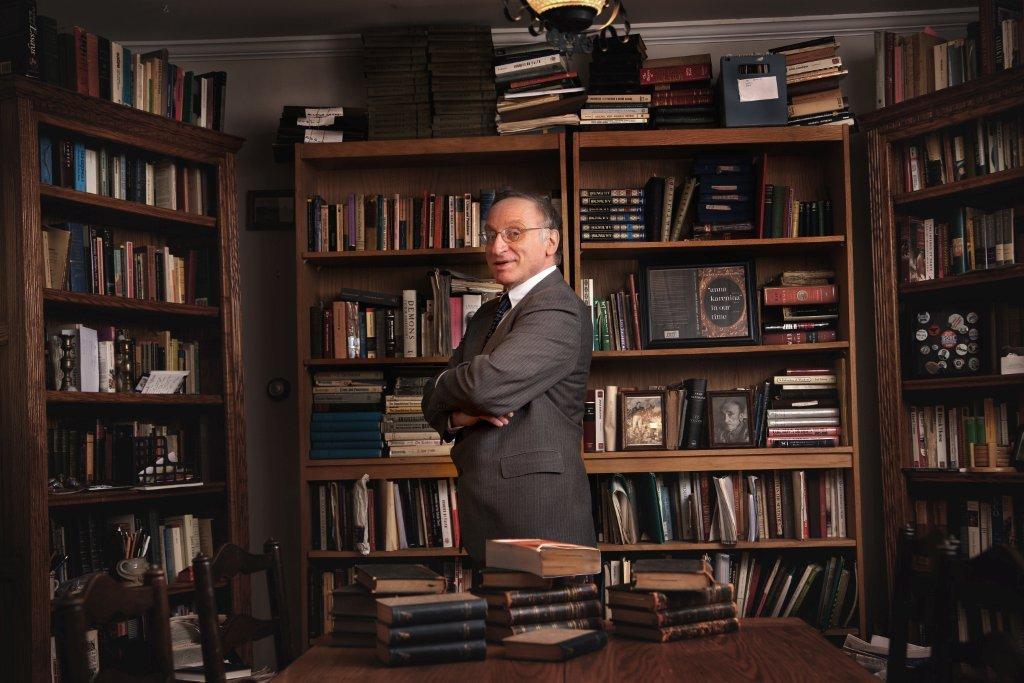
Guest Ach - Professor Gary Morson
Alexander Genis: Once in self -isolation, Putin’s Russia condemned itself to the next round of centuries -old disputes about whether it is Europe. Although starting at least from Peter the answer to this question, it would seem, has long been found, a fierce discussion began again. In my opinion - from scratch. The fact is that Europe is not an address, but the ultimate goal. If you use the term from the theory of chaos, then Europe is the attorney of history: no matter how bizarre the trajectory of the pea thrown into the basin is, sooner or later it will calm down at its bottom.
To avoid this fate, many climb onto the wall, hoping to find a special path. The most ugly is Eurasian. Who will call Pushkin an Eurasian poet?
The question, of course, is not in the map, even political. In the end, what is Europe? Maximum variety on the minimum of space. The smallest of all the continents, Europe, in essence, has never been to them. Without coinciding with its geography, it is rather a concept than the territory. Therefore, if in the West Europe ends with the Atlantic, then in the east - by law. The “Europe” understood in this way means civilization, which, like Magma, spread, spreading, melting in itself languages, customs and culture in one civilization.
What was the role of Russia in this process?
We asked for this to tell our listeners the famous American Russianman, professor of the University of Northwestern, Gary Morson.
Evgeny Aronov is talking to the guest Ach.
Evgeny Aronov: “We treated Europe politely, even respectfully, because we knew that it taught us a lot and, by the way, our own history ... We didn’t think that Europe is ready to fall into barbarism again, and that we are designed to save civilization through the same civilization that recently brought us out of our surveillance.”
So Chaadaev wrote in the stagnant era of the reign of Nicholas I, when the question of Russia belonging to Europe was included in the list of “sick”. In the Crimean war, unleashed by the same anti -liberal emperor, hamsters and Pogodin, for nothing that ideologists of Slavophilism, offered praise to the West both for technical achievements and for the greatness of the spirit. In the liberal era of Alexander II, Tyutchev, on the contrary, exhorted his compatriots not to bend before Europe, because they would never earn her recognition for merits on the basis of education. During periods of ideological Mezheuma, the “sick” question recovered, that is, he came to naught. Today he is experiencing a relapse: in acute form - in Russia, in a soft form - in Europe. Is there any logic in these cycles?
Gary Morson: The question of Russia belonging to Europe, I'm afraid there is no answer. Regardless of whether he burns the hearts of Russians or not, and why. After all, the very concept of Europe is strictly not defined. Is it a cultural phenomenon or geographical? And how far does it extend? Before the Urals, behind which, as Hegel insisted, is there a cultural and historical spirit? Or to the extreme eastern borders of the Roman Empire?
Asking whether Russia belongs to Europe, we are interested in others, namely: does European and Russia have a culture? And even this issue, by and large, is not fundamental. The desire to find out what values should be guided by Russia in its foreign policy, is it worth it to resemble France, England and Germany and be friends with them or to be an alternative to them? The very formulation of this “patient” issue indicates every time the change of foreign policy course in Russia.
Evgeny Aronov: To what extent does Europe and Russia have a common culture?
Gary Morson: At the very end of the 1860s, the major Russian sociologist Nikolai Danilevsky published the book “Russia and Europe”. The author, who began as a person of left -wing, socialist beliefs, and finished as a pan -Slavist, called for the creation of the Slavs federation with the capital in Constantinople. With the culture of Europe, Danilevsky proved, Russia has nothing to do, and should renounce it, as, indeed, from other foreign influences. His famous saying reads: “Europe is not only something alien to us, but even hostile; Her interests not only cannot be our interests, but in most cases they are directly opposite to us. ”
The Westerners - Sergey Soloviev, Timofey Granovsky, of course, Chaadaev and Herzen - proceeded from the fact that Russia entered Europe under Peter, and since then, although slowly and painfully, rebels its culture in a western way, realizing that neither her nor any other people have a different way. In this sense, the Bolsheviks have a paradoxical phenomenon: they adopted an absolutely European ideology, a European cultural paradigm, and soon after the revolution they made it a tool in their fierce struggle with Europe.
Evgeny Aronov: Do you think that the adoption of Christianity by Russia was enough to relax with Europe?
Gary Morson: This is a matter of questions! Well, firstly, it was not Western Christianity, but eastern, Byzantine. With Western Russia, Russia practically had no contacts before Peter; Russia was cut off from Europe. With Eastern Christianity, the contacts were sporadic in nature, and they were completely interrupted in the middle of the 15th century with the fall of Constantinople. Therefore, Russian Orthodoxy was autochthonous; It, let's say gently, did not really relax her with Europe. We will also not forget that Christianity came to Russia seven centuries after it has established itself in the West of the continent, and I think there was enough one of this huge temporary mismatch to make it difficult for them to make a genuine spiritual rapprochement. In a word, the Christian factor can be used both to prove Europeanism in Russia, and to prove its non -Europeanness. It all depends on the political attitude. In today's Russia there are those who affirm the more relationship of Orthodoxy with Islam than with Catholicism. Thus, they are simple to reformulate the idea that Russia does not share the values or the fate of Western Europe.
Evgeny Aronov: Well then, then we will talk about the intersection of the material worlds of Europe and Russia.
Gary Morson: I sometimes ask my students, what Russian goods they buy, or at least which they saw in stores. They call the following: vodka, black caviar, sometimes a Kalashnikov assault rifle. This is all. Moreover, the most competent of them know that even the “metropolitan” is now produced in Estonia. The number of Russia's products in the cultural sphere - literature, ballet, music, painting - huge, its high quality is undoubted. The same is true regarding the products of pure science - mathematics, physics, chemistry. But with regard to technical innovation that directly affects everyday life, the situation is completely different on the material side of civilization.
The lack of points of contact of Europe and Russia in this area is very important in the context of the issue that we analyze. The rich and the poor still belong to different worlds, and technically backward Russia is still poor and still envies the technically highly developed rich neighbors.
By analogy: Europeans can admire the cultural products of India or China, but it never occurred to them to ask themselves if India and China are part of Europe. On the other hand, the unity of material civilization - well, also, of course, political and legal - very closely brings culturally different Europe and America.
Evgeny Aronov: Chairman of the European Council, Belgian Herman Van Rompey at a recent ceremony in Aachen, at which he was awarded the international prize of Karl the Great, said, addressing the envoys of Georgia, Ukraine and Moldova: “Thank you for finding time to come here. This is very flattering for me, because I understand that your attention is now focused on the difficulties that your countries experience. Difficulties that your common neighbor exacerbates, Russia. Which is extremely regrettable, since Russia is a great country belonging to European civilization, European culture. Without Shakespeare or Balzac, there would be no Dostoevsky, as we know him, without Gogol there would be no Kafka, without Tolstoy - Thomas Mann. ”
How do you, as a specialist professor, teaching a comparative literary criticism you comment on the above?
Gary Morson: The influence on Europe of Russian literature began somewhere at the turn of the 19th-20th centuries with the advent of the first quality translations. This influence was very strong, but limited in time. Pushkin, on the one hand, and Soviet literature, say, the end of the 20s-early 30s-on the other. The reading European public was familiar with later Soviet literature, but it did not have such an impact on minds as classics. Nevertheless, both the memoirs of Ehrenburg and the “Doctor Zhivago” Pasternak were very popular. “One day of Ivan Denisovich” Solzhenitsyn is included in the literature program of many secondary schools.
Speaking about the influence of Russian classics, it is interesting that, once established, it never stopped, despite the zigzags of literary fashion and political moods. In the repertoire of any amateur drama circle, and all the more professional theater schools, Chekhov is invariably side by side with Shakespeare. Although the Chekhov Russia is not much like today, Europeans consider Anton Pavlovich part of their culture to this day. Like almost all the cultural products of Russia, produced for a hundred years from the mid-19th to the middle of the 20th century. I mean modernism in painting, ballet and cinema. The works of French and German existentialists are sprinkled with straight and hidden links to Dostoevsky and six. I remember very well how, in the years of my youth, every self-boring family in New York was obliged to have in her library the historical and philosophical novel Dmitry Merezhkovsky “The Risen Gods” dedicated to Leonardo Da Vinci. In every possible way, by the way, I recommend it to your listeners. This is a wonderful romance.
Evgeny Aronov: The most important works of Chinese or Japanese literature in Europe are read only by specialists, unlike Russian, with whom any minimum -educated European is familiar. This also has a partial answer to the question of whether Russia belongs to Europe, and this part of the answer is affirmative, our guest noted.
“But if all the restrictions on this piece,” Professor Morse continued, “if Russia does not become European in its other aspects and does not join the West, then, I am afraid, in 50 - 70, the discussion will not sound like today:“ Is Russia Europe? ” And quite differently: “Is this region of the Chinese Empire to Europe.